Real Estate News and Advice
May 16, 2008
Turn real estate into a happy home The Secret to Positioning Yourself in the High Income Zone


Search Realty Times


See firsthand how REALTOR.com® is changing the face of real estate by altering the way consumers search for real estate online.


Study Online, but Never Alone


Study Online, but Never Alone


NEED HELP?

Click for Live Support


Call: 214-353-6980


Can Mold Be Your Home Inspector's Friend?

Can mold be a home inspector's friend?

FREE 2008 Agent Business Plan

Maybe. Although a home inspector does not replace the needed for an Environmental Mold Specialist to determine if a particular type of mold could a health hazard, a home inspector is certified as a general expert of the home's systems, and as such, can speak to the present conditions and visible defects of the home which may also include the possible causes of mold.

To appreciate how a home inspector utilizes information gathered from mold samples we must first understand the basic principles of mold. In most cases, for mold to be present in a home there must be three things:

  • continuous moisture supply,

  • higher levels of heat, and

  • the mold spores themselves.

This last item is an important one, as there are thousands of species of mold. Most come from either a plant or animal base, and it is the opinion of some health professionals that only a select few animal based molds that are extremely hazardous or harmful to healthy humans. This means that most forms of mold are unsightly or annoying to home owners, and although it is true that mold spores may cause common conditions such as allergenic reactions, only a relatively few varieties of mold are thought to pose significant harm to human health. Of course there are many views on this subject, so it is always recommended that anyone who suspects the presence of mold, that they seek expert advice from companies specializing in environmental control and abatement. Many governmental agencies like the Centers for Disease Control (CDC) can also be contacted for further advice.

That said, how is mold potentially a home inspector's friend? The presence of mold is often an early indicator of an underlying and potentially larger problem. Remember, there must be moisture and heat present in order for the mold spores to glow and thrive, so the question becomes, "Where is the water coming from?" and "Why is this source of water combined with heat sufficient to allow mold to grow?"

The home inspector often tries to answer these questions through a series of deductive steps. The first step is simply a visual assessment, "Is the mold growing just on the outer surface, as in the case of a bathroom shower?"

If the shower is located in a bathroom that does not have a window or fan; then a possible cause may be as simple as cycling, whereby the shower gets used too often or for longer periods than this bathroom/shower system can handle. A full cycle would start when the bathroom fills with heat and moisture during the shower, and end once the bathroom dissipates back to its regular temperature and humidity, after the shower has been completed. And the quicker the cycle, the better. So in this particular case of surface mold, adding a fan or window to the bathroom could at least remove part of the underlying problem.

In more extreme cases, the mold may be visible in locations outside the bathroom. In these cases the mold may not be "common," and the root cause may not be as obvious, not to mention that only part of the mold may be visible. The home inspector must then turn to a more involved series of steps, which may also include the use of measurement tools to aid in the analysis process.

For example, if mold is visible on a floor and wall connection in a bedroom wall, the inspector may use a water meter to see if the wall is currently damp or wet. The water could be collecting on the inside of the wall. Then the inspector may enter the attic to see if there are any water pipes in that area, or to see if possible roof leaks are visible. Remember continuous water must be present for mold to thrive and grow.

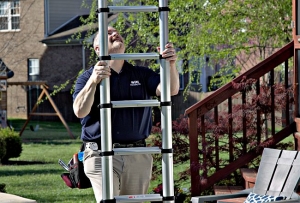
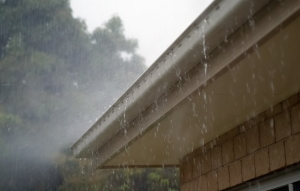
Let's say that a water stain is visible in the attic around the nearby chimney, then the inspector will go outside to look at the roof's construction and the metal flashing around the chimney to see if the roof structure appears to be in a serviceable condition. Maybe this roof section does not slope sufficiently to take water off the roof during regular rain storms, in which case the roof system may need to be re-designed. Or maybe there are overhanging trees or other external forces visible, these factors might be causing water to flow into the area of concern. Many unrelated factors can lead to the actual cause or causes, but gathering this set of knowledge can also lead to solutions which can be incorporated back into the physical designs or repairs.

So as you can see, mold can be a home inspector's friend, as it can be an early warning system in the detection of home defects. Certainly all forms mold should be approached or handled with the appropriate health precautions, and it is always recommend that additional expert advice be sought anytime mold is present, but the presence of mold can act like a smoke detector's alarm, "Warning, there may be a problem here."

And it is the analysis following these warnings that can be helpful in allow designers, contractors, or environmental specialists the opportunity "design-in the proper fix." Bringing in a qualified home inspector can therefore be your "first level of detection," thus letting all parties know that a potential problem exists.

The home inspector may be able to provide indications as to the root cause or causes to the problem, and the inspector may also provide guidance to other testing services or local agencies for further analysis. Mold problems are a serious problem, but the home inspector can help make the process of detection and analysis a little less scary.

Published: March 28, 2007

Use of this article without permission is a violation of federal copyright laws.


Brett Kayzar, CCI; is a Certified California Real Estate Inspection Association (CREIA) Inspector, and an active member of the American Society of Home Inspectors (ASHI). He is also certified by the Inspection Training Associates (ITA), and the Examination Board of Professional Home Inspectors (EBPHI).

Brett Kayzar is the Principal of Quick and Reliable Home Inspections, LLC; and he brings 26-years of practical construction experience as a project manager and Licensed General Contractor with the California State License Board (CSLB). Brett also possesses an MBA from Pepperdine University and a BS degree from Arizona State University.

In addition to being an active Home Inspector, Brett has also provided consulting services for home construction and design, and he will be a featured expert in the upcoming book Health Sustainability and the Built Environment, written by: DAK Kopec and published by Fairchild Books.


Real Estate News Network

You must enable Javascript to view the Video content and Navigation on this site.


Spotlight

Study Online, but Never Alone

Today's Headlines

Today's Insider REALTOR Secret


In a business climate that's growing increasingly more competitive, complex and unpredictable, the only constant is change.


Agent Publicity | Market Conditions Interview | Local Market Conditions | Video Newsletter | Article Index | Terms & Conditions | Privacy | Contact Us

Copyright © 2007 Realty Times®. All Rights Reserved.