Real Estate News and Advice
October 10, 2008
Learn the Art of the Short Sale Today's Insider REALTOR Secret


Search Realty Times


NEED HELP?

Click for Live Support


Call: 214-353-6980


Mold Found Where Least And Most Expected

Considered hot, arid states, Texas, Arizona, Nevada and South Dakota may be moldier than you think. On the other hand, considered more humid, the states of Massachusetts and Alabama are located along the coast, where mold may be less common.

Apparently climatic and geographic location aren't necessarily indicators of where you'll find fungus among us.

That's according to a mold hazard ranking model developed by Middleton, WI-based wholesale insurance brokerage American Risk Management Resources (ARMR). The company compared mold losses on insurance claims with premiums paid on property and liability coverage in each of the 50 states.

The hazard ranking model does not reflect claims associated with 2005 hurricanes or the fact that mold coverage is more expensive in some locations. More expensive coverage could make policy holders more reluctant to file claims if they believe rates will rise or their home will be stigmatized.

ARMR is an insurance brokerage and consulting firm specializing in environmental insurance, including mold coverage for commercial property.

According to ARMR, Wisconsin had the lowest relative mold loss rate, followed by West Virginia, Alabama, Massachusetts, Minnesota, Maryland, Illinois, Colorado, Iowa and Indiana. The highest rates were found in Texas, Florida, Oklahoma, South Carolina, Nevada, Arizona, California, South Dakota, Tennessee, and Kansas.

The list, at both ends, shows areas where more mold might be expected mixed with states where mold might least be expected.

Building quality could explain the difference.

"Mention mold right now, and the Gulf Coast comes to mind first, but the contamination on real estate hit by hurricanes was flood related as opposed to mold growth caused by inferior building materials or poor construction," said Carl Smith, CEO/Executive Director of Greenguard Environmental Institute, an Atlanta, GA-based non-profit organization working with lenders and developers on mold risk mitigation techniques.

"It's counter intuitive to think of shopping centers in Phoenix or casinos in Las Vegas as being at risk for mold, but it makes sense when you examine the causes of mold and problems often caused by modern building practices and materials," Smith said.

Smith said today's buildings, built tight to meet energy efficiency requirements, can create a "greenhouse effect" with moisture nurtured by walls and windows tightly sealed off from consistently hot weather outside. If the ventilation system's design and deployment is inadequate, buildings can become an appetizing buffet for mold, experts say.

"Think of a glass of ice water sitting on your porch in 95-degree heat," said Smith. "Condensation quickly forms on the outside of the glass, but unlike your drink, condensation in a home or business has nowhere to run off so it builds up in the cavities of the structure, creating an ideal climate for mold contamination," Smith said.

The message?

Just because it feels high and dry outside, doesn't mean it isn't a fungal mess behind the walls.

When San Diego, CA-based Quality Built examined hands-on, independent inspections of some 32,000 homes subject to once-overs by inspectors trained to identify high-risk construction defects in 2005, the most common type of construction defect discovered in 41 percent of single-family homes and 23 percent multifamily properties were problems in the building envelope.

"In the age of universal mold exclusions on insurance policies, every one involved in real estate needs to diligently manage the mold risk," said David J. Dybdahl, head of ARMR.

San Juan Capistrano, CA-based mold mitigation company American Mold Guard was founded after CEO Tom Blakeley fought a mold infestation in his own home.

"I was ready to sell my house, but couldn't because mold was growing behind the walls. I realized then that if I had taken precautions and followed a simple checklist when I purchased the newly built home, I would not have lost the sale. To make matters worse, my homeowners insurance did not cover the clean-up -- a typical scenario for many homeowners today," Blakeley said.

Here's what Blakeley offers to help you make sure your new -- or old -- home is mold resistant -- wherever it may be. The advice also speaks to the growing need for new home buyers to have their new home inspected.

  • If your home is a "foundation-slab-on-grade" home, the slab should be tested for moisture transference or examined to determine if it is sitting on or near water.

  • The slab should be sealed with a moisture barrier, a sealer painted over the top of the slab before the floor is installed.

  • If the house has a drop floor, the ground beneath the floor should have been covered with plastic or some barrier to help prevent ground moisture from evaporating into the house.

  • Landscaping should slope away from the home by at least 12 degrees or more.

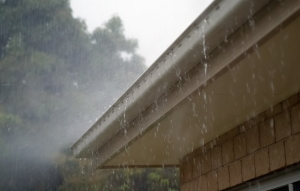
  • Rain gutters should be tested for full functionality.

  • The interior of the house should be tested to maintain "positive air pressure" -- to make sure there are no leaks in the building "envelope."

  • The air conditioning ducts should be thermo-wrapped to prevent water condensation.

  • Windows and doors should seal properly. Quality Built said the single highest individual risk identified in single-family homes included improper framing around windows and doors.

  • Roof flashing should be inspected for correct installation.

  • Overflow drains in wash basins and bathtubs should be tested for proper functionality.

  • Exhaust fans should have been installed in wet areas, including bathrooms, wash rooms, laundry rooms, kitchens, indoor spas, etc.

  • The HVAC (heating, ventilation and air conditioning) system should come with a "dehumistat" feature that automatically maintains a consistent relative humidity level in the home.

  • Interior walls should have been painted with at least two coats of a latex paint to help prevent interior moisture from defusing through to the interior walls.

  • The home's wood frame should have been cleaned of microbial growth prior to drywall installation.

  • Cleaned wood should have been treated with a long-term antimicrobial as a safety net to prevent mold growth during an unexpected water intrusion event, which, given climatic changes, is less and less unexpected.

  • Your homeowners insurance should offer mold remediation and bodily injury insurance, should the need arise.

Published: July 18, 2006

Use of this article without permission is a violation of federal copyright laws.


Broderick Perkins parlayed a career in old-school journalism into a contemporary digital news service that really hits home.

The award-winning consumer journalist, originally from Wilmington, DE, is founder, publisher and executive editor of the bootstrap DeadlineNews Group, a Silicon Valley-based editorial content and consulting service specializing in residential real estate, consumer news and related editorial consulting services.

The DeadlineNews Group includes the website, DeadlineNews.com, offering real estate editorial content and consulting services, and its back shop, the Deadline Newsroom, an open house on news that really hits home.

Perkins obtained his formal journalism education from University of Delaware and a journalism boot camp, the Institute of Journalism Education at the University of California-Berkeley. He went on to 20 years of service as a daily newspaper journalist at the Wilmington, DE News Journal and San Jose, CA Mercury News.

Perkins covered housing on the San Jose Mercury News reporting team which earned a General News Reporting Pulitzer Prize in 1989 for coverage of the Loma Prieta earthquake.

He has also produced real estate, consumer and small business content for the Wall Street Journal, Los Angeles Times, RealtyTimes.com, Nolo.com, Better Homes and Gardens, the National Association of Realtors, Homestore/Move and Intuit/Quicken among more than three dozen publications.

In addition to managing the DeadlineNews Group, Perkins most recently served as chief editorial consultant for Nolo's Essential Guide To Buying Your First Home, Nolo, and writes real estate television scripts for RealtyTimes.com.


Free Daily Headlines E-mail from Realty Times


Real Estate News Network

You must enable Javascript to view the Video content and Navigation on this site.


Mortgage Rates
30 Year Fixed: 5.94%
15 Year Fixed: 5.63%
1 Year Adj: 5.15%
(U.S. Weekly Averages)

Today's Headlines

Exclusive Leads In Your Market


Agent Publicity | Market Conditions Interview | Local Market Conditions | Video Newsletter | Article Index | Terms & Conditions | Privacy | Contact Us

Copyright © 2006 Realty Times®. All Rights Reserved.