![]() |
Real Estate News and Advice |
July 10, 2009 |
|
|
|
|
|
Inspections, Realtors Can Help Prevent Mold Suits
by Blanche Evans
Apparently even million dollar paychecks can't prevent the purchase of a home with problems. According to a story featured on Law.com, Erin Brockovich (Brockovich v. Morrison Associates, No. 051037 (Los Angeles Co. Super. Ct.)) is one of many complainants who are suing over the spread of mold in their homes. Brockovich is the law-firm clerk and homeowner activist made famous in last year's Oscar-winning movie, "Erin Brockovich." And she may use her star-power to do for mold issues what she did for contaminated drinking water victims. Mold is being taken so seriously as an indoor health hazard that the Environmental Protection Agency has just put up a Web page devoted to educating the public about mold and its affect on the lungs. Attorneys are also beginning to take mold seriously, too. "Mold is where asbestos was 30 years ago," says Alexander Robertson IV, whose firm Knopfler & Robertson of Woodland Hills, California, represents Brockovich, according to the report. Robertson began representing mold clients in 1997, and now has over 1,000 mold plaintiffs. Business is so good, he has had to turn down hundreds of other cases. What's frightening is the amount of the awards that many of these cases are getting, many over $1 million. Agents who aren't properly protected by having their customers and clients sign waivers are at risk of being dragged into lawsuits because they didn't protect themselves. But many agents are reluctant to put waivers in front of clients. They should. "I'm seeing an increase in claims regarding molds," says Robert N. Bass, real estate defense attorney. "We need to add it to the list of things we talk about with buyers and sellers." Mold is often a hidden danger, and fails to make most seller disclosures because they don't know it's there. According to Nick D'Ambrosia, vice president and general manager of Hometest, Inc., most problems such as mold are a direct result of three possibilities:
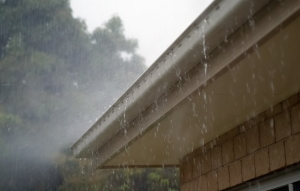
None of these are items that a typical home buyer will see, and a home inspector can often only guess at, but a Realtor should know that selling an older home is going to raise the odds that what can go wrong, will. It's enough to make agents desert older properties and concentrate on new homes, but that won't save them from litigation either. Mold infestations are also on the rise in new homes. New Homes Can Also Get Sick "New homes -- many no more than a year old are experiencing serious, life threatening mold problems," says Nancy Seats, president of Homeowners Against Deficient Dwellings. "Shoddy construction and defective products are contributing to this serious problem in the new homes of today. Families are suffering physically, emotionally, and financially." New home buyers are also at risk in other ways. Many choose to negotiate directly with the builder, leaving agents and attorneys out, but they do so at their own liability. According to a recent Dateline NBC report, Brian and Lorinda Couch bought a new home from Pulte, one of the largest home builders in America. Relying on the homebuilder's warranty, the Couches were shocked to find that shoddy workmanship ran throughout the home, and that many items weren't covered. They were aggrevated by dripping faucets, unwired appliances, uninsulated pipes that burst in 13 degree weather, and a doorway so poorly constructed it allowed rain to pour in, growing mold across the foyer. Now they've moved out of what is now an unhealthy home and are still making payments while they arbitrate the situation. A clause in their contract prohibits them from suing Pulte. Is hiring a Realtor the answer? Would the Couches have been so unlucky if they had hired a Realtor to represent them? Like many new home buyers, the Couches negotiated directly with the builder to save money. According to the report, "...so instead of getting an outside lawyer, they used one suggested by the company — it was cheaper. They saved a bit more money by not hiring an inspector — after all, a county inspector had just OK’d the home," said correspondent Lea Thompson. But a municipal inspection is not enough. "Many homebuyers feel that they do not need to employ a professional home inspector because municipal building inspectors regularly inspect new homes," says D'Ambrosia. "Home buyers need to understand that many building inspectors are seeing over 30 homes a day and are normally only inspecting to see that the builder meets the minimum code requirements. The building inspector is not looking at specific construction practices that tend to determine if a home is going to be a trouble-free investment or one that will require significant modification and repair in the future." Other new home owners are also experiencing problems. The problem is so great in Texas, that homeowners and home inspectors alike are backing a new bill before the Texas legislature. Presented by Senator Leticia Van De Putte of San Antonio, the Texas Homebuyer Protection Act, if passed, will be the nation's first "lemon law" for homes. Homebuyer John Cobarruvias was so upset with the worthless summary judgment that he got against his builder, that he formed a group called the HomeOwners for Better Building. He says homeowners are fed up with builders and their useless warranties. "This is the most protected industry in Texas right now," said Cobarruvias in a recent interview. "You can't touch these people. They are not licensed, not regulated, they have nothing on them and they are making a lot of money." Both the Couches and Cobarruvias lost a lot of money by not hiring a Realtor or a home inspector. Because a Realtor shares the liability with their customers and clients, a good Realtor would have insisted that the Couches get their own inspection. It wouldn't have prevented the problems in the home, but it might have opened other avenues of recourse. Advises D'Ambrosia, "Savvy homebuyers are having newly constructed homes inspected by a professional home inspector who solely represents the buyer during the construction process. The home inspector will inspect the property during several phases of construction and will accompany the buyer at the final walk through and delivery. The home inspector who is trained and experienced in detecting construction defects is inspecting the property for poor construction practices that could be nightmares in the future." But a good Realtor needs to also be able to protect his or her firm from liability by advising customers and clients to get their own air-quality and home inspections, and if they refuse, then having them sign a waiver that they were advised to do so and refused. Says attorney Bass, "There are people who are in the business of making a big deal out of mold." Published: June 5, 2001 Use of this article without permission is a violation of federal copyright laws. Related Articles:
|
Real Estate News Network
Today's Real Estate Outlook
Spotlight
Today's Headlines
|
|||||||||||||||||
| ||||||||||||||||||
|
for Agents
Readers' Choice
|
||||||||||||||||||