Real Estate News and Advice   
Get more leads every month with Market Leader! May 25, 2012

Search Realty Times
 

Exclusive Leads In Your Market


Need Product Help?

Customers -- Click for Live Support


Call: 214-353-6980


Get more leads every month with Market Leader!


Local Market Conditions

Share on Facebook       
Ask the HOA Expert

Question: Our board is considering replacing our cedar siding with vinyl. The reasons stated for doing this are the high costs of painting and maintaining the cedar as compared to the low cost of maintaining lifetime vinyl siding. Our buildings were built in 1985.

Get more leads every month with Market Leader!

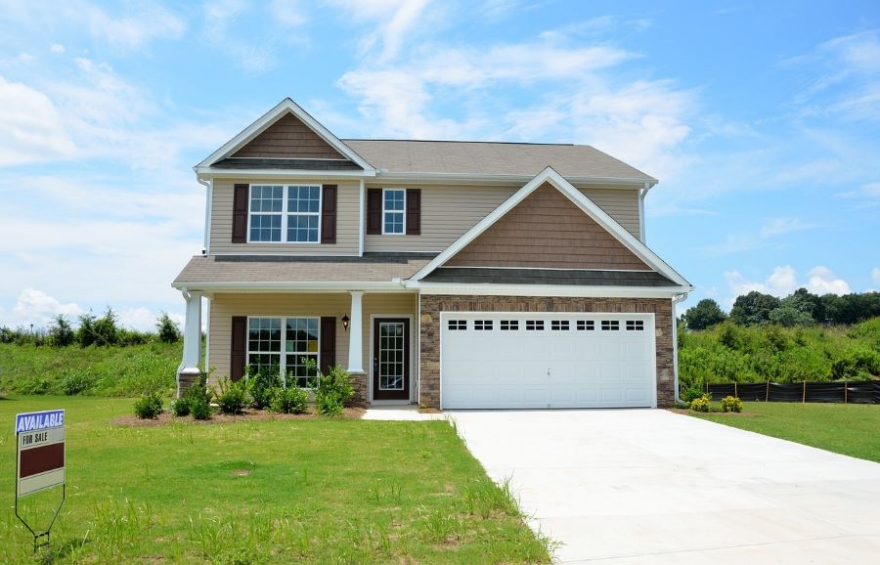
Answer: Unless there is a widespread installation or material defect, I highly recommend against replacing it. Properly installed and maintained cedar siding has a 50-75 year life. The cedar siding you have should last at least 25 more years.

Vinyl siding is often not what it is represented to be (lifetime, no maintenance). While vinyl can carry warranties (usually prorated) up to 50 years, experience shows significant failure within 15-25 years. It fades, cracks and warps and you’re stuck with the color for a very long time. Because of fading, replacing vinyl pieces inevitably creates a color mismatch. Vinyl siding is considered by many buyers to be a low-end product while cedar is considered high end. This means that buyers are willing to pay more for wood sided housing. Stick with cedar.

Question: We recently got a professional reserve study done. Our budget committee took the information and plugged it into a spreadsheet that will allow us to postpone the need for a professional study revision. The substitute study changes some of the assumptions, like reducing the recommended reserve contribution and the inflation rate. By doing this, we can lower our annual contributions significantly.

Our reserve study provider has recommended annual updates. What are the pros and cons of updating the reserve study? How would we update our substitute study and how long could we use it and still be confident that it was fairly accurate?

Answer: Artificially manipulating the reserve study numbers to reduce contributions for current members is a violation of the fiduciary duty the board has to all members, current and future. When it comes to paying for major repairs and replacements (the main purpose of a reserve study), there is no free lunch. Shorting reserves today will require making up the shortfall later, usually by special assessment. Special assessments are always unfair to some because they are being required to pay for something that should have been paid for by owners that sold and are long gone.

The other mistake frequently made with reserves is failing to fund each component fully. An example of full funding is a $10,000 component with a 10 year useful life should have $1000 per year reserved to be fully funded. Reserving less than $1000 a year will create a shortfall which must be made up later. But since reserves often include money for long life components like roofing, there is an illusion that there is more money than needed to pay for things in the short term. Boards that fall into the trap convince themselves that reducing reserves by a third, or a half, or two thirds is just as good as full funding. Huh? New math?

In fairness to all members, current and future, and to eliminate special assessments which are unfair to those that have to pay them, full funding of reserves is the only reasonable approach.

Annual updates are critical to keeping a reserve study accurate. The cost of an annual no site inspection update is usually nominal. A site inspection update is highly recommended at least every three years to verify the condition and useful lives of the components.

You should stay out of manipulating the reserve study yourselves. It has obviously been a self-serving exercise so far that is bound to result in a significant short fall. You paid for an objective and professional reserve study and you should follow the recommendations.

Question: We have a president who solicits co-owner involvement when the board is discussing business at a board meeting. Should co-owners be allowed to participate in board discussion as if they were a board member? Should a board meeting be conducted like a town hall meeting where everyone can speak? It is my contention that a board meeting is for the board to conduct its business without co-owner input.

Answer: Your interpretation is correct. Board meetings are designed for the directors to discuss and make decisions about HOA business. There are occasions when co-owner input is appropriate but not as a general rule. A member forum should be held prior to the start of the board meeting to allow input and questions. But once the board meeting is called to order, guests are there to listen, not participate. There are a number articles about meetings and how to run them that can be found at www.Regenesis.net in the Article Archive>Meetings section.

For more innovative homeowner association management strategies, subscribe to Regenesis.net.

Published: October 12, 2011

Use of this article without permission is a violation of federal copyright laws.


Order a Webcast About This Article Bookmark and Share

Richard Thompson owns Regenesis, a management consulting company that specializes in condominium and homeowner associations. He is a nationally recognized expert on HOA management issues.

Regenesis publishes The Regenesis Report, a monthly newsletter for HOA boards, developers and managers. To subscribe, go to Regenesis.net. He can be contacted by email at .


Connect with your Customers.


Real Estate News Network


Get more leads every month with Market Leader!

Mortgage Rates
30 Year Fixed: 3.83%
15 Year Fixed: 3.05%
1 Year Adj: 2.73%
(U.S. Weekly Averages)

Today's Headlines 10/12/2011


Spotlight

Get more leads every month with Market Leader!

LIBRARY


Agent Publicity | eNewsletter | Local Market Conditions | Video Newsletter | Article Index | Terms & Conditions | Privacy | Contact Us

Copyright © 2011 Realty Times®. All Rights Reserved.