Real Estate News and Advice
July 18, 2008
Exclusive Leads In Your Market


Search Realty Times


Study Online, but Never Alone


Expert Tools. First-hand knowledge.


The Only Listing Presentation That Proves To Sellers You Really Do Have Buyers!


NEED HELP?

Click for Live Support


Call: 214-353-6980


Payment Shocks In Interest-Only Hybrid ARMs Could Hurt Home Buyers

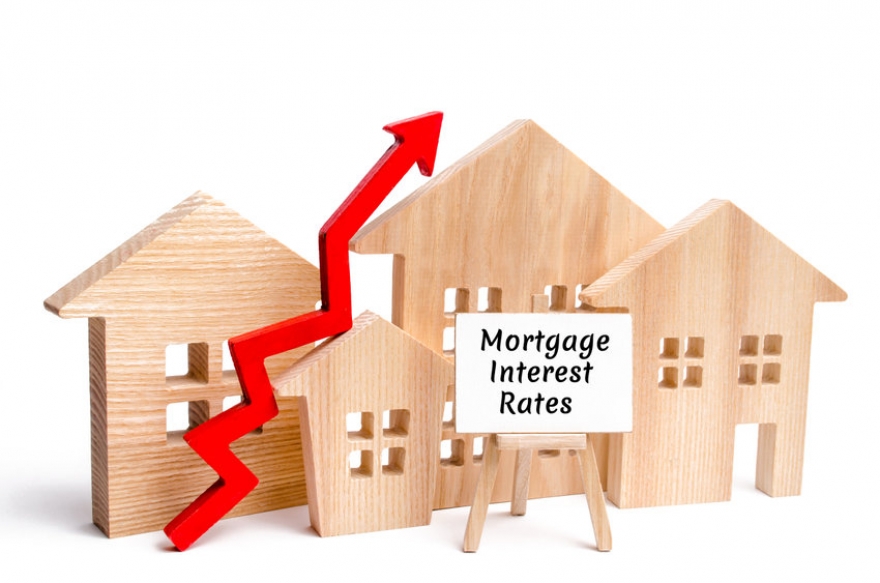
The Federal Reserve's rate hike last week -- likely the beginning of a series of upward moves -- has set off alarm bells about a popular home mortgage product: Short-term interest-only hybrid adjustables.

Get Your Free Summer SALES Kit  NOW!

The danger of hybrid ARMs with initial 36-month and 60-month interest-only periods, say mortgage industry critics, is that they expose unwary home buyers to potentially staggering payment shocks of 30 to 70 percent once the initial period is over.

Most short-term interest-only ARMs work like this: During the interest-only period, the payment rate is artificially low. Not only does the lender set the starting rate low to attract applicants, but there is no principal reduction during that time.

But after the 36 or 60 months are up, the fully-amortizing, market-rate one-year ARM carries substantially higher monthly costs. How much higher?

Consider this example. Say you're buying a home with a $333,700 hybrid interest-only ("IO") ARM. The lender sets the initial IO interest rate at 5.25 percent. Monthly interest-only payments come to $1,460.

In the 61st month, the loan converts to a one-year LIBOR-indexed (London Interbank Overnight Rate) ARM with a standard 2.25 percent margin. Principal reduction begins at this point and payments are keyed to a 25-year amortization schedule.

Even if market rates stay flat, your monthly mortgage payment will jump 30 percent -- $435 -- to $1,895 in the 61st month. But virtually nobody in real estate thinks today's near-historical low rates will remain flat in the years to come. Indeed the Federal Reserve itself appears determined to move them up notch by notch.

Now assume market rates rise by just 1.5 percent over the coming 60 months -- not at all an unlikely scenario. Your payment jump on the conversion date will be 50 percent -- a $730 rise to $2,190 a month.

A 3 percent rise in market rates would require a 72 percent payment jump at conversion.

The problem, say industry critics, is that many home buyers signing up for short-term hybrid "IO" loans -- especially those with 36-month initial periods -- do not seem to have strategies to deal with the guaranteed payment shocks facing them on the near horizon.

Philip X. Tirone, executive loan officer at First Capital Mortgage, Santa Monica, Calif., says "some of the (home buyers) I see are looking at nothing but that fixed (IO) payment period. They have no real idea what they are going to do after that" when the monthly payment spikes by 50 percent.

The riskiest users of hybrid Ioans, says Tirone, are "people who think they've got to get into the real estate market right now in order to make a lot of money in the next couple of years.

"It's scary," he said, because many of these buyers think double-digit real estate appreciation can only keep going. "They assume that at the end of three years, the property will be worth 30 or 40 percent more than today and they'll just sell it or (cash-out) refinance it and get rich."

Who are these home buyers? Tirone says that they are often moderate-income earners who often don't have a lot of cash on hand to make substantial downpayments, and who qualify for highly-leveraged home purchases solely because of the artificially low start rate on the IO ARM.

"If the market goes flat" -- or declines, as it did in southern California as recently as the early 1990s -- "these (buyers) are going to be in a lot of pain." Many will have to bail out of their properties or go to foreclosure, said Tirone.

Other mortgage market players share Tirone's concerns. For example, David Greco, chief credit officer for MGIC Investment Corp., the giant Milwaukee-based mortgage insurer, says that while short-term IO ARMs "can be a very useful tool" for well-informed borrowers, "they can pose a substantial risk to an unknowing, unprepared borrower."

The bottom line: If you or a client are planning to buy a home with a short-term IO loan, make sure you have a strategy to handle the big, guaranteed payment bumps ahead.

Published: July 5, 2004

Use of this article without permission is a violation of federal copyright laws.


Kenneth R. Harney writes an award-winning, nationally-syndicated column on housing and real estate from Washington, D.C. He is also managing director of the National Real Estate Development Center, a professional education company. He is a past member of the Federal Reserve Board's Consumer Advisory Council, a committee that by federal statute reviews all Fed actions on home mortgage, consmer credit and banking industry regulation.

He served as a member of the U.S. Department of Housing and Urban Development's Working Group on Computerized Loan Origination (CLO) systems, and is a member of the Editorial Board of the Fannie Mae Foundation's journal, Housing Policy Debate. He is the author of two books on mortgage finance and real estate.


Real Estate News Network

You must enable Javascript to view the Video content and Navigation on this site.


Mortgage Rates
30 Year Fixed: 6.26%
15 Year Fixed: 5.78%
1 Year Adj: 5.10%
(U.S. Weekly Averages)

Today's Headlines

Today's Insider REALTOR Secret


Learn the Art of the Short Sale


Agent Publicity | Market Conditions Interview | Local Market Conditions | Video Newsletter | Article Index | Terms & Conditions | Privacy | Contact Us

Copyright © 2004 Realty Times®. All Rights Reserved.