Real Estate News and Advice   
Free Daily Headlines E-mail from Realty Times March 11, 2010

Search Realty Times
 

Let Webcast City webcast your message.


NEED HELP?

Click for Live Support


Call: 214-353-6980


Ultimate Real Estate Success SuperConference


Homeowner Subsidies Top $100 Billion Yearly

American homeowners may not think that they constitute one of the federal government's largest spending programs, but a new study from Congress's Joint Committee on Taxation suggests that they are.

The bipartisan Joint Tax committee functions as the House and Senate's key repository of technical and legal advice on tax and budget-related issues. Its new study calculates the size of federal "tax expenditures" in various areas, from subsidies for scientific research to tax support for workers' pensions and medical insurance contributions.

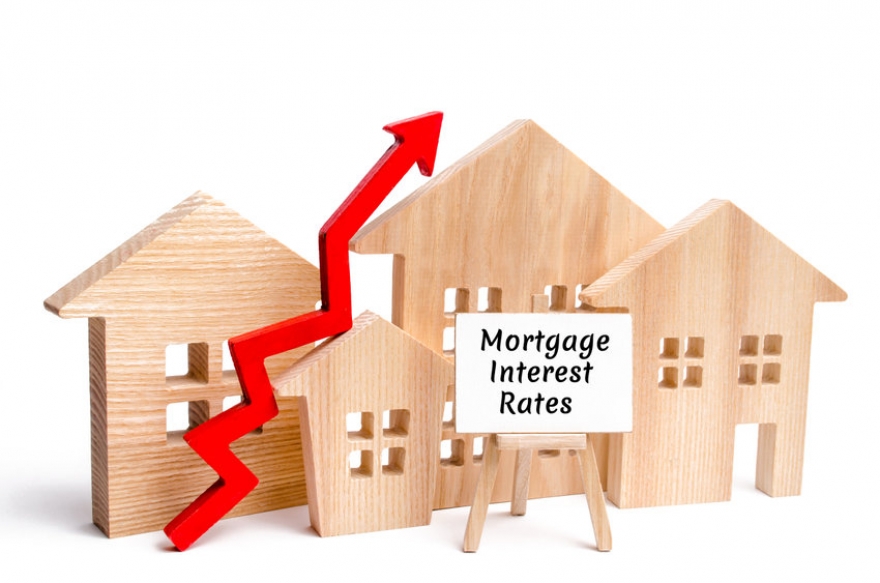
Homeownership-related tax breaks are among the very largest: An estimated $66 billion in fiscal 2002 alone for home mortgage interest write-offs. Another $21 billion goes for home property tax deductions. And $13.4 billion represents the "cost" to the budget for excluding capital gains on home sale profits.

The committee describes tax expenditures -- tax code breaks or benefits set aside for specific activities -- as "analogous to direct outlay programs" by federal agencies, such as the defense budget or appropriations to build federal highways. Tax expenditures "accomplish similar budget policy objectives" as direct spending by federal agencies, says the committee's report, Estimates of Federal Tax Expenditures for Fiscal 2001-2005.

Put another way: When Congress wants to do something, it can either set aside money in the annual budget for appropriations to accomplish the task, or it can create a tax subsidy that achieves the same thing. Most tax expenditure programs are like open checkbooks -- there are no limits on how much can be spent in any one year. It all depends on how many taxpayers qualify for the breaks.

In the case of homeownership, Congress long ago decided that it is a good thing for the country, and that it should be encouraged not through direct appropriations, but through the "back door" -- tax subsidies. Congress has steadily added subsidies that not only promote homeownership, but help make homeowners far richer on average than renters, who get virtually no subsidies.

The write-off for homeowner mortgage interest payments is by far the biggest subsidy, and is granted to homeowners paying interest on mortgage debt as high as $1.1 million in principal balance. The write-off for homeowner property tax payments to local governments is considered a tax-code "double-play": It allows local jurisdictions to fund public education and municipal services using taxes levied on property owners. By making such property taxes at least moderately more palatable, Congress helps fund essential local and state governmental services.

The capital gains exclusion for home sale profits may be the smallest of the three homeownership tax expenditures, but it has economic impacts far beyond its size. Under the code, home sellers can "exclude" up to $250,000 of gain ($500,000 for married joint-filers) on home sales provided they've owned and used the property as a principal residence for at least two of the preceding five years.

Unlike the mortgage interest and property tax deductions -- which are written off against taxpayers' marginal tax rates -- the capital gains exclusions are often large, lump-sum additions to home sellers' net wealth. Instead of paying tax on a $250,000 gain, for instance, the home seller gets to pocket the whole sum with no taxation at the federal or state level.

All three homeownership tax subsidies are projected by the committee to grow significantly in the years immediately ahead. For the five year period of fiscal 2001-2005, mortgage interest write-offs are expected to "cost" the federal government $346.3 billion in uncollected tax revenues. That is, homeowners would have paid that much in income taxes in the absence of the mortgage interest tax break over the five year period. Property tax deductions will rack up another $111.6 in tax expenditures on top of that, and capital gains exclusions will add $67.6 billion more, according to the committee.

The total price tag for the combined subsidies for homeowners over the five years: $525.5 billion -- over half a trillion dollars.


For more articles by Ken Harney, please press here.

Published: February 4, 2002

Use of this article without permission is a violation of federal copyright laws.


Bookmark and Share

Kenneth R. Harney writes an award-winning, nationally-syndicated column on housing and real estate from Washington, D.C. He is also managing director of the National Real Estate Development Center, a professional education company. He is a past member of the Federal Reserve Board's Consumer Advisory Council, a committee that by federal statute reviews all Fed actions on home mortgage, consumer credit and banking industry regulation.

He served as a member of the U.S. Department of Housing and Urban Development's Working Group on Computerized Loan Origination (CLO) systems, and is a member of the Editorial Board of the Fannie Mae Foundation's journal, Housing Policy Debate. He is the author of two books on mortgage finance and real estate.


Real Estate News Network


Today's Insider REALTOR Secret

Mortgage Rates
30 Year Fixed: 4.97%
15 Year Fixed: 4.33%
1 Year Adj: 4.27%
(U.S. Weekly Averages)

Today's Headlines 02/04/2002


Spotlight

Ultimate Real Estate Success SuperConference

LIBRARY


Agent Publicity | Market Conditions Interview | Local Market Conditions | Video Newsletter | Article Index | Terms & Conditions | Privacy | Contact Us

Copyright © 2002 Realty Times®. All Rights Reserved.