![]() Real Estate News and Advice |
| February 10, 2012 |
|
Need Product Help?
Local Guides
All Local Guides
Alabama Alaska Arizona Arkansas California Colorado Connecticut DC Delaware Florida Georgia Hawaii Idaho Illinois Indiana Iowa Kansas Kentucky Louisiana Maine Maryland Massachusetts Michigan Minnesota Mississippi Missouri Montana Nebraska Nevada New Hampshire New Jersey New Mexico New York North Carolina North Dakota Ohio Oklahoma Oregon Pennsylvania Rhode Island South Carolina South Dakota Tennessee Texas Utah Vermont Virginia Washington West Virginia Wisconsin Wyoming |
Low Rates Spawn 10-Year Mortgages
by Broderick Perkins
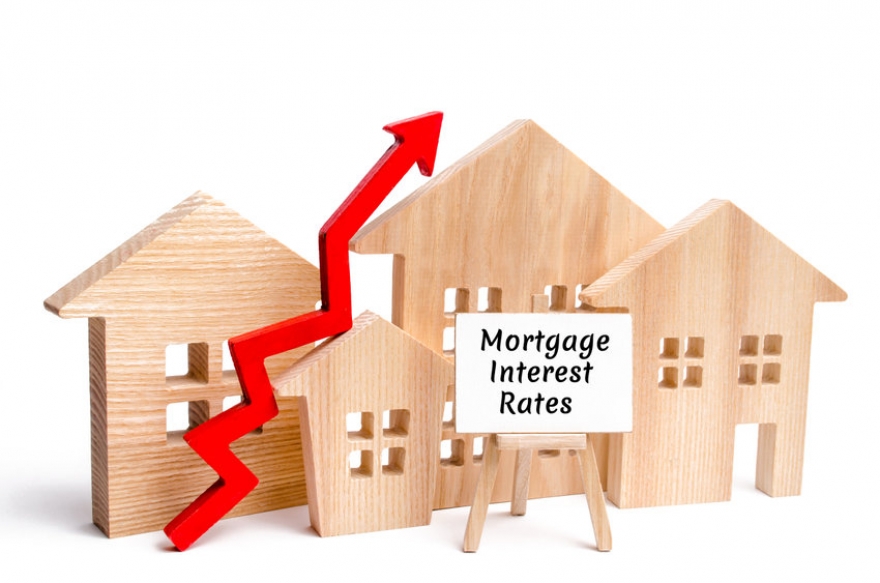
Low mortgage rates are prompting lenders to usher in 10-year mortgages aimed at borrowers who can handle monster monthly payments in exchange for super-sized savings in interest costs over the life of the loan. "This could actually be good for the consumer who has been paying for long time on an existing loan and doesn't want to start the clock over again (at 30 years). If, in 1980, you had a 30-year loan and are now refinancing, you might want a 10-year so that the loan is paid-off at about the same time of the existing loan," said Richard Calhoun, broker-owner of Creekside Realty in San Jose, CA. However, experts say 10-year loans aren't for most borrowers who should stick with the more flexible, longer term loan as a hedge against a soft economy. Borrowers with a short term loan who suddenly find themselves jobless, face mortgage payments nearly twice that of a longer term loan. "Typically, it's people who have a 15-year loan who are going to 10-year loans. It's a huge jump to go from 30 to 10," said Forrest Cambell with Monterey Bay Mortgage in Capitola, CA. Last week, mortgage advisor Roger Harrington of White Bear Township, MN looked at mortgage rates on no-cost loans and found that a 30-year mortgage for $200,000 at the fixed rate of 5.375 percent cost $1,120 a month in principle and interest. The same loan with a 10-year, 4.625-percent mortgage cost nearly double that per month -- $2,085.
*Monthly payment necessary to pay off loan in 10 years. The high monthly payment, however, demands ample income to stay within qualifying debt-to-income ratios to land the loan. And that larger income must be fairly well-established and somewhat safe from economic uncertainty, stalls or slips. "That's the big question. Not many can afford it unless they are currently going from a 15 year amortization to a 10 year amortization," said Cambell. Using Harrington's rates, a $500,000 mortgage (not uncommon in many high cost areas) cost $5,212 a month with a 10-year mortgage, but only $2,800 a month for a 30-year mortgage. And there's another matter. "What about the opportunity cost of the higher payments? Especially if you're not able to fund tax-deductible retirement accounts," because all your disposable income is tied up in the mortgage payment,," asks Eric Tyson, a New England personal finance counselor and author of "Dummies" guides to investments, personal finance, buying and selling homes and mortgages. It might be a better idea to retain the 30-year mortgage and use the monthly payment difference (nearly $1,000 a month on the $200,000 loan or $2,400 on the $500,000 loan) in an investment with a greater total return. "If you are lucky enough that a negative financial change in jobs, health, finances, marriage or any thing else would not cause you to bemoan the larger payment, a 10-year loan is an option, but it should still only be used if it is the best use of money potentially available for investments," said Harrington. Those interest savings over the life of the loan? Here's the rub. Reducing the amount of mortgage interest you typically pay with a 30-year mortgage may not leave you with enough to meet the minimum dollar amount in deductions necessary to qualify for itemized deductions on both federal and state tax returns. "If you are a lousy investor, you may very well be better off with the 10. If you can achieve a 10 percent capital gains return with the difference, you would be far better off with the 30 and the flexibility it offers," said Harrington. By keeping the longer term loan, you'll retain flexibility to make prepayments at a 10-year rate whenever possible, pay the longer term's set monthly rate when cash is short or invest the difference. The rate on the 30-year loan is higher than the 10-year rate and you may not always be able to stick to a self-imposed larger mortgage prepayment regimen, but again, you'll have some financial breathing room. Still, says Tyson. The 10-year loan is a welcomed option in the mortgage market. "The product makes a lot of sense. Why should we have just 15 and 30 year mortgages anyway? Now is a great time to introduce such loans with rates so low," he said. Published: June 12, 2003 Use of this article without permission is a violation of federal copyright laws. Related Articles:
|
Real Estate News Network
Today's Real Estate Outlook
Mortgage Rates
30 Year Fixed: 3.87% 15 Year Fixed: 3.16% 1 Year Adj: 2.78% (U.S. Weekly Averages) Today's Headlines 06/12/2003
Spotlight
|
||||||||||||||||||||||||||||||||||||
| ||||||||||||||||||||||||||||||||||||||
|
for Agents
Readers' Choice
Our most popular recent articles
|
||||||||||||||||||||||||||||||||||||||