Real Estate News and Advice
November 11, 2009
Let Webcast City webcast your message.
Today's Insider REALTOR Secret


Search Realty Times


NEED HELP?

Click for Live Support


Call: 214-353-6980


Ultimate Real Estate Success SuperConference


How To Appreciate And Sell The Ranch-style Home

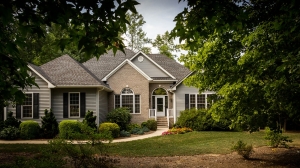
Homes built in the mid-century, late 1940s through the sixties, are among the largest number of resale homes available in the country. In fact, between 1948 and 1968 about 75 percent of the homes built in the U.S. were ranch-style, low-slung, horizontal-lined single-story or split-level homes. Today, homes built in the 1950s and 1970s constitute the largest inventory of resale homes available by age, according to the U.S. Census.

Designed for economy and functionality, ranch-style homes were mass-produced to serve new families that formed after World War II. The Jet Age introduced a new devil-may-care casualness and love of frontier to families, who reveled in the modernity of sliding glass doors overlooking play yards, the sleekness of wall-to-wall carpet (even if they covered hardwoods) and the practicality of Formica countertops with Jetson-era geometric and starburst patterns.

But ranch-style homes had their downsides. Very little front ornamentation, as a nod to efficiency, gives these homes less character than their traditional Tudor or Cape Cod counterparts, and their sheer numbers make them seem less-than-special, especially those built for the working and middle classes by mass-production builders and developers like Levitt, Fox & Jacobs and Eichler.

By the greed-is-good 80s, the modest family-style ranch home was out of vogue, and the McMansion was born. As homes were built further from city cores, developers began to crowd two-story homes onto smaller lots. Imposing facades and shared community amenities became more important to homebuyers than backyard family barbecues.

Today, as homebuyers rebel against long commutes and rediscover their inner cities, they are encountering large numbers of ranch style homes for sale. How attractive those homes are depends a lot on local culture, including how local Realtors appreciate and present ranch homes for sale. If the local Realtor culture treats these homes as architectural treasures, sellers and homebuyers will, too.

The key to making ranch homes work for today's buyer is understanding their historical significance and how applicable these homes are to modern homebuyer's needs.

Dallas historical home expert and Realtor Ken Lampton explains, "I think World War II was such a disruptive influence on American society that everyone felt we had entered a whole new era, and we needed new houses for a new lifestyle. The idea of a house as a "machine for living" had been a key tenet of avant-garde European architects in the 1930s, but it didn't catch on with middle-class Americans until after the war. The ordinary suburban homes that were built in 1948 thru 1954 were so stripped of historical references that it is clear Americans were ready for something new."

Lampton continues, "What made them so eager to embrace "modernistic" design in the fine arts, in decorative arts, and in the architecture of their own private homes? It was this. We had won the war by building the best "machines for fighting" and now we wanted to win the peace by building the best "machines for living". The design of a modern armored tank or an up-to-the-minute jet fighter plane was determined by a rational and unsentimental consideration of the function of that machine. Suddenly it seemed logical that every aspect of a home should be designed in the same rational and unsentimental manner.

"Remember all the talk about the jet age during the late-1940s and early 1950s? The homes built during that time were truly jet-age homes. The military jet airplanes of 1948 through 1954 had a very stark appearance, a whole new design esthetic which abandoned the shapes, proportions, and functional elements that were part of the design esthetic of the propeller-driven airplanes used at the start of World War II. We can think of these shapes and proportions and functional elements as being "historical" in the same sense that an Early American house from 1942 or a Tudor-style cottage from 1926 incorporates "historical" proportions and decorative motifs in order to establish its identity in our minds. You don't put a propeller on a 1950 jet airplane just because airplanes had propellers back in 1930. And you don't put a high-pitched roof and a dormer on a 1950 home just because homes had high-pitched roofs and dormers back in 1650," he instructs.

"Just as automobiles became longer and lower by the early 1950s," says Lampton, "it seemed logical that houses should become "longer" (that is, wider) and "lower" as well. The most obvious way to widen the house was to rotate the old floorplans by 90 degrees. Middle class homes in the 1920s were essentially two rooms wide by three or four rooms deep. But middle class homes in the early 1950s were three or four rooms wide by two rooms deep. The bedrooms tended to be grouped on one side of the house, while the living room, kitchen, and dining facilities were grouped at the other. (This was thought to be very "rational" because it allowed all those new 1950s baby-boom infants to sleep in peace and quiet while mother was busy using her noisy new vacuum cleaner in the living room.)"

The genesis, say housing historians of the ranch style was the Prairie home designed by Frank Lloyd Wright. Using low horizontal lines and open interior spaces, Wright revolutionized the American home at the turn of the century - the 20th century, that is.

Other influences include the Spanish eclectic, which uses stucco and Mediterranean design elements to differ the design from the Western ranch home.

While California builder Cliff May is known as the father of "ranch-style," it is probably Joe Eichler who is most responsible for popularizing the ranch lifestyle and sending it across the country. Eichler was a "merchant builder," who was among the first to hire nationally known architects to design and build housing for the middle class in large numbers.

But it was the automobile that really kicked the design in gear - ranch-style homes were often built with attached garages.

Who's buying ranch homes now?

Boomers and seniors are returning to the ranch-style home. According to Del Webb, they prefer the convenience of one-story living, but the rambling ranch is also well suited to young families who want large play yards for kids, communal gathering areas, and privacy for sleeping.

Dual-income parents are finding the ranch home is family-friendly. In fact, home design is retro, with an emphasis on machines (flat-panel TVs, computers) and family-gathering places like dens, just as it did in the 1950s.

To maximize the ranch home's appeal to modern buyers, look under old faded carpets for hardwoods that can be exposed and redone, or added. Replace rickety sliding glass doors with French doors which allow in as much light. Strip and refinish wood paneling, beamed ceilings and crown molding in lighter shades. Most ranches have no interior load-bearing walls, so walls can easily be moved or eliminated for better flow. L-shaped ranches lend themselves well to additions. Replace small master baths with cedar closets and add-on a master bath with walk-in closets and a sitting room with French doors to the yard.

In addition, new ideas in home design flatter the ranch-style home with lots of light and horizontal lines, which ranch style homes already have. Kathy Adcock-Smith, ASID says, "Our lives are enriched by materials that bring light into formerly dark areas," she says, "I call it 'seeing beyond.'"

"For instance, in my mid-century home, in a set of louvered doors that separated the laundry from the kitchen, I replaced the louvers with sandblasted acrylic. The laundry now shares light from the kitchen, and when we entertain, the light in the laundry room has a pretty effect, and we are aware of an area beyond the closed door. The idea that the space continues adds to how large a space is perceived."

She notes, "The horizontal shape has become even stronger recently - take a spin through your local audio/video store and see the TVs. The furniture for these shapes means the wall loaded with a fireplace and TV has to be carefully designed. What looks weird is a traditional square-ish fireplace opening with the elongated TV face. Clearly this will evolve into separating the two on different walls or working a more streamlined look for the fireplace. The shapes of these TVs are proportionate to the older homes, and we can expect more redesign of cabinetry to accommodate this look."

Says Lampton, "To me, the most fascinating thing about houses is the stories they tell about the economics, social changes, and design esthetic of the era in which they are built."

That's also the key to selling houses of any era.

Your enthusiasm as a Realtor is infectious.

Published: July 14, 2004

Use of this article without permission is a violation of federal copyright laws.


Blanche is a renowned author of five real estate books. Her newest, Bubbles, Booms and Busts: Make Money In Any Real Estate Market, McGraw-Hill, was rave-reviewed by The New York Times. She was also selected from hundreds of real estate experts to contribute to Donald Trump's book, Trump: The Best Real Estate Advice I Ever Received: 100 Top Experts Share Their Strategies, Rutledge Hill Press, and is featured on page 68.


Order Now
Review - Honors

In 2006, Blanche was selected among scores of candidates to author two consumer real estate guidebooks for the National Association of Realtors: The NAR Guide to Home Buying, and The NAR Guide to Home Selling, Wiley & Sons. She is currently planning two new books for the NAR and its members.


Known for her keen insight into real estate industry issues and for her ability to make complex subjects easy to understand, Blanche is a sought-after keynote and continuing education speaker. Real estate organizations from MLSs, to brokerages, to franchisors, to associations hire her to provide up-to-the-minute analysis of real estate industry news and advice on how to improve revenues. Her passionate delivery, peppered with stinging wit, is a huge hit with audiences and fans.


Don Klein, CEO Greater Nashville Association of Realtors, Blanche Evans, Richard Courtney, president 2007, GRAR

"The GNAR membership meeting last week featured Blanche Evans as the keynote speaker. Her comments and insights resonated extremely well with those in attendance and we have had many requests for copies of her PowerPoint Presentation. She was a terrific part of the membership meeting and convention program!" - Don Klein, CEO Greater Nashville Association of Realtors

Coverage from WSMV, Nashville - 8-14-2007

That Interview Guy - Get Inside The Head Of Today's Generation
2007 AE Institute Session - To purchase
2006 AE Institute Session - Parts 1 2 3 4 5 6 7 8 9
HouseValues Mastermind call - Parts 1 2

Blanche's fireside chat with Jeremy Conaway, HAR - Click here.

For more articles by Blanche, click here.


Real Estate News Network

You must enable Javascript to view the Video content and Navigation on this site.


Spotlight

Ultimate Real Estate Success SuperConference

Today's Headlines


Agent Publicity | Market Conditions Interview | Local Market Conditions | Video Newsletter | Article Index | Terms & Conditions | Privacy | Contact Us

Copyright © 2004 Realty Times®. All Rights Reserved.