Real Estate News and Advice
July 9, 2008
Study Online, but Never Alone View Local Market Conditions. Today's Insider REALTOR Secret


Search Realty Times


Expert Tools. First-hand knowledge.


Learn the Art of the Short Sale


The Only Listing Presentation That Proves To Sellers You Really Do Have Buyers!


NEED HELP?

Click for Live Support


Call: 214-353-6980


Homeowners Fleeing Grasp Of ARMs

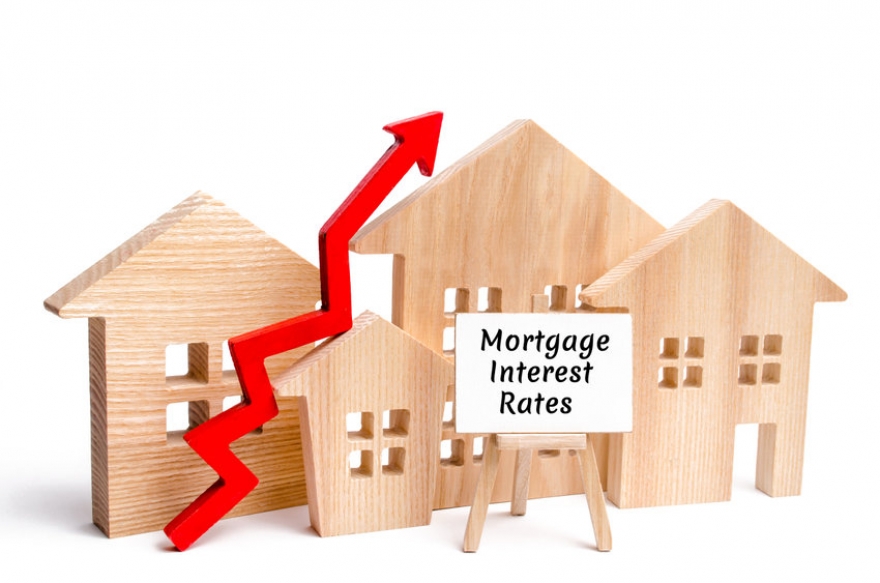
With interest rates as high as they've been in 10 months, homeowners are refinancing in droves to fixed rate mortgages.

Get Your Free Summer SALES Kit  NOW!

That could be a smart and timely move for those who can qualify for the switch.

Even a higher rate on a fixed rate mortgage (FRM) now could be a better deal than holding onto an adjustable rate mortgage (ARM) in the process of upward interest rate adjustments.

It's a lot easier to budget for a mortgage payment based on a stable fixed rate rather than scramble every six months or so to keep up with payment adjustments on an ARM.

"The good news is that despite problems in the subprime mortgage market, the sky isn't falling. In fact, consumers have more options than ever to get into a good mortgage and out of a bad one," said Philadelphia, PA-based University of Pennsylvania Wharton School of Business real estate professor Susan Wachter, who publishes the "U.S. Mortgage Payment Index".

Freddie Mac reported the average fixed interest rate for a 30-year conforming loan went to 6.53 percent by June 7, the highest this year and up from this year's low of 6.14 percent set back in March. The difference adds about $100 a month to every $400,000 borrowed.

The current rate is as high as it's been since August 2006, when rates were at 6.55 percent and, at the time, falling from last year's high of 6.79 percent set back July.

Last week, rising bond yields included the 10-year Treasury note's yield rising to a five-year high of 5.295 percent, exacerbating current concerns about higher mortgage interest rates. Mortgage rates are tied to the note.

Even without the rise in fixed rates, ARMs have been adjusting to unaffordable levels for many in the past year and longer.

RealtyTrac reported this week foreclosure filings -- default notices, auction sale notices and bank repossessions -- were up 19 percent in May from the previous month and a whopping 90 percent from a year ago nationwide.

Adjusting interest rates, the fear of foreclosure and other concerns prompted 89 percent of refinancing homeowners with a 1-year ARM to switch to a fixed-rate mortgage during the first quarter this year, according to Freddie Mac.

A one-year ARM is fixed for the first year and then adjusts periodically, typically every year, but it could adjust more often. How often the rate adjusts, as well as the amount of the adjustment depends upon the terms of the loan.

Freddie Mac also said 84 percent of homeowners with a Hybrid ARM switched to a FRM. Hybrids stay fixed longer, three, five, seven or 10 years and then begin to adjust.

"The shift is an indication that investor's appetite for risk has diminished. The allure of the 'NINJA' loan products (no income, no job, no assets) has run its course as they are no longer producing the kinds of returns they previously had," said Ted Faravelli, a San Jose, CA-based expert witness, forensic real estate analyst and managing director for the California Association of Real Estate Appraisers.

Wachter said another smart move is the use of piggyback loans dropping from an estimated 54 percent of the market during the first quarter of 2006 to 41 percent this year.

Piggy-back loan packages include a first and a second mortgage, with the second typically written to provide for a down payment of up to 20 percent of the loan balance. The financing technique was used to avoid paying mortgage insurance, which is typically required on mortgages written with less than 20 percent down.

"Low down payment buyers are leaning towards mortgage insurance to avoid the need for a second loan, as evidenced by the increase in the use of private mortgage insurance (PMI), which is now tax deductible," Wachter said.

Wachter says new mortgage insurance written in the first quarter of 2007 was up 16.5 percent from a year ago.

Private mortgage insurance is tax deductible for some, but only for 2007 originations, unless Congress extends the provision. The premium is 100 percent deductible, but only to households with adjusted gross incomes of $100,000 or less. The deductibility decreases by ten percent for every $1,000 in annual income that exceeds $100,000. Households with incomes greater than $109,000 cannot deduct the insurance.

With or without deductibility, federal law mandates that lenders must automatically cancel PMI when a homeowner pays down the mortgage to 78 percent of the original purchase price. Other provisions allow homeowners to appeal to the lender to cancel the insurance at the 80 percent level. ARM adjustments don't go away until the rate hits a ceiling or unless the mortgage is refinanced to a fixed rate.

Other rules apply to federal mortgage insurance, which often remains for the duration of the loan.

"While it's not all doom and gloom, there are still a number of people with bad credit stuck in expensive subprime or risky exotic and piggyback mortgages, which could result in dramatically rising payments at best and foreclosure at worst," Wachter said.

Wachter proposes a three-step solution for those stuck with a mortgage that's beginning to squeeze.

  • Try to raise your credit score above 620, the traditional cut-off point for prime versus subprime. The higher the better.

    Certified financial planner Rick Salmeron, of the Salmeron Financial Network, in Dallas, TX, says that means paying all debts on time, not maxing out your credit cards, having a small mix of credit (bank and retail credit card, installment loan, auto loan), rather than a wallet full of credit cards and keeping tabs on your credit report.

    "Somebody else's information could be mixed in with your report, either through a credit bureau mistake or because of identity theft. Furthermore, you can identify old credit card accounts that you opened long ago and never closed out. Close these accounts out, since you don't plan to use them again. A creditor doesn't want to see many open and available credit cards ready to be used," Salmeron said.

  • Consider refinancing into a fixed rate prime mortgage, which will eliminate rising payments.

  • Finally, don't sit still if times get tough. Lenders offer workout programs to make sure that foreclosure is a last resort.

    "The bottom line is that the mortgage market is self-correcting -- consumers are turning away from exotic loans and towards more secure options," Wachter said.

    "For those who remain stuck with rising payments, the time to get out is now."

  • Published: June 14, 2007

    Use of this article without permission is a violation of federal copyright laws.


    Broderick Perkins parlayed a career in old-school journalism into a contemporary digital news service that really hits home.

    The award-winning consumer journalist, originally from Wilmington, DE, is founder, publisher and executive editor of the bootstrap DeadlineNews Group, a Silicon Valley-based editorial content and consulting service specializing in residential real estate, consumer news and related editorial consulting services.

    The DeadlineNews Group includes the website, DeadlineNews.com, offering real estate editorial content and consulting services, and its back shop, the Deadline Newsroom, an open house on news that really hits home.

    Perkins obtained his formal journalism education from University of Delaware and a journalism boot camp, the Institute of Journalism Education at the University of California-Berkeley. He went on to 20 years of service as a daily newspaper journalist at the Wilmington, DE News Journal and San Jose, CA Mercury News.

    Perkins covered housing on the San Jose Mercury News reporting team which earned a General News Reporting Pulitzer Prize in 1989 for coverage of the Loma Prieta earthquake.

    He has also produced real estate, consumer and small business content for the Wall Street Journal, Los Angeles Times, RealtyTimes.com, Nolo.com, Better Homes and Gardens, the National Association of Realtors, Homestore/Move and Intuit/Quicken among more than three dozen publications.

    In addition to managing the DeadlineNews Group, Perkins most recently served as chief editorial consultant for Nolo's Essential Guide To Buying Your First Home, Nolo, and writes real estate television scripts for RealtyTimes.com.


    Real Estate News Network

    You must enable Javascript to view the Video content and Navigation on this site.


    Mortgage Rates
    30 Year Fixed: 6.35%
    15 Year Fixed: 5.92%
    1 Year Adj: 5.17%
    (U.S. Weekly Averages)

    Today's Headlines


    Exclusive Leads In Your Market


    Agent Publicity | Market Conditions Interview | Local Market Conditions | Video Newsletter | Article Index | Terms & Conditions | Privacy | Contact Us

    Copyright © 2007 Realty Times®. All Rights Reserved.