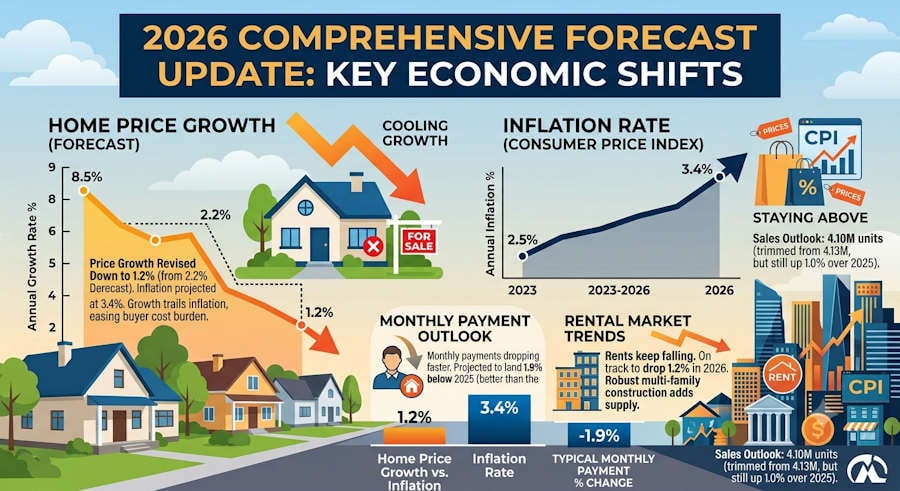
Real estate trends moving into 2026 reflect a market shaped by adjustment rather than acceleration. After several years of volatility, buyers and sellers are entering a phase defined by recalibration, localized performance, and more deliberate decision-making. Economic conditions, affordability constraints, and lifestyle-driven priorities are influencing how transactions unfold, with greater emphasis on preparation and realistic expectations.
As these real estate trends continue to evolve, many buyers and sellers seek guidance from a professional real estate agent in the area to better understand how broader market forces translate into neighbourhood-level outcomes. Local insight has become increasingly valuable as national headlines no longer reflect on-the-ground realities in every region.
Looking ahead, real estate trends in 2026 are expected to reward those who plan early, assess risk carefully, and remain flexible. Buyers and sellers who work with a professional real estate agent can gain clearer visibility into local market shifts, allowing them to make informed decisions grounded in data.
Key Market Forces Shaping Real Estate Trends in 2026
Several foundational forces are expected to shape real estate trends throughout 2026. While national economic conditions set the tone, outcomes are increasingly driven by how these forces interact at the local level. Buyers and sellers who understand these drivers are better equipped to anticipate market behaviour and adjust their strategies accordingly.
Interest Rate Movement and Financing Access
Interest rates remain one of the most influential variables affecting buyer behaviour and overall market activity. While dramatic swings have eased, borrowing costs continue to impact affordability and purchasing power.
Key implications include:
• Buyers who are qualifying for smaller loan amounts compared to earlier cycles
• Greater importance is placed on early mortgage preparation
• Sellers who are adjusting pricing strategies to reflect buyer constraints
These dynamics underscore the importance of buyer and seller preparation, primarily when financing timelines affect transaction success.
Inventory Levels and New Construction Activity
Housing supply remains uneven across North America, contributing to localized imbalances. Some markets are seeing modest inventory growth, while others continue to face shortages due to limited new construction.
Current inventory trends reflect:
• Slower development in high-cost urban areas
• Increased focus on multi-unit housing
• Regional disparities driven by zoning and labour constraints
• Gradual normalization in select suburban markets
Understanding inventory conditions is essential for interpreting local market shifts and setting appropriate expectations.
Affordability Pressures and Pricing Sensitivity
Affordability continues to shape how buyers approach the market in 2026. Even higher-income households are exercising caution, leading to more deliberate purchasing behaviour.
Observed effects comprise:
• Increased scrutiny of price-to-value alignment
• Longer decision timelines
• Greater willingness to compromise on non-essential features
Real estate trends suggest that affordability pressures are influencing both pricing strategy and buyer confidence across many regions.
Lifestyle and Demographic Shifts Influencing Demand
 Image: Canva
Beyond economic drivers, lifestyle changes continue to reshape demand patterns across property types and regions. These shifts are redefining what buyers prioritize and where they choose to live.
Remote work remains a structural influence. Home buyers also increasingly value flexibility, space efficiency, and livability over proximity to traditional employment centers. Migration patterns further amplify these effects, as households relocate for quality of life, cost considerations, or access to amenities.
These changes underscore the growing importance of understanding buyer motivations at a local level, particularly as demand becomes more segmented.
Buyer and Seller Preparation in a Changing Market
 Image: Canva
As real estate trends evolve, preparation has become a defining factor in transaction outcomes. Buyers and sellers who enter the market with clear strategies are better positioned to navigate uncertainty and respond to shifting conditions.
Buyer Readiness and Strategic Planning
Buyers in 2026 benefit from approaching the market with structure. Competitive conditions still exist, but success increasingly depends on preparedness.
Adequate buyer preparation involves:
• Proactively securing financing approval
• Understanding neighbourhood-specific pricing trends
• Accounting for long-term ownership costs
• Evaluating resale potential alongside lifestyle fit
Seller Positioning and Pricing Discipline
Sellers face a more discerning buyer pool in 2026. Properties that are priced or presented inaccurately are less likely to generate momentum.
Successful seller preparation covers:
• Pricing based on recent comparable sales
• Addressing visible maintenance issues
• Aligning listing strategy with current demand
• Responding to market feedback promptly
Accurate positioning reduces the risk of prolonged market time and price adjustments.
Interpreting Local Supply and Demand Signals
National real estate trends provide context, but local indicators drive outcomes. Buyers and sellers benefit from monitoring neighbourhood-level data.
Key signals are:
• Days on market trends
• Absorption rates
• List-to-sale price ratios
A professional real estate agent can help translate these indicators into practical guidance tailored to local market shifts.
Staying Competitive in 2026
In a more balanced market environment, competitiveness in 2026 is driven by strategy. Buyers and sellers who succeed tend to rely on clear information, realistic timing, and adaptability rather than aggressive positioning. Buyers benefit from entering the market with financing prepared, a strong understanding of local pricing, and defined priorities that align with long-term goals. Sellers must recognize that buyers are more analytical and less willing to overlook pricing misalignment or condition issues, making accurate positioning essential from the outset.
Research shows that homes priced correctly relative to comparable sales tend to sell faster and avoid repeated price reductions, as properties lingering on the market are often perceived as overpriced by buyers. This reinforces the importance of preparation, pricing discipline, and market awareness for all participants.
In 2026, competitive advantage is increasingly shaped by how well buyers and sellers understand current real estate trends and respond to local market shifts with informed, measured decisions.
Navigating 2026 With Informed Market Insight
Real estate trends in 2026 point toward a market shaped by balance, selectivity, and localized performance. Buyers and sellers are no longer operating in an environment dominated by urgency or speculation, but one where preparation and realistic expectations play a central role. Understanding how interest rates, affordability, inventory, and lifestyle shifts intersect is essential for navigating the year ahead.
Buyer and seller preparation has emerged as a key differentiator. Buyers who align financing readiness with lifestyle priorities and long-term goals are better positioned to act decisively. Sellers who price accurately and respond to current demand patterns tend to experience more predictable outcomes. Thus, both benefit from interpreting real estate trends through the lens of local market shifts.
With guidance and support from a professional real estate agent in the area, buyers and sellers gain a more profound understanding of local conditions, adjust expectations responsibly, and make informed decisions that align with immediate needs and long-term objectives.