You’ve learned the lesson first hand: Real estate is a tough, competitive industry. As a real estate professional, you’re always looking to demonstrate your value to clients and to deliver the results they want. But it’s not always easy — not in a market filled with brokers and agents all vying for the same customers.
You need to find a way to stand out from the crowd. The best way to do that? Help your clients’ homes stand out from the crowd, too, by creating powerful advertising to make lasting impressions.
Results: The Only Thing Your Clients Care About
When prospective clients search for representation, they aren’t necessarily interested in your experience, your comprehensive marketing plan, or your knowledge of the local market.
They only care about results. How fast can you sell my home? And can you maximize its value?
How do you get results for modern residential and commercial property sellers? It’s all about making an outstanding first impression. And, in today’s world, your opportunity to make a lasting first impression will most likely to come via the Internet.
According to the National Association of Realtors, 44% of residential homebuyers first discovered their future home online.Compare that to the 33% who first found their home through a real estate agent. A well executed web listing is incredibly important when making a first impression. Which leads to the question: How do you write an effective real estate advertisement?
Make the Words Matter
Writing isn’t always easy. Are you intimidated by the blank page? Don’t know where to start? Here’s what to focus on when creating a real estate ad that sells:
· Headline: Depending on where you place your listing, the headline may be your only chance to capture attention. Make sure the headline is interesting and different than the basic snoozers everyone else it putting out there. It’s easy (and lazy) to settle for description alone. If you have a three-bedroom, two-bath for sale on Main Street in Springfield, you could very easily throw up a headline that says: “3-bed, 2-bath for sale on Main Street in Springfield” and call it a day. However, it’s far more attention-capturing to say: “See it Before it’s Gone: Beautiful Brownstone — Walking Distance to Bustling Brewers Hill.”
· Lifestyle: Use the narrative description to make the home and its surrounding area come alive. Make sure your buyers know exactly what kind of lifestyle they can have if they snag this house. Don’t just start listing details; Rather, embed them into the story of the house. Don’t just say the elementary school is close; Highlight that an award-winning elementary school is just a few minutes’ walk down lightly trafficked, tree-lined streets. Don’t just say that the house is 2,000 square feet; Say that the home boasts an expansive open floor plan with two living areas — perfect for entertaining. Don’t just say that the backyard is fenced; Say that the shaded outdoor space is a private space — providing a safe, enclosed setting for children and pets.
· Call to action: Make it easy for your prospects to take the next step. Fully customized premium single property websites are available for the listing that deserves more than one page. Use a service that offers single property galleries (virtual tours) to showcase your listings. These tours should include a contact form that’s simple and easy to use.
· Differentiation: New Realtors tend to make one very common mistake: They look at what’s out there and try to match the style of competing listings. This feels safe, right? But the last thing you want to do is blend into the crowd. Figure out what makes your property different (and better for that matter), and then emphasize those differences as you create a listing that makes buyers pause and want to learn more.

Quality Real Estate Photos and Video Are Imperative
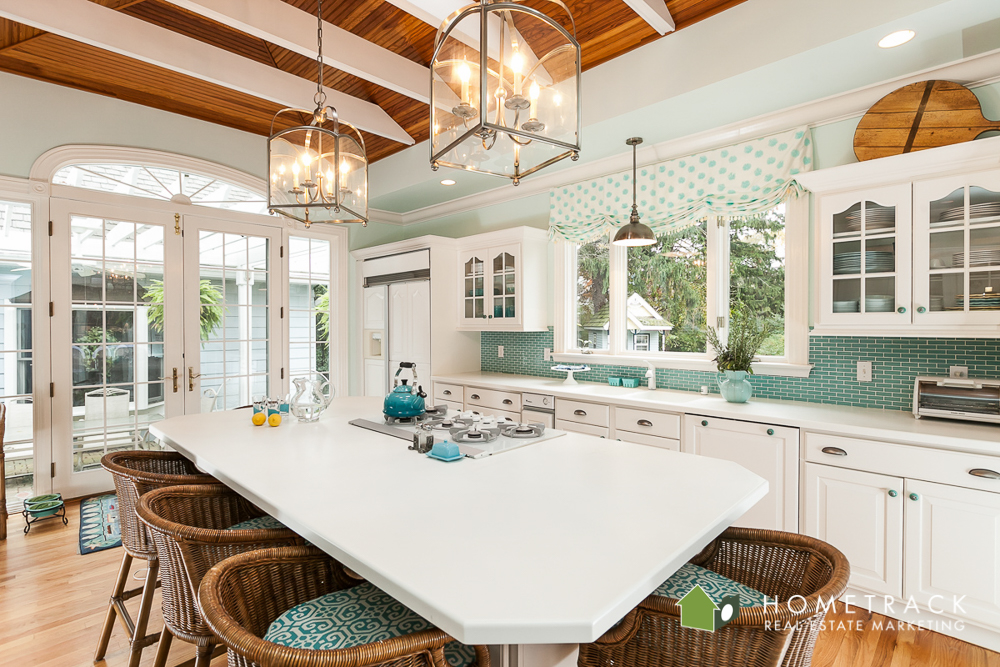
Words matter, but so does your visual marketing. You want to create a sense of the lifestyle to entice buyers — and reinforce that lifestyle through impactful images and video. Think an investment in good real estate photography doesn’t pay off? Think again.
In 2015 REAL Trends found that 75% of agents and 73% of brokers see quality photographs vital to listings that sell. These real estate professionals overwhelming view an investment in quality photography as one that provides a strong return on investment.
In 2015 Redfin found that listing photos taken with high-quality cameras (DSLRs, for example) led to faster sales and higher sales prices. This same study found that 92 percent of buyers search online for their new homes — meaning online photos and video features can make a huge difference.
The verdict is in: quality real estate photography can help you sell more listings, accelerate sales, and provide a higher ROI.
A quality real estate photographer can deliver a suite of visual tools that will make your listing stand out in a crowded marketplace. These real estate marketing tools can make your listing exponentially more attractive to prospects, which helps broaden the pool of potential buyers for your home. No photos or poor quality photos can immediately disqualify your listing as a prospect. Invest in a professional real estate photographer, and give your listing the best possible chance to secure the maximum sale price.
This careful approach will help you hire the best among professional real estate marketing photographers.
Published by HomeTrack Real Estate Marketing | Author: Sydny Atwood | www.hometrack.net | Copyright April 2017