Look:
You stink at bookkeeping.
As an entrepreneur and visionary, we fly at 50,000 feet.
There is no way you can develop the right KPIs to track. You won’t have the discipline to do it. You won’t look at it. And you won’t keep up with that data consistently.
You’re probably wondering:
Why the heck do you need to focus on bookkeeping?
Here’s the deal:
A bookkeeper will help you establish your business’ KPIs, help you track them, and allow you to make business decisions based on data.
3 Key Performance Indicators (KPIs) Your Bookkeeper Should Be Tracking Today

How Much Does It Cost To Get That Deal?
Knowing how much you have to spend to get a deal is one of the most important aspects of business.
Not knowing how much a deal costs your company will result in your making business decisions based on emotions and not data.
You need to be focused on data, not drama.
Reverse engineering your numbers to figure out how much you need to spend to get $100,000 if your cost per deal is $485.
Break down your customer acquisition costs down per channel.
Most businesses have multiple channels of marketing. Tracking your acquisition costs per deal per marketing channel allows you to adjust your marketing efforts to get the best ROI.

Profit Per Deal
Gross income per deal (check) minus the expenses to get that deal.
If you get a deal every two weeks, but you pay someone to help you part time for $250 / week
How to Hit Your Goals
Here’s the kicker:
The first two KPIs are:
· Acquisition Costs
· Profit Per Deal
Knowing these KPIs will allow you to reverse engineer how much you need to spend to hit your goals.
If you want to make $1,000,000 per year when every deal costs you $2,500 and profits you $17,000, you can figure out exactly what it’s going to take to get to $1M per year.
First, divide your target income by weeks that you work in a year (usually 50 weeks / year). This will tell you how much you need to make each week to hit your goal.
$1M / 50 weeks = $20,000 / week.
Whoa. $20k / week. That’s a bit overwhelming.
You might be wondering:
How in the world can you hit that? You’ve been sitting at $125k for 2 years now.
Here’s the best part:
You now know how to get to $20k / week in profit.
Your average profit / deal was $17k.
You divide your goal profit per week ($20k) by your average profit per deal ($17k).
Goal Number of Deals / Week:
$20k / $17k = 1.18 deals per week.
Obviously, you can’t break up a deal into 0.18 deals per week, but what you can do it figure out how much do you need to spend per week for deal acquisition?
You now multiply your Goal Number of Deals / Week (1.18) by your cost per deal ($2,500). This will tell you how much you need to spend in marketing per week to hit your goal of $1M per year.
$2,500 x 1.18 = $2,950 / week.
Now you know that to reach your goals of $1M per year for your own business, you need to spend $2,950 / week in advertising.
That may seem like a ton of money, but now you know that you have the data proving that you can spend $2,500 to make $17k. Your emotions should no longer dictate how much you invest into your marketing.
Data, not drama.
I’ll make this easier on you:
Check out this simple Google Sheets Calculator to figure out how much you need to spend per week to hit your goals.

How Much Profit Needs To Go To Taxes
As you become more successful in business, you need to keep up with the percentages of your income bracket.
As of the Tax Reform of 2017, the new tax brackets are:
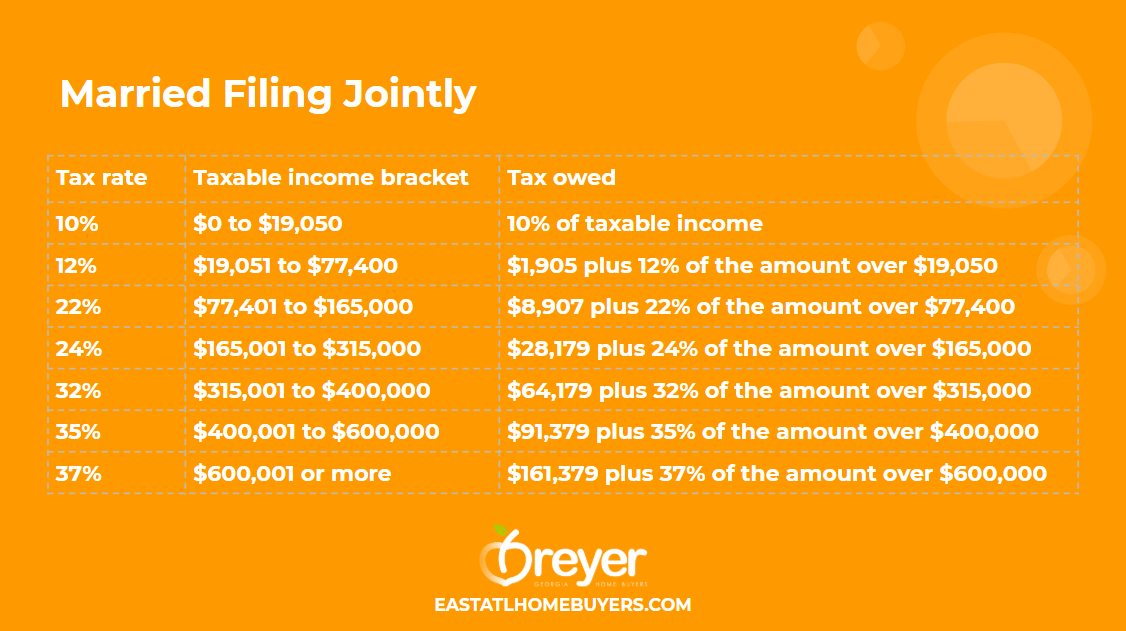
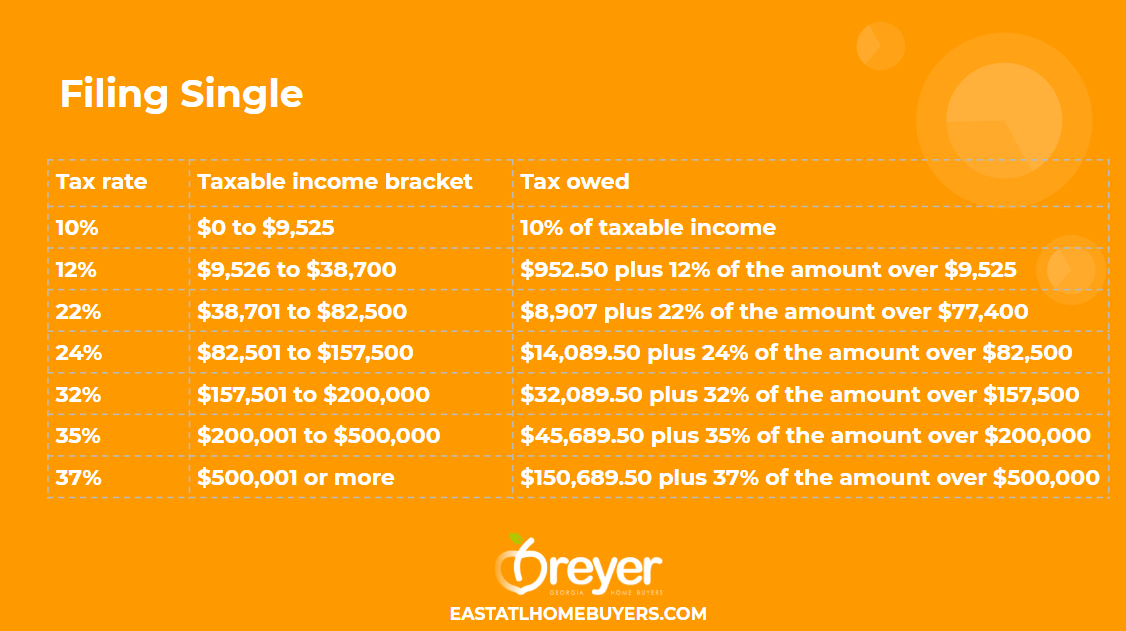
You need to be setting aside your taxes first into a ‘sacred’ account. A sacred account is an account that is in a separate bank from your other money accounts so that transfers of money is more difficult.
Treat your taxes as if you were still an employee and pay them first.
You need a bookkeeper that can say “Hey you made $400,000 this year. You need to set aside this much on each deal for taxes, then you can take this much to invest into your real estate investment strategy, and the rest is allocated to your own salary, reserves, and business capital.”
Knowing what your top tax benefits are for your investment properties is what’s going to set your bookkeeper apart from other bookkeepers.
Having a bookkeeper will allow you to not worry about whether or not you’re setting up your accounts properly and allocating the correct percentages of money to each account.
Action Steps (What To Implement)
- 1. Find a good, reputable bookkeeper that understands real estate business.
- 2. Start tracking:
- a. Your marketing cost to acquire a customer
- b. Your Profit Per Deal
- 3. Figure out your annual income goal and how much you need to invest weekly to achieve it.
- 4. Set the proper amount of taxes aside per deal in a sacred account.
Shawn Breyer
ook:
You stink at bookkeeping.
As an entrepreneur and visionary, we fly at 50,000 feet.
There is no way you can develop the right KPIs to track. You won’t have the discipline to do it. You won’t look at it. And you won’t keep up with that data consistently.
You’re probably wondering:
Why the heck do you need to focus on bookkeeping?
Here’s the deal:
A bookkeeper will help you establish your business’ KPIs, help you track them, and allow you to make business decisions based on data.
3 Key Performance Indicators (KPIs) Your Bookkeeper Should Be Tracking Today
How Much Does It Cost To Get That Deal?
Knowing how much you have to spend to get a deal is one of the most important aspects of business.
Not knowing how much a deal costs your company will result in your making business decisions based on emotions and not data.
You need to be focused on data, not drama.
Reverse engineering your numbers to figure out how much you need to spend to get $100,000 if your cost per deal is $485.
Break down your customer acquisition costs down per channel.
Most businesses have multiple channels of marketing. Tracking your acquisition costs per deal per marketing channel allows you to adjust your marketing efforts to get the best ROI.
Profit Per Deal
Gross income per deal (check) minus the expenses to get that deal.
If you get a deal every two weeks, but you pay someone to help you part time for $250 / week
How to Hit Your Goals
Here’s the kicker:
The first two KPIs are:
· Acquisition Costs
· Profit Per Deal
Knowing these KPIs will allow you to reverse engineer how much you need to spend to hit your goals.
If you want to make $1,000,000 per year when every deal costs you $2,500 and profits you $17,000, you can figure out exactly what it’s going to take to get to $1M per year.
First, divide your target income by weeks that you work in a year (usually 50 weeks / year). This will tell you how much you need to make each week to hit your goal.
$1M / 50 weeks = $20,000 / week.
Whoa. $20k / week. That’s a bit overwhelming.
You might be wondering:
How in the world can you hit that? You’ve been sitting at $125k for 2 years now.
Here’s the best part:
You now know how to get to $20k / week in profit.
Your average profit / deal was $17k.
You divide your goal profit per week ($20k) by your average profit per deal ($17k).
Goal Number of Deals / Week:
$20k / $17k = 1.18 deals per week.
Obviously, you can’t break up a deal into 0.18 deals per week, but what you can do it figure out how much do you need to spend per week for deal acquisition?
You now multiply your Goal Number of Deals / Week (1.18) by your cost per deal ($2,500). This will tell you how much you need to spend in marketing per week to hit your goal of $1M per year.
$2,500 x 1.18 = $2,950 / week.
Now you know that to reach your goals of $1M per year for your own business, you need to spend $2,950 / week in advertising.
That may seem like a ton of money, but now you know that you have the data proving that you can spend $2,500 to make $17k. Your emotions should no longer dictate how much you invest into your marketing.
Data, not drama.
I’ll make this easier on you:
Check out this simple Google Sheets Calculator to figure out how much you need to spend per week to hit your goals.
How Much Profit Needs To Go To Taxes
As you become more successful in business, you need to keep up with the percentages of your income bracket.
As of the Tax Reform of 2017, the new tax brackets are:
The following Tax Brackets are from NerdWallet
Married: Filing Jointly
|
Tax rate |
Taxable income bracket |
Tax owed |
|
10% |
$0 to $19,050 |
10% of taxable income |
|
12% |
$19,051 to $77,400 |
$1,905 plus 12% of the amount over $19,050 |
|
22% |
$77,401 to $165,000 |
$8,907 plus 22% of the amount over $77,400 |
|
24% |
$165,001 to $315,000 |
$28,179 plus 24% of the amount over $165,000 |
|
32% |
$315,001 to $400,000 |
$64,179 plus 32% of the amount over $315,000 |
|
35% |
$400,001 to $600,000 |
$91,379 plus 35% of the amount over $400,000 |
|
37% |
$600,001 or more |
$161,379 plus 37% of the amount over $600,000 |
Single Filers
|
Tax rate |
Taxable income bracket |
Tax owed |
|
10% |
$0 to $9,525 |
10% of taxable income |
|
12% |
$9,526 to $38,700 |
$952.50 plus 12% of the amount over $9,525 |
|
22% |
$38,701 to $82,500 |
$8,907 plus 22% of the amount over $77,400 |
|
24% |
$82,501 to $157,500 |
$14,089.50 plus 24% of the amount over $82,500 |
|
32% |
$157,501 to $200,000 |
$32,089.50 plus 32% of the amount over $157,500 |
|
35% |
$200,001 to $500,000 |
$45,689.50 plus 35% of the amount over $200,000 |
|
37% |
$500,001 or more |
$150,689.50 plus 37% of the amount over $500,000 |
You need to be setting aside your taxes first into a ‘sacred’ account. A sacred account is an account that is in a separate bank from your other money accounts so that transfers of money is more difficult.
Treat your taxes as if you were still an employee and pay them first.
You need a bookkeeper that can say “Hey you made $400,000 this year. You need to set aside this much on each deal for taxes, then you can take this much to invest into your real estate investment strategy, and the rest is allocated to your own salary, reserves, and business capital.”
Knowing what your top tax benefits are for your investment properties is what’s going to set your bookkeeper apart from other bookkeepers.
Having a bookkeeper will allow you to not worry about whether or not you’re setting up your accounts properly and allocating the correct percentages of money to each account.
Action Steps (What To Implement)
1. Find a good, reputable bookkeeper that understands real estate business.
2. Start tracking:
a. Your marketing cost to acquire a customer
b. Your Profit Per Deal
3. Figure out your annual income goal and how much you need to invest weekly to achieve it.
4. Set the proper amount of taxes aside per deal in a sacred account.
Shawn Breyer