Furniture rarely gets wrecked by bad luck. It gets wrecked by a dresser corner catching a door frame, a sofa dragged across a threshold, or a drawer that slides open halfway down the stairs. Almost all of it traces back to how a piece was prepped and carried, which means much of it is preventable.
Learning how to protect your furniture during a move takes some blankets, a roll of plastic wrap, and a bit of planning the week before. Do that part well and the heavy stuff arrives looking the way it left.
Most Damage Happens the Same Few Ways
Before the wrapping starts, it helps to know what you're guarding against.
Finished surfaces scratch on contact with almost anything, including the inside wall of a truck. Legs snap when a piece gets dragged instead of lifted. Drawers and doors swing open mid-carry and crack against a wall. And once everything is loaded, items that aren't strapped down shift on the drive, which is where a surprising amount of damage happens. Most of these situations are avoidable with the right preparation.
Do This Before Moving Day
Work through these in order in the days before the move, not the morning of.
- Measure before you lift. Check the width of doorways, hallways, and stairwells, then measure your bigger pieces. It's a five-minute job that tells you what needs to come apart and what can go through as is. If a sofa won't clear the front door, better to know now than on the landing.
- Take apart what you can. Remove table legs, bed frames, shelf brackets, and anything else that unscrews. Smaller parts are easier to carry and far less likely to catch a corner. Drop the screws into a labeled bag and tape it to the piece it came from, so reassembly isn't a scavenger hunt.
- Clean each piece first. Dust and grit sit on surfaces and act like sandpaper once a blanket presses against them. A quick wipe of wood and a vacuum of upholstery keeps the wrapping from grinding dirt into the finish.
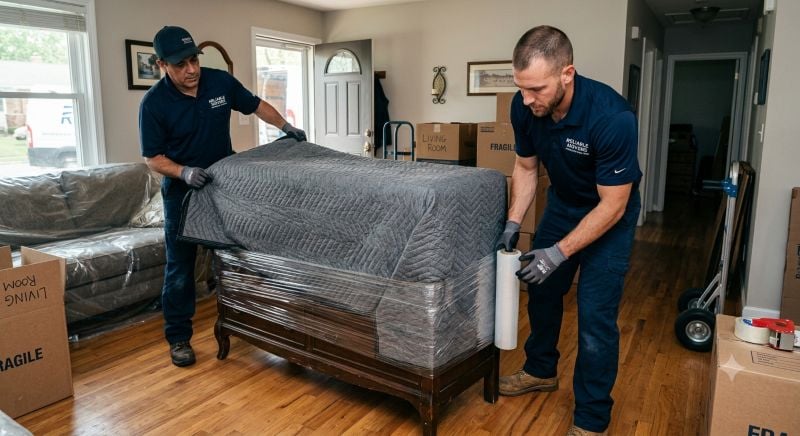
- Wrap for the material. Wood and other finished surfaces go into moving blankets first, held in place with stretch film over the blanket. Skip the tape on any finish, since it lifts the surface when it comes off. Add cardboard or foam guards on edges and corners. This is where a home-improvement resource like Family Handyman's furniture-moving tips earns its keep, because the right wrap depends on whether you're dealing with veneer, glass, or fabric. Some movers place painter's tape across large glass surfaces to help contain loose fragments if the glass breaks, then protect both sides with cardboard and moving blankets.
- Lock down drawers and doors. Wrap dressers and cabinets so drawers can't slide open, and secure cabinet doors the same way. An open drawer is a hazard to whoever's carrying the piece and an easy thing to snap off.
- Protect the path. Not just the piece. Lay runners or old blankets over floors at both homes, and pad door frames and railings in the tight spots. Then lift instead of drag. Furniture sliders and a dolly prevent more scratches to your floors and your furniture than muscle ever will.
- Load with a plan. Heavy pieces go on first, against the cab wall, to build a stable base. Many sofas can be transported on end to save space if the manufacturer allows it and they're properly protected. Soft goods fill the gaps so nothing wanders on the drive. Strap the load down, because a truck that stops short shouldn't get to rearrange your bedroom set.
That's a real amount of work, and not everyone wants to give up a weekend to it. Handing the wrapping and loading to a crew is the whole reason to hire pros, and a company like Daymakers Moving brings the pads, does the wrapping, and stacks the truck so pieces don't move in transit.
When Protection Fails, Know What's Covered
Even a careful move can go sideways, so it's worth knowing where you stand if something arrives broken. Before anything gets wrapped, photograph your higher-value pieces. If you ever need to file a claim, that record does the arguing for you.
Here's the part people miss: many homeowners insurance policies provide limited or no coverage for damage that occurs during a move. Coverage usually applies to named events like fire or theft, not a table leg that cracks in a truck, which is why a standard policy often won't cover damage in transit. Check your policy with your insurer before moving day.
If you hire a licensed mover for a move across state lines, they're required to offer two levels of liability. The basic option pays out by weight, which barely covers a scratched dresser. Full-value protection costs more but repairs or replaces at the item's value. For anything you'd hate to lose, the upgrade tends to be worth it. Ask what's included before you sign.
The Short Version
Good furniture protection isn't complicated, it's mostly work you do ahead of time. Measure, take things apart, match the wrap to the material, and load with some care. Handle the insurance question early, keep the hardware in labeled bags, and moving day stops being something your furniture has to survive.