The traditional playbook of buying a small suburban house as your first step on the property ladder is broken. With the U.S. short roughly 4.03 million housing units and high mortgage rates sidelining buyers, entry-level inventory is painfully scarce. In fact, recent reporting from the BMO Real Financial Progress Index shows that 65% of home shoppers now expect their first house to be their last because conventional costs have climbed so high.
Finding anything affordable is getting tougher by the year, with regions like Clark County, WA, hitting a median sales price of $545,000. Builders aren't rushing to fill the gap either, with single-family starts dropping 9% in April. Consequently, buyers are pivoting to alternative property types that bypass the conventional site-built market entirely. To help you navigate these non-traditional paths, we evaluated eight modern alternatives against key practical benchmarks: affordability, path to ownership, timeline, logistics, geographic availability, and long-term livability.
The Factory-Built Pioneers
1. Home Nation
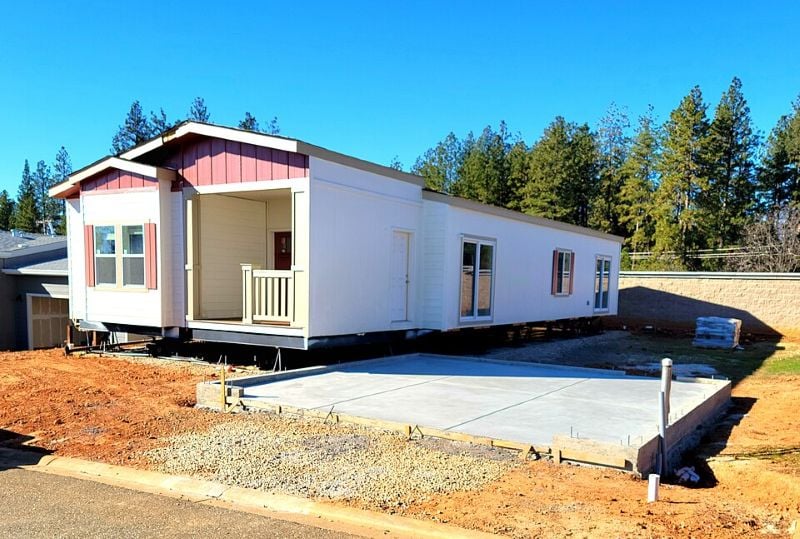
Factory-built units offer a fast, cost-effective solution for private lot owners, costing 35% to 47% less per square foot than site-built homes.
-
- Geographic Availability: Nationwide. While they ship across the country, their heaviest and most cost-effective distribution footprints are concentrated across Florida, Indiana, Ohio, Michigan, Illinois, Georgia, and Arizona.
- The Upside: Home Nation bypasses showroom markups by shipping nationwide. Buyers can browse single-wide manufactured homes, double-wides, and modular options online to view delivered pricing by ZIP code.
- The Reality Check: Listed prices cover only the physical structure and transit. You must independently budget for permits, foundations, skirting, and utility hookups.
2. Clayton Homes
As one of the nation's largest builders, Clayton leverages its massive scale to deliver consistent, high-quality finishes even in its budget-friendly lines.
-
- Geographic Availability: Nationwide. They have an interconnected network of over 800 local dealer partners
- The Upside: Buyers benefit from established national distribution channels and built-in financing affiliates.
- The Reality Check: You can't just add a home to an online cart. Because sales go through local dealerships, final prices remain fuzzy until you get a formal quote that accounts for dealer markups and regional shipping.
3. Champion Home Builders
With 46 North American factories, Champion provides highly versatile housing options, including HUD-code manufactured homes, state-coded modular builds, and park-model RVs.
-
- Geographic Availability: Nationwide. They operate 46 factories strategically placed across the U.S. and western Canada.
- The Upside: Internal transport fleets and factory-direct retail sites minimize delivery and placement headaches.
- The Reality Check: Treat the initial structural quote as a starting point. Modular homes must meet standard municipal codes, and permanent foundations still command full local contractor rates.
4. Palm Harbor Homes
Operating under Cavco Industries, Palm Harbor positions its manufactured housing as a heavy-duty, long-term alternative to traditional suburban builds.
-
- Geographic Availability: Regional. They primarily serve Texas, Oklahoma, New Mexico, Florida, and the West Coast (California, Nevada, Oregon, and Washington).
- The Upside: They prioritize energy efficiency and structural wind-zone engineering, offering large 3- to 4-bedroom layouts that rival the scale of traditional houses.
- The Reality Check: Upgraded materials mean higher base costs than stripped-down competitors, and securing a quote requires contacting regional sales centers directly.
Micro-Housing & ADUs
5. Boxabl
Boxabl's flagship "Casita" is a 400-square-foot foldable micro-home designed for rapid deployment as a backyard Accessory Dwelling Unit (ADU) or minimal primary residence.
-
- Geographic Availability: Nationwide. They ship factory-direct from their primary manufacturing hub in North Nevada, though shipping costs scale significantly the further you are from the West.
- The Upside: Delivers a fully finished layout (including kitchen and bathroom) built with lightweight, rot-resistant composite panels.
- The Reality Check: The advertised price covers only the structure. You must source the land, pour the foundation, hire a crane for setup, and navigate strict local zoning hurdles.
6. Abodu
Abodu offers a fully managed, turnkey solution for homeowners looking to build a backyard ADU rather than relocate.
-
- Geographic Availability: California Only. Their end-to-end, full-service model is hyper-localized to navigate the Golden State's specific regulatory framework.
- The Upside: They handle everything: permitting, site prep, foundation, crane delivery, and utility connections. By using state-pre-approved architectural plans, projects can wrap up in as little as nine months.
- The Reality Check: It requires a high investment ($200,000 to $350,000+) and is strictly limited to existing property owners in California.
7. Tumbleweed Tiny House Company
Tumbleweed builds custom, mobile residences certified as Park Model RVs and delivers them nationwide with modern Scandinavian or classic cabin styling.
-
- Geographic Availability: Nationwide. They design and ship custom mobile builds directly to clients across all 50 states.
- The Upside: Exceptional mobility and highly customized, efficient living spaces for solo buyers or couples.
- The Reality Check: Living full-time on wheels introduces legal hurdles. Many municipalities ban full-time RV living outside designated parks, and financing requires specialized RV loans rather than standard 30-year mortgages.
Creative Financing
8. Divvy Homes
Instead of building houses, Divvy offers a lease-purchase (rent-to-own) program for buyers who are locked out of traditional lending.
-
- Geographic Availability: Select Metro Areas. They operate in select major metropolitan markets across roughly 19 states, with a heavy focus on the Sun Belt and the Midwest (including Georgia, Texas, Florida, and Missouri).
- The Upside: You apply for a set home-shopping budget and select an exclusive, move-in-ready property directly from Divvy's existing inventory. You bypass competitive open-market bidding while building down-payment savings through your monthly lease.
- The Reality Check: You remain a tenant during the lease phase. If you choose not to buy the home, your accumulated savings will incur heavy relisting fees and contract deductions.
At-a-Glance Comparison Matrix
|
Brand |
Primary Housing Type |
Geographic Availability |
Best For |
Key Consideration |
|
Home Nation |
Manufactured / Modular |
Nationwide (Strongest in FL, IN, OH, MI, IL, GA, AZ) |
Budget baseline & clear upfront pricing |
Excludes all site-prep, foundation, and utility costs. |
|
Clayton Homes |
Manufactured / Modular |
Nationwide (Network of 800+ local dealer partners) |
Nationally distributed, reliable finishes |
Final cost depends heavily on local dealer markups. |
|
Champion |
Versatile (HUD, Modular, ADU) |
Nationwide (46 factories across US & Canada) |
Siting flexibility across various formats |
Local zoning and permanent foundations add variable costs. |
|
Palm Harbor |
High-spec Manufactured |
Regional (TX, OK, NM, FL, and West Coast) |
Long-term durability in harsh climates |
Higher base price and less transparent online pricing. |
|
Boxabl |
Foldable Micro-ADU |
Nationwide (Ships from Nevada factory) |
Fast deployment on an approved lot |
High additional costs for freight, cranes, and site setup. |
|
Abodu |
Turnkey ADU |
California only |
Hassle-free, full-service building |
Expensive; restricted entirely to California properties. |
|
Tumbleweed |
Tiny Homes on Wheels |
Nationwide (Delivers to all 50 states) |
Highly mobile, flexible lifestyle |
Strict local zoning laws regarding full-time RV living. |
|
Divvy Homes |
Rent-to-Own Program |
Select Metro Areas (Active in ~19 states) |
Buyers rebuilding credit or savings |
Draw from Divvy's specific home inventory; walking away triggers penalties. |
Redefining Your Path to Homeownership
The classic starter home has officially evolved. Whether your best path forward is a factory build, a backyard ADU, a mobile layout, or a creative financing structure, there is no single "right" way to buy in today's market. By directly comparing total project costs, local zoning laws, and financing options, you can confidently choose the modern alternative that aligns with your budget and goals.