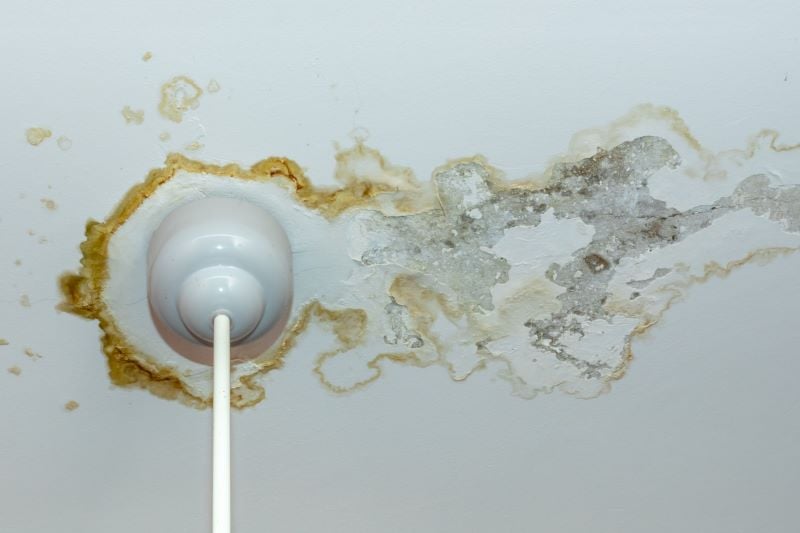
Most sellers prepare a home the way they live in it: fresh paint, clean carpets, tidy landscaping. Buyers' inspectors and appraisers look at it very differently. They are trained to find the water stain you stopped noticing two years ago, the faint musty smell in the basement, and the soot shadow above the fireplace. As a restoration company, we are often called in during escrow, after a problem has already turned into a price negotiation. It almost always would have been cheaper, calmer, and better for the sale to deal with it before the sign went in the yard.
Here is how water, mold, and fire damage actually affect a sale, and what to handle before you list.
Why old damage costs you at the worst possible time
A buyer who finds damage after going under contract has leverage you no longer have. Unaddressed water, mold, or fire issues tend to surface at three expensive moments:
-
- The inspection. A flagged moisture or mold issue invites a repair demand, a price credit, or a buyer walking away during their contingency window.
- The appraisal and the loan. Appraisers note active damage, and lenders and insurers can balk at financing or covering a home with an open water or mold problem until it is resolved.
- Disclosure. Most states require sellers to disclose known material defects, including past water intrusion, mold, and fire damage. Painting over it is not a fix, and a buyer who discovers a concealed problem after closing can come back to you.
Handling these before you list turns a mid-escrow crisis into a line item you controlled.
Water damage: find the source, not just the stain
Water is the most common and the most underestimated. The brown ring on the ceiling or the warped baseboard is the symptom; the leak, the grading, or the failed flashing is the cause. Cosmetic patching without fixing the source guarantees the problem, and the disclosure question, come back.
Before listing, look for staining, peeling paint, warped flooring, a persistent musty smell, and any history of leaks under sinks, around windows, near the water heater, and in the basement or crawlspace. Anything beyond a small, fully dried surface stain is worth a professional assessment, because water travels, and what shows on the surface is often smaller than what is behind it.
Mold: the buyer's deal-breaker
Nothing cools a buyer faster than the word mold. It reads as a health risk and an unknown cost, and it is a near-universal disclosure item. The mistake sellers make is painting or bleaching over visible growth, which hides it briefly, does not address the moisture feeding it, and creates a disclosure problem if it returns.
Surface mold on a hard, non-porous spot can sometimes be cleaned and dried. But if it covers more than a small area, has reached porous materials, or keeps coming back, it needs professional remediation that removes the growth, fixes the moisture source, and leaves you with documentation. That paper trail is what converts a scary word into a solved, disclosed, and closed item.
Fire and smoke: the part you cannot see
A home that has had even a small fire carries two problems into a sale: lingering odor and hidden residue. Smoke and soot work their way into drywall, insulation, ductwork, and porous surfaces, and a repaint or a new coat of trim does not remove them. The smell returns on the first humid day, and a buyer notices immediately.
If the home has any fire history, address the odor and residue at the source with proper cleaning and, where needed, sealing or replacement, and keep the records. Disclosed, professionally remediated fire damage is a manageable fact. An odor a buyer discovers at the showing is a deal-killer.
The pre-list playbook
A simple sequence keeps this from turning into a scramble:
1. Walk the home like an inspector, or pay for a pre-listing inspection. Better you find it first than the buyer's inspector does.
2. Fix the source before the symptom. Stop the leak, correct the moisture, clear the residue. Cosmetics come last.
3. Do not cover it up. Painting over a stain or mold is a short-term illusion and a long-term liability.
4. Bring in a pro for anything beyond surface level, and keep every invoice and report.
5. Disclose accurately. Documented remediation reassures buyers; concealment invites a claim.
6. Do it before the photos, not during escrow, so the home shows as resolved on day one.
Documentation is the quiet selling point
Here is the part sellers miss: professionally remediated, well-documented damage is not just neutral, it can be reassuring. A buyer who sees water intrusion identified, source repaired, area dried and cleared, with a certified report attached, is looking at a problem that was handled by an expert rather than a landmine. A professional restoration company can give you exactly that paper trail. It is the difference between a buyer imagining the worst and a buyer reading the receipts.
The bottom line
The damage you have learned to live with is the first thing a buyer's team will find. Deal with water, mold, and fire issues before you list, fix causes rather than covering symptoms, and keep the documentation. You will protect your price, your timeline, and your peace of mind, and you will spend the escrow period talking about the offer instead of the inspection report.