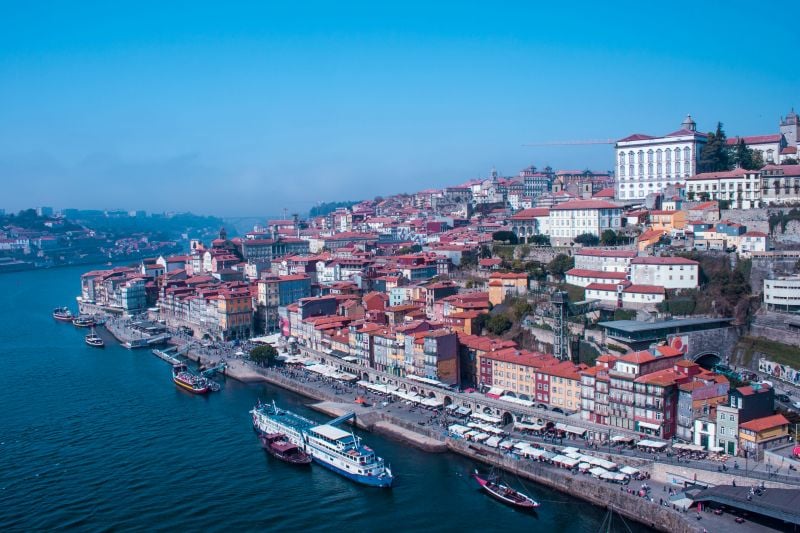
Portugal's property market continues to demonstrate remarkable resilience and appeal, even as global economic conditions shift and local regulations evolve. The conclusion of the popular Golden Visa program for real estate investments has not deterred international buyers; instead, it has refined the market's focus. Today, the driving forces are lifestyle enhancement, secure long-term investments, and the country's undeniable quality of life. Investors and homebuyers are now looking beyond transactional benefits, seeking genuine value in a market characterized by regional diversity and growing sophistication. Understanding this new landscape is crucial for anyone considering an investment in Portuguese property, as opportunities now lie in strategic location choices and streamlined acquisition processes.
The Post-Golden Visa Landscape for Foreign Buyers
The termination of the real estate pathway for Portugal's Golden Visa marked a pivotal moment, yet the market's pulse remains strong. The change has filtered the pool of international buyers, shifting the emphasis from residency-driven acquisitions to investments rooted in lifestyle, retirement planning, and portfolio diversification. This transition has strengthened market fundamentals, as demand is now more closely tied to the intrinsic value of the properties and their locations. The allure of the country's climate, safety, and culture persists as a primary motivator for those seeking real estate Portugal. Furthermore, alternative residency options, such as the D7 visa for passive income earners and the Digital Nomad visa, continue to attract a steady stream of foreign nationals who require a permanent base, thus sustaining demand for high-quality housing across the country. This evolution signals a maturing market where the focus is on long-term habitation and sustainable growth rather than short-term residency gains.
The Shift from Transactional to Transformational Living
"The focus has shifted from transactional residency to transformational living. Investors are now buying into the Portuguese lifestyle, not just a passport."
Uncovering High-Growth Regions Beyond the Obvious
While Lisbon, Porto, and the Algarve have long dominated headlines, savvy investors are increasingly turning their attention to emerging regions that offer compelling value and significant growth potential. These areas provide a more authentic Portuguese experience, often with lower entry costs and higher potential for appreciation. The Silver Coast (Costa de Prata), stretching from north of Lisbon to Figueira da Foz, is a prime example. It boasts stunning coastlines, historic towns like Óbidos, and property prices that are a fraction of those in the capital, all within an hour's drive of Lisbon's international airport. Similarly, the Alentejo region, known for its vast rolling plains and vineyards, is attracting buyers interested in larger estates, rural tourism projects, and a tranquil lifestyle. In the north, cities like Braga offer a dynamic blend of historic charm and modern innovation, with a thriving tech scene and a younger demographic driving demand for modern real estate in Portugal.
Navigating the Purchase Process: From NIF to Notary
Acquiring real estate in Portugal involves a series of well-defined legal and administrative steps that can seem daunting for foreign buyers. A successful transaction hinges on understanding and correctly executing each stage. The process is transparent but requires careful navigation, highlighting the value of professional guidance. Innovators in the market are now addressing this challenge by offering comprehensive, integrated services that simplify the entire journey for the buyer.
The key milestones in the purchasing journey include:
- Obtaining a NIF (Número de Identificação Fiscal): This tax identification number is mandatory for any significant financial transaction in Portugal, including opening a bank account and buying property.
- Opening a Portuguese Bank Account: A local account is essential for transferring funds and handling property-related payments.
- Signing the CPCV (Contrato de Promessa de Compra e Venda): This promissory contract is a legally binding agreement between the buyer and seller. It outlines the terms of the sale, the price, and the timeline, and typically involves a deposit of 10-30%.
- The Final Deed (Escritura Pública de Compra e Venda): This is the final step, conducted before a public notary, where the property ownership is officially transferred.
To streamline this complex sequence, platforms like realestate.pearlsofportugal.com have introduced a "one-stop-shop" approach. This model guides buyers from the initial property search to financing and the final notary appointment. As a significant value-add, they cover the notary fees, removing a common hidden cost and providing both financial savings and peace of mind. This integrated service transforms a potentially stressful process into a managed, cost-effective experience.
Understanding the True Cost of Acquiring Property
The advertised price of a property is only the starting point. A comprehensive budget must account for various taxes and fees that are integral to the acquisition process. These costs are primarily borne by the buyer and can add a significant percentage to the final purchase price. Being aware of these additional expenses from the outset is critical for effective financial planning and avoiding unwelcome surprises at closing. The primary costs associated with buying real estate in Portugal include property transfer tax (IMT), stamp duty, and notary fees. A clear breakdown provides prospective buyers with the transparency needed to make an informed investment decision.
Here is a summary of the main transaction costs:
|
Cost Type |
Typical Rate/Amount |
Description |
|---|---|---|
|
IMT (Property Transfer Tax) |
0% - 7.5% (sliding scale) |
A municipal tax levied on the transfer of property ownership. The rate varies based on the property's value, type, and intended use (main residence vs. secondary home). |
|
Stamp Duty (Imposto do Selo) |
0.8% |
A fixed-rate tax applied to the property's declared value as stated in the final deed. It is payable at the time of the transaction. |
|
Notary and Registration Fees |
€750 - €1,500+ |
These are administrative fees for the public notary's services in preparing and witnessing the deed, as well as for registering the property in the buyer's name. |
|
Legal Fees |
1% - 2% (+VAT) |
Fees for a lawyer to conduct due diligence, review contracts, and represent the buyer's interests throughout the process. |
While these costs are standard, forward-thinking service providers are finding ways to reduce the buyer's burden. As mentioned, some marketplaces now cover notary and registration fees, directly lowering the upfront investment required.
The Rise of Sustainable and Tech-Integrated Homes
A clear trend shaping the future of real estate in Portugal is the growing demand for sustainable and technologically advanced properties. Modern buyers, both local and international, are increasingly prioritizing energy efficiency, environmental impact, and smart home features. This shift is influencing new construction projects and major renovations across the country. Properties with high energy performance certificates (EPC ratings of A or A+) are not only more attractive for their lower running costs but also align with a broader global consciousness toward sustainability. Developers are responding by incorporating features like solar panels, advanced insulation, and heat pumps as standard. Concurrently, the demand for tech integration is on the rise. High-speed fiber optic internet, integrated smart home systems for controlling lighting and climate, and dedicated home office spaces have become key selling points, particularly for digital nomads and professionals who require a seamless remote work environment. This evolution reflects a market that is not just selling homes, but a modern, efficient, and forward-looking lifestyle.