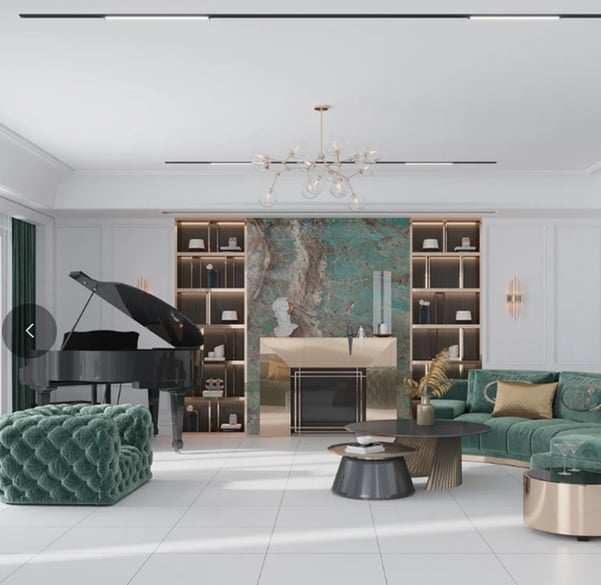
Most homeowners think that making a room feel bigger and brighter requires invasive procedures, including knocking down walls and increasing the square footage. What most don’t know is that perception has a huge role in making a space seem larger than it really is. The way a wall is designed, or tiles are laid on the floor, can influence the way the eye travels, how light spreads in the room, and how airy and spacious a room feels.
Tiles are both efficient and practical as they offer complete control over scale, color, layout, finish, and texture, with practical benefits. When these factors come together, they can help you create a more open, connected, and modern home without undertaking a full-scale renovation.
Visual Layout and Flow
The eye naturally follows seamless surfaces. Every random and abrupt change, whether in height, color, shape, pattern, material, or layout, acts as a ‘pitstop’ for the eye, making it halt. This effect makes a room feel smaller and more confined.
To mitigate this, instead of treating every room as a separate entity, consider them as multiple elements of a single project. Using complementary finishes and tile colors in juxtaposition helps the eye to move across the space continuously without any hurdle. If you are unsure about complementary and contrasting colors, you may consult a color wheel to guide you.
Having similar flooring does not equal having identical flooring. The goal is to create a transition that feels intentional rather than abrupt.
Using Direction to Guide the Eye
Tile layout can also affect how the eye (and thus people) perceive the size and shape of a space.
For example, rectangular tiles installed lengthwise stretch the room visually, especially when directed towards a window. The natural light coming in from the window draws the eye towards the bright spot, making the room feel much larger than it physically is. It is also an easy way to make your space feel fresh and inviting. Consistent layout in open spaces ensures a seamless uniformity, making the floor feel continuous and not disjointed.
Rather than asking which pattern is most fashionable, consider which direction best complements the architecture of the room.
Think Beyond the Usual Horizontal Layouts
While floors are deciding factors in shaping the spaciousness of a room, they are not the only element that influences it.
Installing wall tiles in a vertical layout encourages the eye to travel upwards, subtly underlining the ceiling height. The effect can be further enhanced by carrying the wall tile installation higher than usual– instead of stopping midway, let it touch the ceiling to create a cleaner and more architectural appearance. This approach works particularly well in bathrooms, fireplaces, and entryway feature walls.
Harnessing Controlled Contrast
Strong contrast is a popular design element as it creates energy, but excessive contrast can often divide a room into multiple sections, creating smaller, chaotic spaces.
Keeping the difference between floor, wall, and adjoining finishes relatively subtle helps the eye move naturally throughout the space. Accent colors should be used thoughtfully as subtle design details rather than dominant features. Avoid covering large surfaces with multiple contrasting tile styles, as this can make the space feel visually overwhelming.
For instance, if you choose to have a modern statement flooring such as black marble-look tile with gold veining, avoid choosing stark blue and ruby red tiles on the wall. A balanced color palette creates a more open, attractive, and welcoming space.
Take A Chance on Transitional Tiling
One dated yet common mistake that people continue to do is stopping tile installation exactly where a room ends.
For a more uniform and sophisticated look, carrying the same tile flooring through the connected spaces can create a feeling of openness. For instance, living room floor leading to entryway, kitchen floor flowing into dining areas, laundry rooms connected to mudrooms – the choice is endless. All these spaces can benefit a lot through consistent and uniform flooring.
The effect isn't dramatic in a single moment, but throughout the home it creates a noticeable sense of continuity.
Allow Natural Light to Shine
There is a close connection between tiled surfaces and light. In fact, natural light in the field of spatial design holds a significant place.
Tiles, depending on the material and finish, either reflect light or absorb it. Tiles with a glossy finish and gentle surface variations reflect daylight differently throughout the day. This interplay of light and shadows creates a unique depth and movement.
In darker rooms, using reflective tiles is highly recommended as the bounced light gets distributed around the space, illuminating it. A combination of different finishes can help you control the amount of light you want in a room. The objective isn't simply brightness but a balanced interaction between material and light.
For an added effect, try pairing natural with artificial light. Different types of lights can help you create different effects.
Don’t Forget the Grout Lines
Do not overlook the importance of grout! While it may seem unassuming, grout has a significant impact on how big a room appears.
Large-format tiles generally tend to have fewer visible grout lines and joints. This particular layout tends to create broad visual planes, making surfaces look cleaner and less fragmented.
Another way grout lines can be used to extend the appearance of a space is by matching the grout color as closely as possible to the tile. This reduces visual interruption and allows the surface to read as a continuous plane.
This subtle design decision often has a greater impact than choosing an expensive material.
Tiles: A Practical Choice for Practical Spaces
Making a home feel larger isn't about fooling the eye. It's about removing visual obstacles that interrupt how we experience a space. Thoughtfully selected tile can strengthen sightlines, improve continuity, reflect light more effectively, and create interiors that feel calmer and more generous than their actual dimensions suggest.
These subtle improvements not only enhance everyday living but can also make a home more appealing to future buyers who value bright, open, and well-planned spaces.