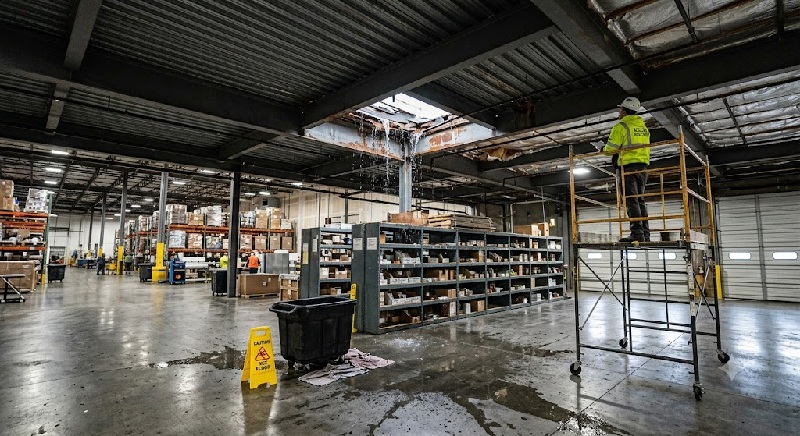
Commercial and industrial roofs are critical to protecting buildings, equipment, and operations. A leak can cause property damage, disrupt business operations, and compromise safety.
Understanding how to address leaks and maintain roofing systems is essential for facility managers and business owners.
This guide provides insights into identifying leaks, repair options, and preventive measures.
Identifying a Commercial Roof Leak
Signs of a Roof Leak
Leaking commercial roofs often show warning signs such as:
-
- Water stains on ceilings or walls
- Mold or mildew growth
- Dripping water in specific areas
- Ponding water on flat roofs
- Rust or corrosion on metal roofing
Early detection is crucial. Ignoring leaks can lead to structural damage and expensive repairs.
Common Sources of Leaks
Leaks in commercial roofs often originate from:
-
- Roof membrane punctures (EPDM, TPO, PVC)
- Damaged flashing around vents, skylights, or HVAC units
- Roof penetrations from plumbing or electrical systems
- Roof seam separations or shrinkage
- Aging or deteriorated roofing materials
Regular inspections, especially after storms, help identify problem areas early.
How to Repair a Commercial Roof Leak
1. Temporary Fixes
For immediate relief, temporary solutions can prevent further water intrusion until professional repairs are scheduled:
-
- Applying roofing tape or patch kits to small membrane holes
- Using sealant or caulking around minor flashing gaps
- Placing waterproof tarps over leaking areas
While temporary fixes may protect the interior, permanent solutions are necessary for long-term roof integrity.
2. Membrane and Surface Repairs
For single-ply or metal roofs:
-
- EPDM, TPO, or PVC: Replace or patch torn sections with matching membrane and adhesive
- Metal roofs: Tighten loose fasteners, replace damaged panels, and seal seams with approved coatings
Professional contractors often recommend inspecting the entire roof after a patch to ensure no other vulnerabilities exist.
3. Flashing and Roof Penetration Repairs
Flashing around vents, skylights, and HVAC units is a common source of leaks. Proper repair may include:
-
- Replacing rusted or bent flashing
- Re-sealing fasteners and joints
- Installing new gaskets or weatherproof collars
4. Full Roof Section Replacement
Severe or recurring leaks often require replacing large roof sections. Modern commercial roofing systems allow for partial replacement without removing the entire roof, but proper evaluation is necessary.
Preventive Maintenance to Reduce Future Leaks
-
- Routine inspections: At least twice a year and after major storms
- Clean drains and gutters: Prevent ponding water that stresses membranes
- Check roof seams and flashings: Repair small cracks before they worsen
- Maintain rooftop equipment: HVAC units, vents, and skylights should be properly sealed
- Professional maintenance contracts: Many industrial buildings benefit from annual service plans to extend roof lifespan
Safety Considerations
Commercial roofs often have steep slopes or complex layouts. Always consider safety first:
-
- Use fall protection equipment
- Follow OSHA safety standards
- Hire trained personnel for inspections and repairs
Benefits of Hiring a Professional
While small leaks may be temporarily patched, professional commercial roof leak repair ensures:
-
- Proper identification of leak sources
- Long-term durability of repairs
- Compliance with warranty and building codes
- Reduced risk of future water damage
Industrial roof systems, including flat, metal, or single-ply membranes, require specialized expertise to maintain and repair effectively.
Conclusion
Commercial and industrial roofs require ongoing attention to prevent leaks and structural damage. Early detection, routine inspections, and commercial roofing experts are critical to extending roof life and protecting assets.
When addressing leaks, business owners should prioritize professional assessment to ensure repairs are durable and compliant with industry standards.
Proper maintenance and timely intervention reduce costs, minimize operational disruptions, and enhance building longevity in 2026.