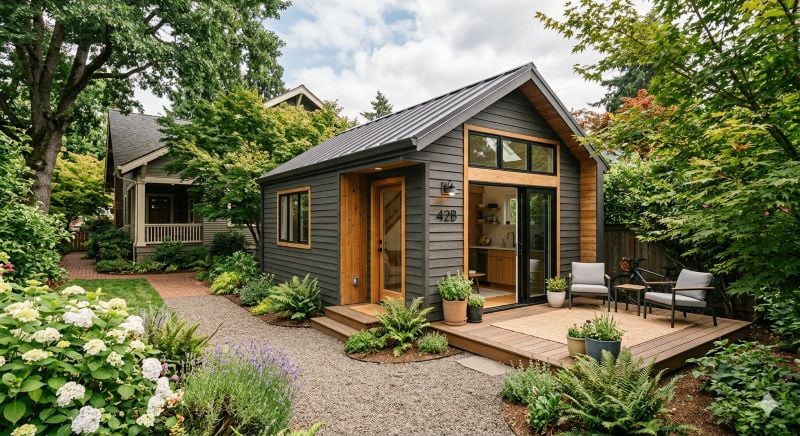
Granny flats have shed their daggy reputation. Once thought of as a spare room for ageing parents, the humble secondary dwelling has become one of the most talked-about additions a homeowner can make - pitched as a way to earn rental income, house family, and add serious value to a property all at once.
But the headline question is the one that matters: do they actually increase property value, or is that just clever marketing? The honest answer is yes, they usually do - but with some important conditions attached. Here's what homeowners genuinely need to know before they start digging up the backyard.
What the research says
The most widely cited figures come from research by CoreLogic and Archistar, which found that adding a granny flat could lift a property's value by around 30% and boost its rental income by roughly 27%. Those are eye-catching numbers, and they're a big part of why interest in secondary dwellings has surged.
It's worth treating them as a ceiling rather than a guarantee, though. A 30% uplift represents a well-located, well-built, properly approved granny flat in a high-demand market. Get any of those elements wrong and the figure shrinks fast. The value is real, but it's earned - not automatic.
Why a granny flat adds value
When a granny flat does lift a property's worth, it's for a few clear reasons.
The most obvious is dual income potential. A home that can generate rent from a separate, self-contained dwelling is far more attractive to investors and to owner-occupiers wanting to offset their mortgage. A property that pays you back every week is simply worth more than one that doesn't.
There's also flexibility, which buyers increasingly prize. The same space can be a rental, a home for adult kids who can't crack the property market, accommodation for elderly parents, a home office, or a private studio. A dwelling that adapts to a household's changing needs has broad appeal across very different buyers.
And there's plain extra liveable floor space. In established suburbs where land is scarce and prices are high, the ability to add functional square metreage without buying more land is genuinely valuable.
The conditions that make or break it
This is where homeowners need to pay attention, because the difference between a value-adding granny flat and an expensive mistake usually comes down to a handful of factors.
Council approval is non-negotiable. An unapproved or illegally built structure doesn't add value - it can actively scare off buyers, complicate a sale, and create legal headaches. Rules vary by state and council, including whether you're allowed to rent the dwelling out. In Queensland, for example, a 2022 change opened the door for homeowners to lease granny flats to tenants who aren't family members, which significantly improved the rental case. Always confirm the current rules for your area before committing.
Quality and design matter enormously. A cramped, poorly finished box delivers a fraction of the return of a thoughtfully designed dwelling that feels like a proper home. Natural light, a sensible layout, good separation from the main house, and finishes that match the era and quality of the existing property all feed directly into perceived value. This is exactly where working with a specialist pays off. A builder like Humpy Co., which focuses on designing secondary dwellings that complement the main home rather than looking like an afterthought, can be the difference between a granny flat that adds genuine equity and one that just adds clutter.
Location and demand drive the numbers. A granny flat in a tightly held, amenity-rich suburb with strong rental demand will deliver returns that a comparable build in a low-demand area simply won't. The local market sets the ceiling.
Beware of over-capitalising. It's possible to spend more on a granny flat than the market will ever return, particularly if the build is lavish relative to the value of the home and the suburb. The goal is a sensible build cost that aligns with what local buyers and renters will actually pay for.
Run the numbers before you build
Before committing, homeowners should do some honest sums. Weigh the all-in build cost - including approvals, site works, and connections - against realistic local rental figures and the likely value uplift. A good specialist builder will help with a feasibility assessment, and it's wise to get an independent view from a local valuer or agent on what a finished granny flat is genuinely worth in your specific street.
It's also worth thinking about your goal. If you're chasing rental yield, the maths can be very compelling. If you're building primarily to house family, the financial return is a bonus rather than the point - and that's a perfectly valid reason to build too.
The bottom line
So, do granny flats really increase property value? In most cases, yes - and sometimes substantially. But the uplift isn't a given. It rewards homeowners who get the approvals right, build to a good standard, choose the right location, and avoid overspending.
Treated as a considered investment rather than a backyard afterthought, a granny flat can be one of the smartest ways to add both income and equity to your home. Done carelessly, it's just an expensive shed. The difference is in the planning - and in who you choose to build it.