The guest room is usually the last room in the house to get any real attention. It's where the treadmill goes to die, where off-season clothes pile up, where the spare comforter waits for a visit that always sneaks up faster than you expect. Then someone books a flight, and you've got about a week to turn a storage unit back into a bedroom.
Good guest room design has almost nothing to do with square footage or how much you spend, which is the part most people miss. The rooms people genuinely enjoy staying in share a few quiet decisions, most of which cost very little and take an afternoon. A welcoming guest room makes a visitor feel looked after without saying a word. That feeling is what they remember long after they've forgotten the paint color.
This matters more than most homeowners think. Host family over the holidays, and the guest room shapes whether those visits feel restful or strained. And if you're weighing a future sale or a short-term rental, a thoughtfully styled spare bedroom reads as a true bedroom in listing photos instead of the dead space buyers mentally discount. So here's how to get it right.
Start With How the Room Feels, Not How It Looks
For a few days, the guest room is the one space in your home that belongs entirely to your visitor. That sense of ownership is the whole job. A bare room with a perfectly made bed can still feel cold. A small room with a reading lamp and a folded throw can feel like a retreat.
The trick most hotels understand is sequencing. A guest notices the bed first, then the light, then whether there's anywhere to put their stuff. Nail those three, and the rest is just decoration. Miss one, and no amount of styling saves the room.
Before you buy anything, sleep in the room yourself for one night. You'll find the problems your guests are too polite to mention (the streetlight through thin curtains, the outlet three feet from the bed, the door that catches at 6 a.m.). It's the cheapest design audit you'll ever run.
Get the Bed Right Before Anything Else
If your budget only stretches to one upgrade, spend it here. A decent mattress and layered bedding do more for a guest's experience than a gallery wall ever could. And whatever you do, resist retiring your worst old mattress to the guest room. Your visitors will feel every spring.
Layer the bed the way better hotels do. Start with quality sheets (a 300 to 400 thread count percale or cotton sateen feels crisp without breaking the bank), add a duvet, then fold a separate blanket across the foot for anyone who runs cold. Offer two pillow types, one firm and one soft, so side and back sleepers both get what they need.
A few bedding upgrades are worth the money:
-
- A mattress protector, which keeps the bed fresh between guests and protects your investment
- Two pillow firmness options per person
- A breathable duvet plus a fold-down blanket for temperature swings
- One spare set of sheets in the closet, so quick turnarounds don't turn into laundry emergencies
The honest catch is cost. A good mattress isn't cheap, and you'll notice the bill. But it's the one guest bedroom purchase that pays you back every single visit, so it earns the splurge.
Lighting Is the Detail Most Guest Rooms Get Wrong
Overhead lighting alone is the fastest way to make a bedroom feel like a waiting room. One ceiling fixture casts hard, flat light that flattens everything and makes it hard for anyone to read in bed. The fix is layering, and it's where a plain spare room starts feeling designed.
Aim for three layers: a soft overhead source, a bedside lamp that each guest can reach without getting up, and one accent light that adds warmth after dark. Color temperature does the heavy lifting here. Warm white bulbs in the 2700K to 3000K range give a room that golden, settled glow people associate with rest, while cooler bulbs above 4000K read clinical and keep the brain alert. For a guest room, stay warm.
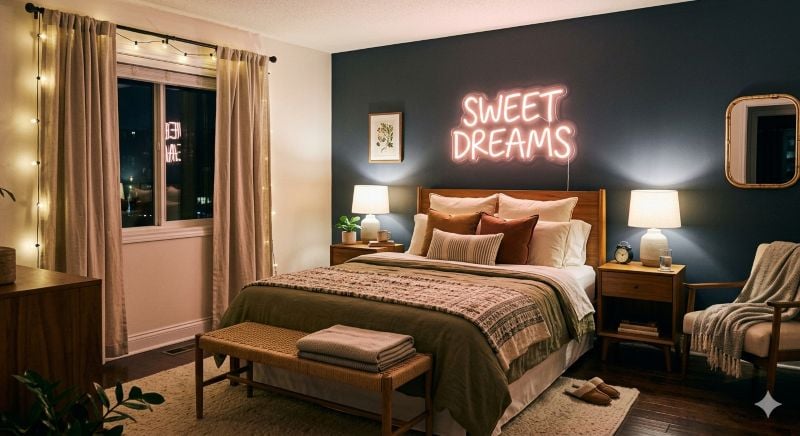
The accent layer is where you add real personality, and it's the part most people skip. A small framed light, a salt lamp, or a custom neon sign with a soft word or simple shape gives the room a focal point and doubles as a low, friendly glow for anyone finding their way around an unfamiliar space at night.
Modern LED neon runs cool to the touch, sips very little power, and mounts flush to the wall, adding character without eating up floor space or running up the electric bill. A quiet "rest" or "hello" above the headboard does more for the room than another generic print ever will.
Changing just one thing? Swap the harsh ceiling light for something warm and add a bedside light you can reach. That single move shifts the whole mood of the space.
Give Guests the Small Things Hotels Always Nail
The gap between a room a guest tolerates and one they rave about usually comes down to a handful of small touches that signal you actually thought about them. None of these are expensive. All of them get noticed.
Keep a carafe or a couple of water bottles on the nightstand so nobody has to creep through a dark kitchen at 2 a.m. Add a power strip or a bedside charging spot, because the nearest outlet is rarely close enough.
Put a few hooks or a luggage rack near the door so a suitcase isn't lying open on the floor for a week. And spend on proper window coverings, because blackout curtains or a quality blind are the unsung hero of any guest bedroom (jet-lagged visitors will quietly thank you).
A small basket of extras seals it. Think a phone charger, a couple of fresh towels, a spare toothbrush, maybe a note with the wifi password so your guest isn't texting you from the next room. These guest room ideas take ten minutes to put together and make a visitor feel like you were expecting them. Which, of course, you were.
Make It Personal Without Making It Feel Like Yours
There's a fine line between a welcoming guest room and a room that clearly belongs to someone else. Your visitor wants warmth, not your high school trophies and a closet you've asked them not to open. Aim for a space that feels cared for but neutral enough that they can settle in and make it briefly their own.
Lean on texture and soft styling instead of personal clutter. A throw, a couple of cushions, one piece of art, a little greenery (a low-maintenance plant or even a good faux one), warms a room without crowding it. Clear at least half the closet and a drawer or two, because usable storage is the difference between a real guest space and an overflow zone with a bed in it.
That balance is exactly what makes the room pull double duty if you ever list the home. A clean, warm, lightly personalized guest bedroom photographs as an inviting space that buyers can picture themselves in, which is the whole point of staging. You're designing for the friend visiting next month and the buyer scrolling listings next year, at the same time.
A guest room earns its keep when someone walks in, sets down their bag, and exhales. That doesn't come from a bigger budget or a trendier palette. It comes from a comfortable bed, light that flatters the hour, the small comforts people forget to pack, and just enough personality to feel human.
Get those few things right, and you'll have built the rare spare room people look forward to staying in, the kind they mention to you on the way out.