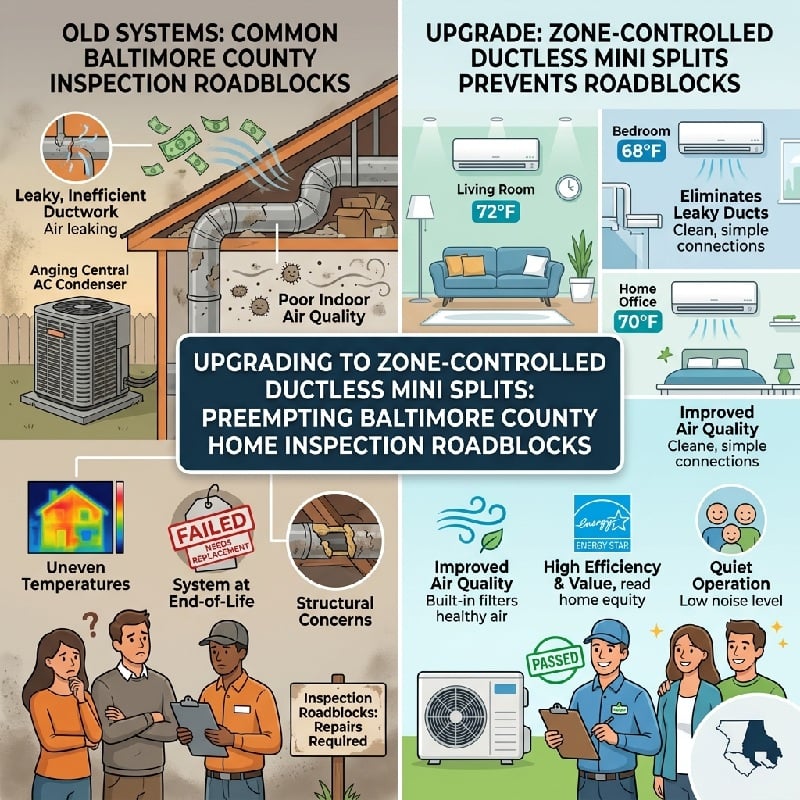
In Baltimore County real estate, the HVAC system is one of the most common reasons a deal slows down at inspection. An aging or improperly installed system shows up in the inspector’s report, and suddenly the buyer is asking for credits, repairs, or a price reduction. Upgrading to a zone-controlled ductless mini split before listing removes several of these roadblocks at once: it provides a permanent, code-compliant heat source, eliminates the duct-related defects inspectors flag, and gives the buyer a modern, documented system with a transferable warranty. For sellers in Towson, Catonsville, Dundalk, and surrounding communities, where much of the housing stock predates modern HVAC standards: this single upgrade can be the difference between a clean inspection and a stalled contract.
What HVAC problems most often stall a Baltimore County home inspection?
Home inspectors don’t “pass” or “fail” a house - they document condition against standards of practice published by bodies like InterNACHI and ASHI. But certain HVAC findings reliably become negotiation roadblocks: a system near or past its 15–20-year service life, inoperable or undersized equipment, improper installation, and the absence of a permanent heat source in a room or addition. Duct-related defects are especially frequent - the U.S. Department of Energy reports that about 20–30% of the air moving through a typical duct system is lost to leaks, holes, and poor connections. Inspectors note visible duct damage, disconnected runs, and rooms that won’t reach temperature. For loan types with property standards — including FHA and VA appraisals, which require a permanent heating source capable of maintaining a habitable temperature - a home heated only by window units or space heaters can derail financing entirely.
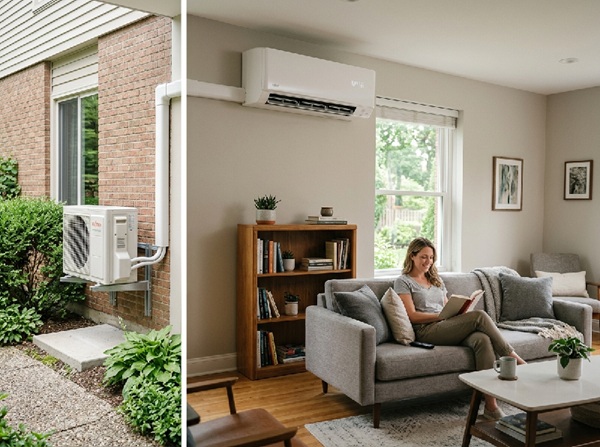
Image: Nano Banana
How does a zone-controlled ductless mini split resolve those inspection red flags?
A ductless mini split addresses several inspection issues in one installation because it changes the system architecture, not just the equipment. With no ducts, it eliminates the duct-leakage defects inspectors cite - the U.S. Department of Energy notes that going ductless avoids losses that can account for more than 30% of energy consumption for air conditioning. Each zone is served by its own indoor head, so a previously unconditioned room, finished basement, or addition now has documented, permanent heating and cooling that satisfies FHA and VA requirements. A correctly sized heat pump is a code-recognized heat source, not a portable workaround. And because a professional installation is permitted and inspected by Baltimore County, the seller can hand the buyer’s inspector a clean paper trail: permit, load calculation, and a manufacturer warranty that transfers to the new owner.
Why do older Baltimore County homes benefit most?
Baltimore County’s housing mix includes a large share of mid-20th-century rowhomes, bungalows, and capes that were never built for central air, plus homes heated by aging oil, electric baseboard, or boiler systems. These are exactly the properties where inspection HVAC problems cluster: no ductwork to retrofit, additions tacked on without proper conditioning, or a heat source the appraiser won’t accept. A zone-controlled ductless system fits these homes precisely because it needs no ductwork - an installer can condition a converted attic, a back addition, or a rowhome’s third floor without opening walls. ENERGY STAR–certified ductless heat pumps also use roughly 60% less energy than electric resistance heating and cut cooling costs by about 30% versus conventional room air conditioners - a tangible efficiency story sellers can put in the listing.
Do ductless mini splits add resale value when selling?
The value shows up in three concrete ways rather than a guaranteed appraisal bump. First, it removes inspection objections: a documented, warrantied, code-compliant system gives the buyer fewer items to negotiate against. Second, it broadens the buyer pool by satisfying FHA and VA permanent-heat requirements, expanding who can finance the purchase. Third, it lowers projected operating costs - heating and cooling typically account for roughly 43% of a U.S. home’s utility bill, per the U.S. Department of Energy, so a high-efficiency ductless system is a number buyers can point to. The practical payoff is a smoother transaction with less price erosion between offer and close.
What does “zone-controlled” mean, and why does it matter to buyers?
“Zone-controlled” means each area of the home has its own indoor unit and thermostat, all connected to one outdoor condenser - bedrooms, living area, and basement set independently, with a single outdoor unit typically supporting four or more heads. During a transaction, this matters beyond comfort: an inspector can confirm that every conditioned space actually holds temperature, closing out the “room won’t heat/cool” findings common in reports. For buyers, independent zones signal a modern home and eliminate hot-and-cold-room complaints during showings. Zoning also supports better humidity control in Maryland’s humid summers - a detail savvy buyers increasingly ask about.
How much does a ductless mini split cost in Baltimore County, and what incentives remain in 2026?
For a single-zone ductless installation in the Baltimore County area, homeowners can generally expect roughly $3,000–$5,500, while multi-zone systems serving a whole home typically run about $7,000–$12,000 depending on the number of heads, brand, and BTU capacity. Pricing always depends on a proper load calculation rather than a rule of thumb. On incentives, the picture changed in 2026: the federal 25C Energy Efficient Home Improvement Credit, which previously covered up to $2,000 for qualifying heat pumps, expired for systems placed in service after December 31, 2025, under Public Law 119-21 (signed July 4, 2025). State and utility programs are now the main savings path: Maryland’s EmPOWER program and BGE’s heating-and-cooling incentives still offer rebates, though amounts shift mid-cycle, so confirm current figures with your contractor. Sellers should weigh the upgrade against the inspection credits they’d otherwise concede.
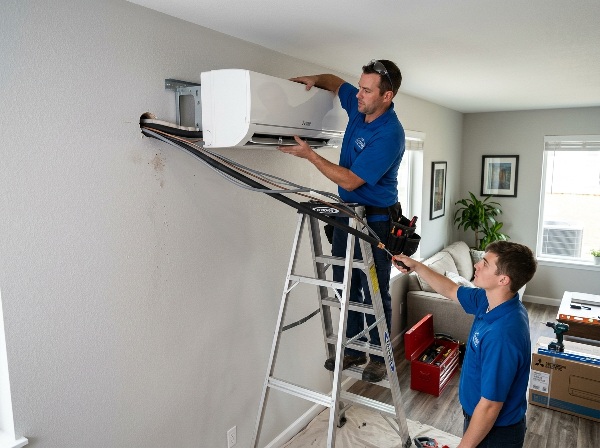
Image: Nano Banana
What should sellers do before listing?
Plan the upgrade early, because a permitted installation takes coordination, not just a day of labor. Start with a contractor who performs an ACCA Manual J load calculation to size the system correctly - oversizing causes short-cycling and poor humidity control, the kind of “works but feels clammy” issue a sharp buyer’s inspector will note. Confirm the job includes a Baltimore County permit; Maryland requires a licensed contractor to pull HVAC permits, and the permit record is exactly the documentation that reassures a buyer’s inspector. Keep the paperwork - load calculation, permit, equipment model numbers, and the warranty registration that transfers to the new owner - and schedule the work before photos and listing so the system is operational for showings. Done in this order, the upgrade converts a likely roadblock into a documented selling feature.
Frequently asked questions
Can a ductless mini split count as the home’s permanent heat source for an FHA or VA loan?
Yes. FHA and VA appraisals require a permanent heating system capable of maintaining a habitable temperature, and a properly installed ductless mini-split heat pump qualifies, whereas portable space heaters and window units do not. This is one of the main reasons the upgrade can rescue a deal that would otherwise stall over financing.
Will a buyer’s inspector flag a professionally installed ductless system?
A permitted, correctly sized, operational ductless system installed by a licensed contractor gives an inspector little to flag. The common write-ups — leaking ducts, no permanent heat, rooms that won’t reach temperature - are designed out of the system. Keep the permit and load calculation available for the inspection.
Are ductless systems a good fit for Baltimore rowhomes?
Yes - rowhomes and older Baltimore County homes without ductwork are ideal candidates, since ductless adds conditioning to additions, top floors, and basements without the wall-opening that ducted retrofits require.
The bottom line for Baltimore County sellers
The HVAC section of the inspection report is where deals quietly lose money: credits, repair demands, and financing snags tied to aging equipment, leaky ducts, and missing permanent heat. A zone-controlled ductless mini split closes those gaps in a single, permitted upgrade — it satisfies FHA and VA heat-source requirements, eliminates duct-leakage defects the U.S. Department of Energy says waste 20–30% of conditioned air, and hands the buyer a documented, warrantied, efficient system. If you’re preparing a home in Towson, Catonsville, Dundalk, or the surrounding area, size and install the system before the photos are taken - so the inspection confirms a selling point rather than a sticking point.
About the author: Eli is the owner of The Mighty Ductless, a licensed and certified ductless HVAC contractor serving Baltimore, Towson, Catonsville, Dundalk, and surrounding Baltimore County communities. Contact: (443) 535-1477.