“Why can’t these homeowners just list their house instead? Won’t they get more?”
In speaking to friends and family about my business over the years, no doubt this is one of the very first questions that comes up as I start to explain my business model of buying houses directly from homeowners at a discount.
The Background
 My name is Mike Qiu, and I’m a real estate investor. My company, Good As Sold Home Buyers has purchased, fixed, and resold dozens of houses in the Greater Seattle market since 2015. The key to success for my business model is the ability to find homeowners that are looking for a solution to their problems. The interesting part is, many times these problems may not even be directly caused by their real estate. But real estate can act as either a cure for their issues, or it’s just a burden that needs to be left behind.
No matter if it’s an inheritance someone is selling that used to belong to a loved one, a hoarder house one can no longer live in, a house falling apart with too many repairs, or a landlord emotionally done dealing with troublesome tenants, I’ve always felt like I had a natural ability to feel and express empathy towards the sellers, which is a large part of my success thus far.
em·pa·thy
noun
the ability to understand and share the feelings of another.
However, it wasn’t until this week that I had an experience that made me feel like I was actually standing in the shoes of a motivated seller.
The Story Starts Here
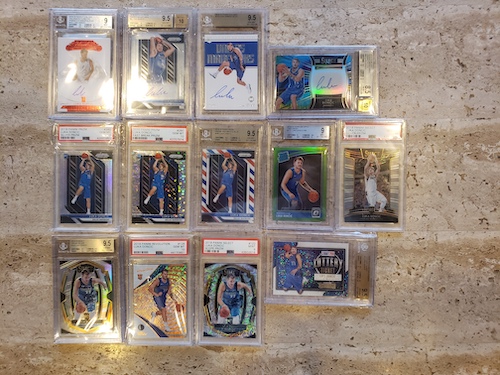
I am a huge sports fan, and I have put together a large collection of trading cards in recent years. Similar to the housing market, the sports card market has appreciated drastically in the last decade. What once was a few thousand dollar collection has seen its value increase into a $60K collection. Even though it’s no match for the housing prices around the Greater Seattle area, it’s still a hefty chunk of “assets”. I wanted to make a smart financial decision and take the gains while ahead, since I’m still not completely sold on sports cards as a reliable holder of value.
When it came time to make a decision on how to liquidate my collection, I had these choices below. I’ve also summarized it in relation to the real estate arena:
1. Sell the cards individually to private buyers/investors, using methods such as “razz” to maximize the sale value of the cards. This would likely net me the most proceeds. (This would be similar to a homeowner choosing to fix up their house, then possibly sell FSBO to avoid paying commissions)
2. Package the cards up and send to a consignment virtual store for a 12% to 15% fee. The consignment business will list the cards or auction the cards through their network, and I would eventually receive my proceeds once the cards sell. Although there’s no guarantee when they would all sell, this option might have the highest potential sale price and upside due to the consignment business’ network and the auction format. (This is similar to hiring an agent to sell my house on the MLS for a commission.)
3. Lastly, I have the option to sell quickly, in bulk to a card dealer, but at a more significant discount so the dealer can receive a good deal then “flip” the cards for a profit. (This is obviously the equivalent of selling a house to an investor. Even though most of the times, real estate investors are doing more work to flip a house than a card flipper)
As you might have guessed, I chose option #3. I decided that my time is better spent working on my business instead of maximizing the sale prices of the cards. Even though I’m giving up the most equity in my collection with this option, I’m still far ahead of where I started, and I was satisfied with that decision. Furthermore, I realized that no one could’ve convinced me on that decision. A wise mentor used to tell me that you cannot create or talk someone into becoming a motivated seller. You just need to be there when they need you, and show credibility as well as your sincerity to help. I realized that to be true here, as the card dealer I chose has used the Facebook platform to advertise his high end purchases each week, and has used testimonials to show his good track record with other sellers he’s bought from.
This is one of the pictures showing the card dealer the cards I agreed to sell him. Sad day indeed.
An Unexpected Learning Experience
This experience I had, even though unrelated to real estate, was an interesting proof of concept. Many people do not understand this particular business model of real estate investing, including many real estate agents. Also, many newer investors attempting to purchase real estate directly from motivated sellers start off their careers with a mental block on why someone would sell to them at a discount.
My story shows that there are good reasons for many people to sell assets at a discount for speed and convenience. With real estate not being as liquid of an asset as perhaps stocks or even sports cards, an investor that can provide liquidity and speed of transaction (among other reasons) is a vital part of the real estate market.