The easy money in real estate evaporated twenty-four months ago. If you think you can slap some gray luxury vinyl plank flooring over a rotting subfloor, paint the cabinets white, and extract a 40% gross margin from a desperate buyer, you are completely out of touch with reality. Real estate ROI in 2026 requires surgical precision, ruthless acquisition tactics, and an absolute refusal to over-improve. You must acquire properties completely off-market. You must execute hyper-targeted, low-cost renovations. You must anticipate severe structural red flags before they incinerate your entire contingency budget. The days of blind bidding over asking price and hoping appreciation bails you out are dead. Success now belongs strictly to operators who treat property data like a weapon.
The Amateur Flipper Is Extinct
Amateurs bought into the cable television myth of real estate investing. They paid retail prices for wholesale problems. They hired the wrong contractors. They fell in love with the houses they bought.
Now they are bleeding cash.
Institutional buyers and hardened operators shifted tactics long ago. We don't guess. We don't speculate on neighborhoods that real estate agents claim are "up-and-coming." We analyze raw data. We run rigorous title checks. We pull municipal permits. We target distressed inventory with deep structural discounts that terrify retail buyers.
The math simply does not support sloppy underwriting anymore. Holding costs have doubled. Hard money lenders are demanding points upfront and refusing to fund inexperienced operators. Supply chain issues still pop up unexpectedly, delaying projects by weeks. Every single day a house sits empty, it drains your capital. If you want to survive the current real estate market trends, you must abandon emotion. You adopt an institutional mindset. You buy based on aggressive capitalization rates and worst-case scenario exit strategies.
What Are the Real Returns on House Flipping Right Now?
The numbers are genuinely horrifying for the uninitiated.
According to recent dataset analysis, the typical profit margin for a flipped home was 23.1 percent nationwide. That sounds acceptable until you realize that is strictly a gross profit figure. That number completely ignores the crushing weight of holding costs. It ignores the exorbitant interest rates charged by private lenders. It fails to account for capital gains taxes. It turns a blind eye to the realtor commissions and closing costs that eat another 8% on the back end.
When you factor in the actual expenses of doing business, a 23.1% gross margin almost always translates to a net loss. The situation deteriorated so rapidly over the last year that profit margins officially hit a 17-year low. The median purchase price for flipped homes skyrocketed, destroying the spread between acquisition and the After Repair Value. Investors are paying too much upfront. They are getting crushed on the exit.
How Do I Find Out Who Owns a Property?
Off-market deals are the only acquisitions left with actual profit margins.
The Multiple Listing Service is picked clean by algorithms within milliseconds. If a property hits a public portal, it is already grossly overpriced. You need to locate distressed, vacant, or tax-delinquent properties months before a licensed real estate agent plants a sign in the front yard.
You drive for dollars. You spot a house with knee-high weeds, a sagging porch, and a pile of uncollected mail. What next? You have to identify the decision-maker. Knowing how to find out who owns a property separates the serious investors from the tourists. You bypass the local assessor's outdated GIS maps. You need the chain of title. You need the lien history. You need the actual mailing address of the absentee owner, not the property address.
Send aggressive direct mail. Skip trace the phone numbers. Cold call them at dinnertime. Show up with a clean cash offer. Heirs inheriting rundown properties rarely want to deal with a general contractor or a drawn-out probate process. They want fast liquidity. Be the liquidity. You extract your profit when you buy, not when you sell.
What Renovation Budgets Actually Make Sense in 2026?
Stop over-improving your properties.
The market will not compensate you for imported Italian marble in a neighborhood of modest starter homes. Buyers are financially squeezed by interest rates and persistent inflation. They want clean. They want safe. They want functional. They do not care about your bespoke design vision.
National remodeling growth is stalling out rapidly. The Harvard Joint Center for Housing Studies explicitly projects that annual homeowner spending on improvements will ease to 1.6 percent growth by late 2026. Homeowners are scaling back massively. Furthermore, the 2026 Houzz & Home Study revealed that the median planned renovation spend stands at $15,000. That is a sharp drop from previous years. The era of the blank check renovation is finished.
Homeowners are broke. Flippers are tight. Budget allocation is the entire game.
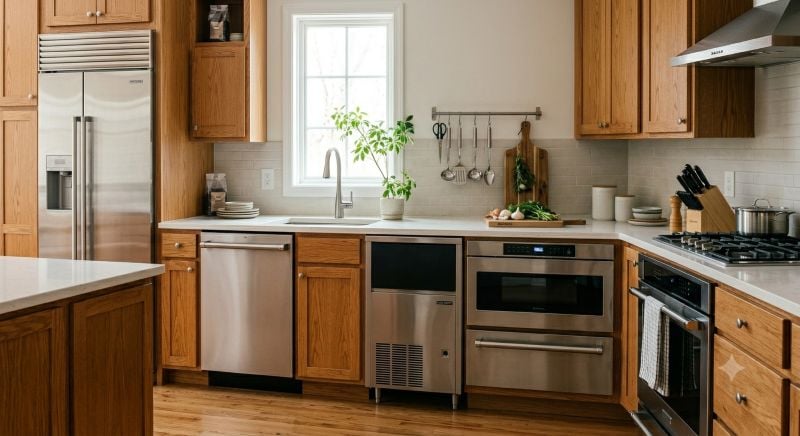
Do not gut a functional, structurally sound kitchen. Reface the cabinets. Swap the outdated hardware for brushed nickel or matte black. Reglaze the existing tub instead of ripping out the cast iron. Spend your heavy capital entirely on curb appeal and roof integrity. A retail buyer makes an irreversible psychological decision about a house within the first eight seconds of pulling into the driveway.
Which Exterior Upgrades Stop Buyers in Their Tracks?
Curb appeal is not about planting a few cheap petunias near the mailbox. It is about creating an immediate perception of high value and zero deferred maintenance.
A dead, patchy lawn screams financial neglect. A cracked, heaving driveway suggests catastrophic foundation issues. Buyers instantly extrapolate the condition of the exterior to the condition of the unseen HVAC system. If the yard looks like a wasteland, they assume the furnace is a fire hazard.
You live in a brutal desert climate? Ditch the thirsty turf immediately. Xeriscaping is no longer a niche environmental statement for activists. It is a hard financial necessity. If you are flipping in the Southwest, you hire professional landscaping services in Las Vegas. You install drought-tolerant flora. You lay down geometric patterns of decomposed granite. You install highly efficient drip irrigation.
Buyers will absolutely not sign up for a $400 monthly water bill. They want zero-maintenance aesthetics. Desert landscaping done right commands a massive premium. It signals to the buyer that the house has been updated to modern efficiency standards, protecting them from the most common first-time buyer mistakes.
What Are the Non-Negotiable Structural Fixes?
Cosmetics sell houses. Structural defects kill deals dead in their tracks.
A fresh coat of agreeable gray paint will never hide a sagging roofline from a competent, licensed home inspector. Roofs are the ultimate, undisputed dealbreaker. When a buyer's inspector finds active leaks, rotted fascia, or severe granular loss on the shingles, the buyer walks away. Or worse, they demand an absurd $20,000 credit at the closing table. You lose either way.
Here is what you actually fix:
-
- Roof decking and architectural shingles.
- Foundation cracks wider than a quarter inch.
- Outdated aluminum wiring.
- Galvanized plumbing that reduces water pressure.
On the West Coast, in California, you never skimp on the roof. You do not patch a 25-year-old, brittle three-tab shingle roof. You replace it entirely. You hire roofers in Los Angeles to tear off the old layers down to the bare wood. You replace the rotted decking. You install architectural shingles.
A new roof is not an optional luxury upgrade. It is a strict baseline requirement for securing financing. FHA and VA appraisers will flag a defective, aging roof immediately. If the property cannot qualify for government-backed loans, you just eliminated 40% of your potential buyer pool overnight. Do not play stupid games with structural integrity. It always shows up on the home inspection checklist.
Takeaway: The Mathematical Reality of 2026
The market does not care about your effort. It does not care how many hours you spent agonizing over tile grout colors or matching cabinet hardware.
You buy right, or you go bankrupt. Period. The margins are razor-thin and entirely unforgiving. The successful operators in 2026 are treating real estate like a highly regulated manufacturing process. They source cheap raw materials, process them efficiently, and package them perfectly for the end consumer.
Stop speculating. Start calculating. Calculate your maximum allowable offer down to the penny. Refuse to budge. If the seller rejects your number, you walk away without a second thought. There is always another distressed property waiting for someone willing to do the tedious, unglamorous work of finding it.