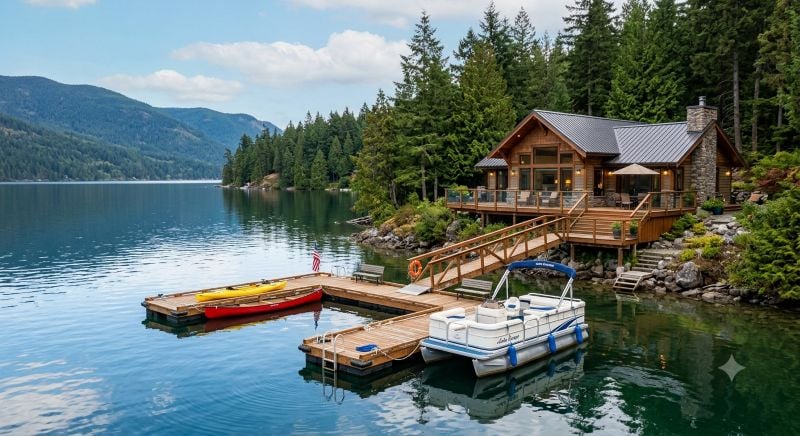
For many waterfront buyers, the dock is part of the dream. It is where the boat sits, where family gathers, where kayaks launch, and where the view becomes part of daily life. But a dock is also a structural investment exposed to weather, water movement, changing levels, ice, sun, waves, and heavy use.
That is why homeowners should treat dock planning with the same seriousness as a deck, roof, seawall, or major outdoor-living project. A well-designed dock can make a property easier to enjoy and more attractive to future buyers. A poorly planned dock can create maintenance headaches, access problems, safety concerns, and permitting issues.
Floating docks are popular because they rise and fall with changing water levels. That flexibility can be valuable on lakes, rivers, reservoirs, and shorelines where seasonal variation is common. Still, the right dock depends on much more than whether it floats.
Start with the shoreline, not the catalog
Many homeowners begin by looking at dock styles, sizes, and accessories. That can be useful later, but the first step should be understanding the shoreline itself. Water depth, bottom conditions, slope, wave exposure, current, ice movement, boat size, and the distance from the house all influence what type of dock makes sense.
A dock that works beautifully on a calm private lake may not be right for a river property with current. A narrow residential lot may need a different layout than a wide recreational property. A property with frequent water-level changes may need different anchoring and access choices than a stable shoreline.
Experienced floating dock builders will look at these site conditions before recommending a layout. The goal is to design around the property rather than forcing a generic system into a location that needs a more specific approach.
Think about how the dock will be used
A dock for one fishing boat is different from a dock used for swimming, kayaks, guests, personal watercraft, and sunset entertaining. Before choosing a size, homeowners should list the activities the dock must support.
Important questions include: How many people will use it at once? Will children or older adults use it often? Does the dock need space for seating? Will it support boat lifts, ladders, benches, storage boxes, lighting, or power? Does it need to connect smoothly to an existing walkway, ramp, or shoreline path?
The answers help determine width, length, shape, float capacity, decking material, safety features, and accessories. They also help prevent the common mistake of building too small and then trying to add function later.
Permits and rules matter
Waterfront projects often involve local, state, HOA, lake association, or environmental rules. Requirements may cover dock dimensions, setbacks, shoreline disturbance, lighting, anchoring, electrical work, wetland protection, or seasonal removal. In some communities, a dock that seems simple can still require review.
Homeowners should research requirements early. If a property is being purchased, buyers should ask whether existing docks are properly permitted and whether replacement or expansion is allowed. For sellers, clear dock documentation can reduce questions during due diligence.
Choose materials for the real environment
Dock materials need to handle more than foot traffic. They face moisture, ultraviolet exposure, temperature swings, impacts, and biological growth. The best choice depends on climate, water conditions, maintenance tolerance, and budget.
Aluminum, steel, wood, composite decking, and different float systems all have tradeoffs. Some materials are lighter and easier to handle. Others are chosen for strength, longevity, or low maintenance. Surface temperature, slip resistance, corrosion resistance, and repairability should all be part of the decision.
Safety should be designed in
A dock is an outdoor living space, but it is also a place where people move close to water. Good planning should include stable footing, proper width, visible edges, safe transitions, ladders, lighting where appropriate, and thoughtful placement of cleats or accessories.
If the dock will be used at night, lighting should improve safety without creating glare or disturbing neighbors. If children frequently use the area, ladders, railings in specific areas, and clear access paths may be worth discussing. If the dock supports boating, the layout should reduce awkward boarding angles and tripping hazards.
Maintenance affects long-term value
A dock should be inspected regularly for loose hardware, damaged decking, float problems, corrosion, shifting anchors, storm damage, and wear at connection points. Homeowners should understand what seasonal maintenance is required before committing to a system.
This matters for resale. Waterfront buyers often look closely at docks because replacement can be expensive and because access to the water is a major part of the property's appeal. A clean, functional, well-documented dock can support buyer confidence. A damaged or questionable dock can become a negotiation issue.
Connect the dock to the whole property
The best waterfront properties feel connected from house to shoreline. The path to the dock, lighting, landscaping, storage, seating areas, and views all influence how often the waterfront is actually used. A dock that is technically sound but hard to reach may not deliver its full value.
Owners should consider the full experience: carrying gear from the house, walking after rain, hosting guests, storing water toys, and moving safely between the yard and dock. Small design choices can make the waterfront feel more natural and usable.
A dock is part of the property story
In real estate listings, waterfront access is more than a line item. It is part of the lifestyle the property offers. For buyers, the dock can shape how they imagine weekends, boating, swimming, relaxing, and hosting. For owners, it can determine how often the water becomes part of daily life.
Building or replacing a floating dock should not be rushed. When homeowners plan around the shoreline, usage, rules, materials, safety, and maintenance, the result is more likely to serve the property well for years. On a waterfront home, that kind of planning is not just an outdoor upgrade. It is part of protecting the value and enjoyment of the whole property.