If like many homeowners, you’re partial to doing a little D-I-Y home improvement around the house, you will be aware that some tasks require scaffolding to be carried out properly. Though each year, falling is one of the most common causes of death on construction projects and even though it’s safer than using a ladder, a high percentage of these involve scaffolding.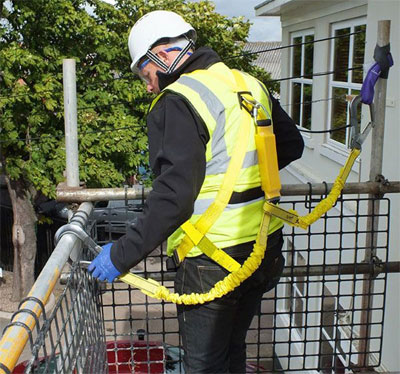
If you are planning to use scaffolding in your next home improvement project, it’s important to educate yourself on the health, safety and proper use of scaffolding.
1. Proper Assembly
One of the most common causes of scaffolding accidents is down to the scaffolding structure itself collapsing. Even though you are not on an official construction site, it is important that the structure is assembled by professionals. Once assembled, the structure should also be inspected and signed off as safe to use.
2. Use Correct PPE
Once the scaffolding is safe to use, it is also important to ensure everyone who will be working on the structure has the appropriate personal protective equipment (or PPE). This will ensure that they are protected against injury. Essential personal protective equipment to invest in includes:
- Head protection, such as a hard hat
- Fall protection - including any tools held secure by a lanyard
- Sturdy non-slip work boots
To protect against falls, it’s also important to ensure any scaffolding over two metres or more from the ground has a personal fall arrest system or guardrail systems, depending on the job in hand. If you feel unsure as to which you will need, any reputable scaffolding erector should be more than happy to advise.
When using a fall assist, it’s also important to ensure you:
- Always attach your fall protection system to a fixed, anchored safe point - such as structural parts of buildings. It’s vital that you do not anchor your fall protection system to anything such as vents or drain pipes, which could potentially give way and break in the event of a fall.
- Make sure to regularly clean and test your fall protection system and never tamper with it whilst in use and on the scaffold.
3. Cordon Off Work Zone and Protect Those Below
When working on and using a scaffolding structure for your home improvement project, it is vital that you keep in mind those who may be below the structure. You have a responsibility to keep those below you safe and make sure no one is injured. You must avoid any scaffolding collapsing, items falling off the structure and ensure people on the ground are protected and no one is injured near the structure.
One key way to ensure no one is injured is by blocking off the work zone underneath the scaffolding. Cordon off a generous zone around the structure to prevent anyone from walking under or getting too close.
4. Put Away Any Tools at the End of the Day
When you’ve finished using the scaffolding for the day, make sure that all tools are put away. Never leave anything on the structure, even if there are tools and materials that you will need to use the next day. Any item left on the scaffolding could potentially trip up other users, causing a fall and even death. They could also potentially fall off the structure due to strong winds and vibrations and injure someone below.
5. Never Overload The Structure
When working with scaffolding on a home improvement project, it’s also important to educate yourself on the weight limits of the structure. Most scaffolds will have this limit printed on the side, but if you are at all in doubt, always ask the company providing the structure. They should be able to let you know the maximum number of people who should be on the platform and its load capacity.
Even though a scaffold should typically be able to support more than double the stated load capacity, going over the limit will put anyone on the structure at risk.
6. Can’t Reach? Don’t Risk It.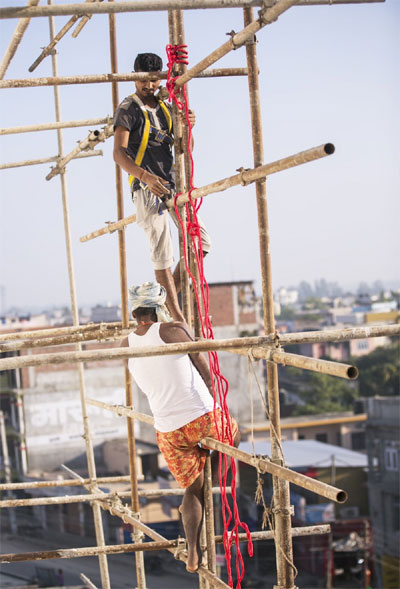
If you are on the scaffolding structure and you’re unable to reach the area where you need to work, it is vital that instead of reaching past your limit, you have the scaffold platform raised. This is a small job and shouldn’t take long, and more importantly, is much better than risking your safety.
It is also vitally important that you do not use anything such as boxes, buckets, stepladders or stilts to reach higher up as the side rail will not be high enough to keep you safe and the purpose of it will effectively be defeated.
7. Don’t Use the Structure In Bad Weather
If the weather is rough outside, do not use the scaffolding structure. It’s very easy for the platform to get extremely slippery and it should not be used when it’s raining. If after bad weather, any rain, ice, snow, mud or even any debris is left behind, it should all be cleaned off before anyone is allowed on the structure.
Scaffolding can also be very dangerous if used when it is raining, snowing or incredibly windy and can lead to many accidents.
8. Never Use Damaged Scaffolding
If you have noticed, or it has been picked up in a check, that the scaffolding structure is damaged in any way, never use it. Even if a small component is missing, or guardrails are not at the required safety height, then no one should use the structure until it is fixed.
What’s more, never attempt scaffolding repair yourself, unless you have proper training. It is a better idea to call the company which is supplying the structure.
9. Use The Right Scaffolding Structure For The Job
It is vitally important that you ensure you are using the right scaffolding structure for the home improvement project at hand. Using the wrong type of scaffolding is one of the quickest ways to cause a potentially fatal accident, which could have been easily avoidable.
If you are, for example, working on soft and unstable ground, it is important that you do not use supported platform scaffolding. These types of scaffolds should only be used on completely stable ground.
If you do find yourself working on soft ground, such as a lawn, you should use a suspended scaffold, but if in doubt any reputable scaffolding supplier will be confident in advising you on the right type of scaffolding for your project.
Your home improvement project will only ever be as safe as you allow it to be, but if you are using scaffolding, be sure to follow our tips to not only keep yourself safe and accident-free but also ensure those underneath the structure, on the ground, aren’t injured. If you have any doubts about the safety of your structure, it is important to choose a local scaffolding company such as ASC Edinburgh Ltd, leading supplier of Scaffolding Glasgow, who takes safety seriously.