Asbestos was used as a building material in most countries around the world. It was used extensively from the 60s until it was banned in the late 80s because of the health risks it caused. However, even though it was banned years ago and is now illegal to use as a building material, there are still buildings across New Zealand found with asbestos in their construction – including garages, sheds and roofs. Here’s what you need to know about asbestos in roofs, and the removal and replacement of it.
How Dangerous Is An Asbestos Roof?
When you think about asbestos, people who don’t know the risks will assume that it’s dangerous in any form. In reality, if you find asbestos in your roof still intact and without damage, then you aren’t at risk. Asbestos is a naturally occurring mineral, made up of millions of fibres. These fibres are where the danger comes from. When asbestos is broken open or exposed to the elements is when you’re at most risk.
These fibres are microscopic and can become airborne rapidly. They settle everywhere and are breathed into the lungs. They cause damage in the lungs by creating a build-up of scar tissue, which causes breathing problems, asbestosis and mesothelioma.
If you find asbestos in your roof that’s still intact, you have some time to start making plans to remove it. Some asbestos removal professionals will say that you aren’t in danger, and the asbestos roof can be left alone. However, others treat it like a time bomb – a substance that can get damaged and cause illness at any moment.
Does Your Roof Contain Asbestos?
If you live in an older home built during the 1970s, chances are high that you have an asbestos roof. Your best option would be to get an inspection performed. They’ll survey the building materials and take samples to be tested. Once the results come back, most asbestos removal specialists will recommend that you remove the roof and replace it as soon as possible.
There are home kits available on the market which allow you the opportunity to test your roof yourself; however, this can be risky. Taking a sample could disturb the substance and cause greater exposure. For that reason, it’s always best to hire a professional; they’ll have the experience, training and certification necessary to inspect your roof safely.
Asbestos Roof Removal And Replacement
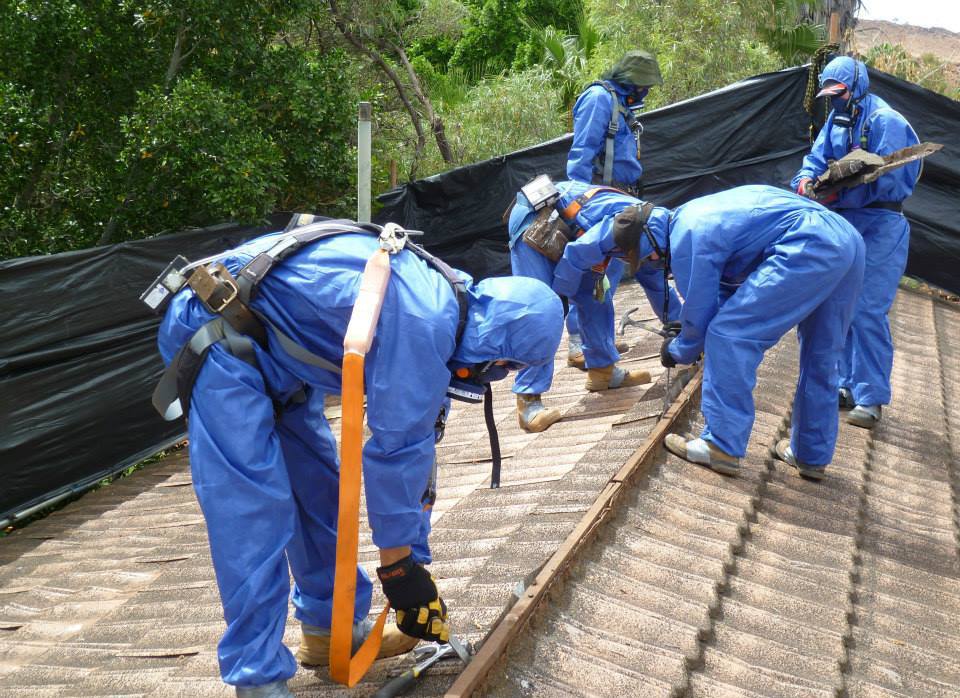
How does this type of job work, and what do you need to know? In many countries around the world, it’s illegal to perform asbestos removal yourself. Because it’s such a dangerous substance, it’s better to trust this kind of work to a professional. A professional has the required expertise, equipment, and licensing to do the job. They’re also able to dispose of the asbestos safely, where it can’t harm the locals.
An asbestos roof removal team will do the following:
- They’ll put up warning signs during the removal process to inform the public to keep their distance.
- They’ll close off your property so that the fibres aren’t released into the neighbourhood while they work. This keeps your family and your neighbours safe.
- They’ll coat the roof in an adhesive, remove and wrap the asbestos in protective sheeting or bags, and deposit of the waste at a removal site.
- They’ll then clean the area, making sure all asbestos fibres have been removed.
- They’ll finish with respraying the roof with more adhesive before installing a new roof.
It can be a long, drawn-out process. However, it’s done to keep your family and community safe. Asbestos roof removal and replacement is essential, especially when you’ve been exposed to the fibres. If you suspect that your roof could contain asbestos, call JP Franklin Roofing; we’ll perform inspections, remove the asbestos and install a new roof.