|
Monday Morning Quarterback
(Monday, August 28, 2023)
Say what you will about Taylor Swift, but she is good for Los Angeles. I mention this because the six recent Taylor Swift concerts at SoFi Stadium were a nice pick-me-up for L.A.’s still-ailing tourist economy. According to an economic analysis by the California Center for Jobs and the Economy, a nonprofit in Sacramento, Los Angeles got a $320 million bump in its gross domestic product, thanks to Swift. And while Swift walked away with millions, area employment increased by an estimated 3,300, and local earnings went up $160 million. This was particularly good news for local hospitality businesses and their employees. “The local tourism industry, while improving, is still short of recovery to pre-pandemic levels,” the Center’s report said. “Hotel jobs in the city of Los Angeles are still an estimated 15% below their pre-pandemic peak.” Governments benefited, too. An estimated $20 million was paid in sales taxes to state and local governments, $17 million was spent on state income taxes from Swift and her employees and $9 million was paid in hotel taxes. BTW, the report also says the average ticket price was $700, and a different survey says the average concert goer spent more than $1,300 when the food, drink, merchandise and any travel expenses are added to that ticket purchase. What’s more, the local tourism economy likely benefited even more because some of the out-of-town visitors may have stayed on in Los Angeles after (expenses that were not included in the analysis). In other real estate investor news, let’s get under the hood…
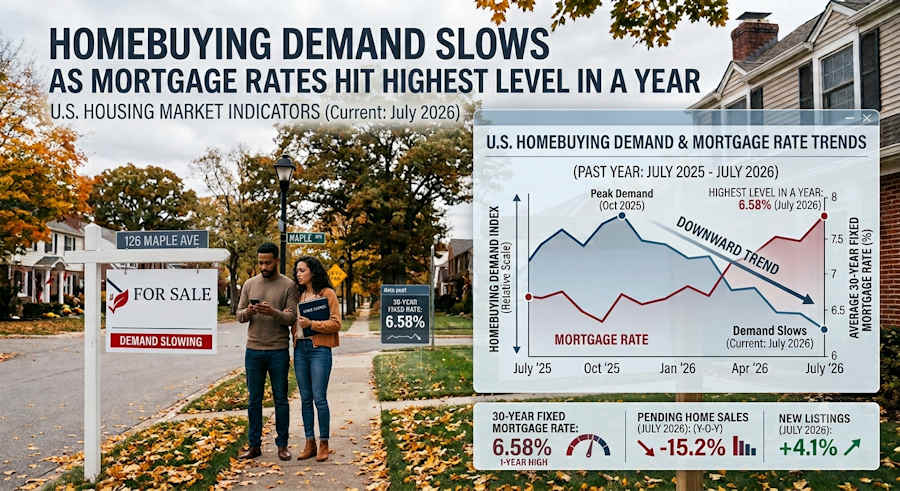
New Home Sales Increased in July. New home sales rebounded in July following a small decline the prior month, remaining resilient despite a recent surge in mortgage rates. New single-family home sales increased 4.4% in July to a 0.714 million annualized rate. Sales have been on an upward trend in the past year and are now 31.5% above the low in July of 2022. However, they still remain well below the pandemic highs of 2020. The main issue with the US housing market remains affordability. Assuming a 20% down payment, the rise in mortgage rates since the Federal Reserve began its current tightening cycle amounts to a 29% increase in monthly payments on a new 30-year mortgage for the median new home. With 30-year mortgage rates currently sitting above 7.5% for the first time in two decades, financing costs remain a headwind. The good news for potential buyers is that the median sales price of new homes has fallen by 12.1% from the peak late last year, which has helped sales activity begin to recover. While a lack of inventory had contributed to price gains in the past couple of years, in general, inventories have made substantial gains recently. The months’ supply of new homes (how long it would take to sell the current inventory at today’s sales pace) is now 7.3, up significantly from 3.3 early in the pandemic. Most importantly, the supply of completed single-family homes is up 150% versus the bottom in 2022. This is in contrast to the market for existing homes which continues to struggle with inventory problems, often due to the difficulty of convincing current homeowners to give up the low fixed-rate mortgages they locked-in during the pandemic. Though not a recipe for a significant rebound, more inventories should continue to help moderate new home prices and put a floor under sales activity. One problem with assessing housing activity is that the Federal Reserve held interest rates artificially low for more than a decade. With rates now in a more normal range, the sticker shock on mortgage rates for potential buyers is very real.
Existing Home Sales Fall In July To Six-Month Low. Higher mortgage rates and a persistent shortage of existing homes for sale pushed U.S. home sales down in July to a six-month low. Sales of previously owned homes fell by 2.2% to an annualized rate of 4.07 million in July, the National Association of Realtors reports. (That’s the number of homes that would be sold over an entire year if sales took pace at the same rate every month as in July. The numbers are seasonally adjusted.) Home sales in July were the lowest since January 2023. Sales activity for the month of July was the lowest since the so-called Great Recession. Compared with July 2022, home sales were down by 16.6%. The median price for an existing home in July was $406,700, up 1.9% from a year ago. Home prices peaked in June 2022, when the median price of a resale home hit $413,800. Around 35% of properties are being sold above the list price, the NAR notes. But the total number of homes for sale in July fell by 14.6% from last July — to 1.11 million units. Housing inventory for the month of July, particularly of single-family homes, is at the lowest level since the early 1980s. Homes listed for sale remained on the market for 20 days on average, up from 18 days in July. Last July, homes were only on the market for 14 days. All-cash buyers (i.e. investors) were responsible for 26% of sales nationally. The share of individual investors or second-home buyers was 16%. About 30% of homes were sold to first-time home buyers. As the 30-year mortgage rate hovers around 7.5% in August, buyers are pulling back, and that’s likely to damage home-sales figures further, unless rates fall in the near term. Even home builders, who don’t have the same inventory issues as the existing-home market, are concerned about rising rates and a drop in buyer traffic. “The existing-home market remains moribund, as most homeowners are staying put, enjoying their 3% and 4% mortgages, as 30-year mortgage rates on current transactions exceed 7%,” Stephen Stanley, chief U.S. economist at Santander U.S. Capital Markets, wrote in a note. “The result is a dearth of homes on the market.“
|