Bathroom design in the UK has changed dramatically over the past decade. What was once a purely functional space has become one of the most considered rooms in the home. And at the centre of that shift is one trend that shows no sign of slowing down: the wet room.
Once associated with five-star hotels and high-end new builds, wet rooms have moved firmly into the mainstream. Today, they appear in Victorian terraces, modern apartments, compact en-suites, and sprawling family bathrooms alike. So what is driving this shift, and why are so many homeowners choosing a wet room over a conventional shower enclosure?
What Is a Wet Room?
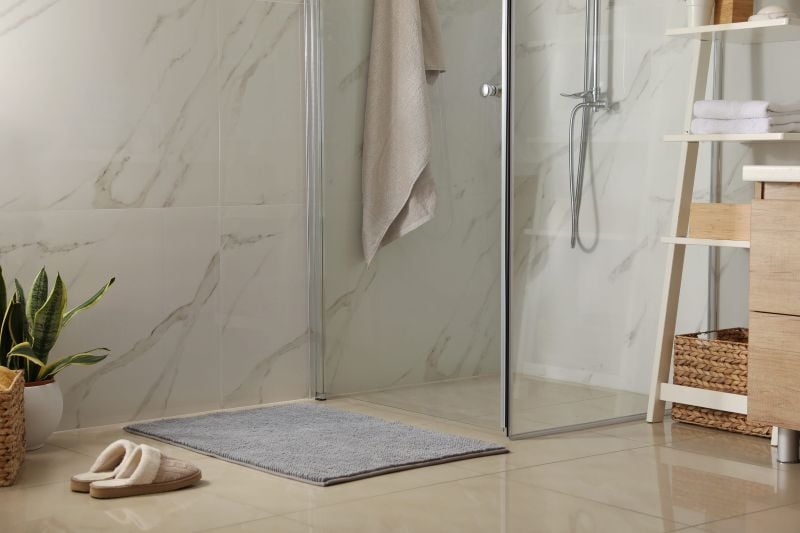
A wet room is a fully waterproofed bathroom or showering area with no shower tray and no enclosed cubicle. The floor is tanked (sealed against water ingress) and gently sloped towards a drain, allowing water to disperse freely.
A walk-in wet room takes this a step further. Rather than surrounding the shower with glass on all sides, a single wet room screen or panel is used to direct water and provide a degree of privacy.
Reason 1 – Wet Rooms Make Bathrooms Feel Larger
In the UK, bathroom space is often at a premium. Many homes — particularly older terraces and semis were built long before en-suite culture became the norm. Making a small room feel bigger is a priority for most homeowners.
A wet room addresses this directly. Without a bulky shower enclosure, the eye travels across the full floor area uninterrupted. There are no frames, no sliding doors, and no shower tray edges to break up the sightline.
A well-positioned wet room screen lets light flow through the space. Even in a modest bathroom, this visual openness can make the room feel significantly larger than it actually is. It is one of the most practical ways to maximise the perceived size of a small bathroom without any structural work.
Reason 2 – Walk-In Designs Create a More Modern Look
Contemporary bathroom design has moved firmly towards clean lines, natural materials, and an absence of unnecessary detail. Traditional shower enclosures — with their aluminium frames, pivot doors, and trays- are uncomfortably within this aesthetic.
A walk-in wet room is the natural alternative. With frameless or semi-frameless glass panels and minimal hardware, the result is a bathroom that looks considered, deliberate, and genuinely modern.
Walk-in enclosures and wet room screens are available in a wide range of frame finishes that includes chrome, brushed nickel, and matte black perhaps making it straightforward to match the rest of your bathroom fixtures. The result is a cohesive, purposeful look that elevates the whole space.
Reason 3 – Easier Access for All Ages
Accessibility in the home is no longer a niche requirement. As the UK population ages and multi-generational living becomes more common, step-free design has become a mainstream consideration.
A wet room eliminates the shower tray entirely. There is no step to navigate, no raised edge to catch a foot, and no door to swing open in a confined space. Entry is simply a matter of walking in.
This makes wet rooms genuinely suitable for children, older adults, and anyone with reduced mobility or a physical disability. For homeowners thinking about long-term usability and sometimes called “ageing in place” that is a wet room is one of the most practical choices available. It provides an accessible design without compromising on style.
Reason 4 – Wet Rooms Are Easier to Clean
Ask most homeowners what they dislike about their shower enclosure, and cleaning will feature prominently. Limescale on glass. Soap residue in door runners. Mould along silicone seals. Grime in the corners of shower trays.
Wet rooms reduce all of this considerably. With fewer surfaces, no moving parts, and no corners for water to pool in, cleaning is faster and less frequent. A wet room screen has a single face to wipe down. The floor is open and accessible. There are no door tracks to scrub.
When combined with easy-clean glass coatings, now standard on many quality screens, the ongoing maintenance of a wet room is markedly lower than that of a traditional enclosed shower.
Reason 5 – Better Use of Awkward Bathroom Layouts
Not every bathroom is a neat rectangle. Loft conversions come with sloping ceilings. Period homes often have chimney breasts, alcoves, or irregular wall angles. Compact en-suites may be barely larger than a wardrobe.
Traditional shower enclosures are designed for standard spaces. They come in fixed sizes and require a level floor and a minimum clearance for doors to open. In awkward layouts, they are difficult to install well, and often look wrong.
Wet rooms are far more flexible. Because there is no tray and no fixed enclosure, the showering area can be positioned to suit the room. A wet room screen can be placed across a corner, along a sloping wall, or fitted into an alcove. This adaptability makes wet rooms an ideal solution for the many UK bathrooms that do not conform to standard dimensions.
Reason 6 – They Can Increase Perceived Property Appeal
A well-designed bathroom makes an impression. For buyers and renters viewing a property, the bathroom is one of the most scrutinised rooms and a wet room, done well, tends to stand out positively.
There is a reason that premium new builds and recently refurbished homes frequently feature walk-in showering areas. They signal quality, thoughtfulness, and contemporary taste. For landlords and property developers in particular, a well-executed wet room can differentiate a property in a competitive market.
This is not about inflating valuations. It is about presenting a bathroom that feels current, considered, and appealing, and a wet room does that reliably.
Reason 7 – Wet Rooms Create a More Open Showering Experience
Showering inside a traditional cubicle can feel claustrophobic. The walls close in. Steam builds quickly. Movement is restricted, particularly in smaller enclosures.
A wet room changes this entirely. With no enclosure walls, the showering zone flows into the wider bathroom. There is more room to move, the steam disperses more naturally, and the overall experience simply feels more expansive and less confined.
For households with young children, where bathing and showering often happen simultaneously, an open-plan wet room provides far more practical space than a standard shower cubicle tucked into a corner.
Reason 8 – More Design Freedom
One of the most appealing aspects of wet room design is the level of personalisation it allows. Rather than selecting from a limited range of boxed enclosures, homeowners can choose individual components that reflect their own taste.
Wet room screens are available in a range of widths, typically from around 700mm up to 1200mm, and in heights of 1850mm or 1950mm to suit different ceiling heights and preferences. Glass options include clear, tinted, and fluted styles, each creating a different visual effect.
Frame and hardware finishes extend the personalisation further. Chrome remains popular for its timeless clarity. Matte black suits more industrial or contemporary schemes. Brushed brass and brushed bronze add warmth to neutral palettes. Brushed nickel and gun metal grey offer a quieter, more understated refinement.
The ability to combine these choices, such as screen width, height, glass style, and finish, means that no two wet rooms need to look the same.
Reason 9 – Wet Rooms Work in Both Small and Large Bathrooms
There is a common misconception that wet rooms are only suited to large, luxurious bathrooms. This is simply not the case.
A compact ensuite of 1.5m x 2m can benefit just as much from a wet room layout as a sprawling family bathroom. In fact, removing the shower enclosure from a small space often has a more dramatic effect, freeing up valuable floor area and making the room feel far less cramped.
For larger bathrooms, wet rooms allow for generously proportioned showering zones that sometimes incorporate two shower heads, a bench, or a feature wall. But it is the installations that often prove the most transformative. The wet room format scales effectively across the full range of UK bathroom sizes.
Reason 10 – They Are Designed for Modern Living
Taken individually, each of the benefits above is compelling. Taken together, they describe a bathroom format that is simply better aligned with the way people live today.
Modern homeowners want spaces that are low maintenance, long-lasting, and visually coherent. They want bathrooms that work well for their whole household — not just today, but in ten or twenty years’ time. They want a design that does not date quickly.
Modern wet rooms deliver on all of these counts. They are practical without being austere. They are accessible without being clinical. And they are stylish without requiring constant attention to maintain that appearance. For a growing number of UK homeowners, that balance is exactly what they are looking for.
Are Wet Rooms Right for Every Bathroom?
In most cases, yes, but it is worth acknowledging the situations where a traditional shower enclosure may still be the better choice.
If a bathroom is shared by many people and steam management is a primary concern, a more enclosed showering area may perform better. In properties where floor construction makes full tanking impractical, the cost and complexity of wet room installation may outweigh the benefits.
There are also personal preferences to consider. Some people simply prefer the contained feel of a traditional enclosure. There is nothing wrong with that.
But for the majority of UK homeowners, perhaps particularly those renovating with the next decade in mind, a wet room offers a level of practicality, flexibility, and design quality that traditional shower enclosures struggle to match.
Conclusion
Wet rooms have become one of the most popular choices in UK bathroom renovation for good reason. They make spaces feel larger, look more contemporary, and function more effectively across a wider range of users and layouts. They are easier to clean, more flexible to install, and more adaptable to individual design preferences.
Their appeal is not driven by trends alone. It comes from the fact that they are genuinely better suited to the demands of modern living than many of the alternatives. As more homeowners discover this through friends, through renovation shows, and through their own research, the shift away from traditional shower enclosures is only likely to continue.