If you're building a SERM dashboard, running automated rank tracking, or pulling competitive intelligence at scale, the Semrush API gets expensive fast. The API-level pricing sits well above what many mid-market SaaS teams and agency ops budgets can absorb. The good news: there are credible Semrush API alternatives that cover keyword research, backlink analysis, SERP data, and competitor tracking — often at a fraction of the cost.
This article covers five tools our team has used across SaaS, e-commerce, IT services, and outsourcing verticals: SE Ranking, Keywordtool.io, SpyFu, Ahrefs, and Moz. Each has a distinct positioning. Some are strong Semrush API competitors on price, others on data depth.
What Is the Best Semrush API Alternative?
SE Ranking is the best Semrush API alternative for most teams. Here's why:
- The API covers AI search visibility, rank tracking, keyword research, competitor analysis, backlink data, and SERP features — all accessible programmatically.
- The white-label infrastructure makes it especially useful for agencies managing multiple client projects — SaaS, e-commerce, or IT clients alike.
- Data freshness is reliable for daily rank tracking, which matters when you're monitoring reputation keywords in real time.
- The platform supports Google, Bing, Yahoo, and YouTube SERP data, which covers most SERM use cases without needing a second tool.
As you can see, SE Ranking is the top 1 competitor to Semrush in 2026. We recommend that you try its 14-day free trial with 100,000 credits.
Comparison Table: Semrush API Alternatives at a Glance
|
Tool |
Data Access |
SERP / Rank Tracking |
Backlink Data |
Keyword Research |
Starting Price (API) |
Free Tier |
|
SE Ranking API |
SEO + PPC + SERP |
Yes – live & historical |
Yes |
Yes |
$50 (pay-as-you-go) |
14-day with 100,000 credits |
|
Keywordtool.io API |
Keyword suggestions |
No |
No |
Yes (multi-platform) |
$88/mo |
Limited free tier |
|
SpyFu API |
Organic + PPC intel |
Limited |
Basic |
Yes |
$39/mo |
No |
|
Ahrefs API |
Backlinks, keywords, SERP |
Yes |
Yes – large index |
Yes |
$1499/mo |
No |
|
Moz API |
DA/PA, links, keywords |
Limited |
Yes |
Yes |
$20/mo |
Free tier (limited) |
1. SE Ranking API
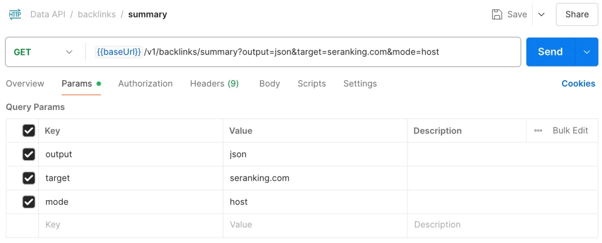
SE Ranking has moved well past its rank-tracker origins. The platform now covers keyword research, site audits, competitive research, backlink analysis, local SEO, and content marketing tools — but its actual differentiator is broader than any single feature set. It connects LLM visibility, social analytics, and traffic data with SEO signals to give teams a clearer picture of brand presence across channels.
The AI Search Toolkit tracks visibility across AI Overviews, AI Mode, ChatGPT, Perplexity, and Gemini — with competitor benchmarking and daily tracking built in. Social analytics come via Planable, which is part of the SE Ranking ecosystem. GA4 integration pulls traffic and on-site behavior into the same workflow, so you can see how shifts in search or AI visibility translate to actual traffic changes.
For teams building API-driven workflows, SE Ranking now offers an MCP server that delivers keyword, competitor, backlink, and LLM visibility data directly inside AI assistants like ChatGPT, Claude, and Gemini. That makes it a practical alternative to semrush api for teams working inside AI-native environments rather than traditional BI dashboards.
On G2, SE Ranking holds a 4.8/5 rating — higher than any other tool on this list. On Capterra, it sits at 4.7/5 (retrieved February 2026).
What Are the Key Features of SE Ranking?
- Rank Tracking API: daily or on-demand SERP positions across keyword, location, and device combinations
- AI Search Toolkit: tracks brand and domain visibility across AI Overviews, ChatGPT, Perplexity, and Gemini with competitor benchmarking
- MCP Server: delivers keyword, backlink, competitor, and LLM visibility data inside AI assistants — direct integration with ChatGPT, Claude, and Gemini
- Keyword Research API: search volume, CPC, competition level, and keyword difficulty
- Backlink API: referring domains, anchor text, and link attributes
- GA4 Integration: connects traffic and behavior data to SEO and AI visibility signals in one workflow
- Planable Integration: social media analytics accessible from the same ecosystem, no separate login
- White-Label and Agency Pack: scheduled reports, lead generator, agency catalog listing, and client management tools
- On-Page Audit API: automated technical SEO checks via API
What Are the Pros and Cons of SE Ranking?
Pros:
- Broadest channel coverage among semrush api alternatives — SEO, AI search, social, and traffic in one ecosystem
- MCP server makes it directly usable inside AI assistants, which most semrush api competitors don't offer
- API included in standard plans without a separate costly add-on
- Highest user rating on G2 (4.8/5) among tools on this list
- White-label and agency reporting built into the platform
- Clean interface with consistent navigation across tools
Cons:
- Social analytics via Planable sit separately for now, not fully merged into one view
- Backlink index smaller than Ahrefs
- Keyword database for some non-English markets can be thinner
What Is the Pricing of SE Ranking?
- The pay-as-you-go tier requires a $50.00 minimum deposit for 250,000 credits
- Core Plan ($129/month or $103.20 billed annually): 10 projects & 1 seat, 2,000 keywords + 100 prompts daily, 5 GEO domains, 250k audit pages/month, 25k API credits with MCP access, rank tracking, unlimited keyword/backlink research, site audit, and integrations (GA, GSC, Looker Studio, Matomo)
- Growth Plan ($279/month or $223.20 billed annually): 30 projects & 3 seats, 5,000 keywords + 250 prompts daily, 15 GEO domains, 2M audit pages/month, 100k API credits with MCP access, all Core features plus historical data, collaboration tools, page monitoring, and dedicated support
- Agency Pack (+$69/month, annual): add-on with 30 projects, 30 client seats, full white-label platform & reports, unlimited scheduled reports with AI summaries, agency catalog placement, and lead generator
- AI Search Add-on ($89/month or $71.20 annually): 200 prompts, tracking across AI platforms (ChatGPT, Perplexity, AI Overviews), unlimited competitor research, SE Visible dashboard, and automated reporting
- API Add-on ($149/month, annual): 12M credits, access to backlinks, domain analysis, keyword research, AI search, and website audit APIs for automation
- SMM Platform (from $33/month): social media scheduling, collaboration workflows, content planning, analytics, and asset management
- SEO Data API (from $179/month): standalone API with scalable volume, access to backlinks, domains, AI search queries, MCP integration, and automation via tools like Looker Studio, n8n, and Make
- 24M Credits Plan ($318/month effective): 24M credits/year (billed $3,816/year upfront), suitable for large-scale API usage and automation workflows
Best Use Cases of SE Ranking
- SERM teams that need to monitor branded keyword rankings alongside AI search visibility in a single platform
- Agencies managing SEO, AI search, and social performance for multiple clients with white-labeled reporting
- Teams building AI-native workflows that pull SEO and competitor data directly into ChatGPT, Claude, or Gemini via MCP
- E-commerce teams tracking product keyword positions and connecting ranking changes to GA4 traffic shifts
- Mid-market businesses that need more than rank tracking — specifically, a connected view of brand visibility across search channels
2. Keywordtool.io API
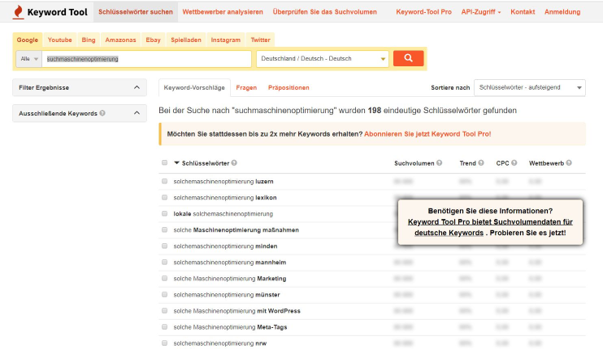
Keywordtool.io is a keyword research tool that aggregates autocomplete suggestions from Google, YouTube, Bing, Amazon, Instagram, Twitter, App Store, and Play Store. Its API is focused entirely on keyword data — it does not provide rank tracking, backlink analysis, or competitor domain intelligence. Among the best Semrush API alternatives for pure keyword discovery across non-Google platforms, it has a clear specialist position.
What Are the Key Features of Keywordtool.io?
- Autocomplete-based keyword suggestions from 10+ search platforms
- Google Keyword Planner volume data available on higher-tier plans
- CPC and competition data for Google Ads keywords
- Bulk keyword processing via API
- Localization support: 192 countries and 83 languages
- Negative keyword list generation
- Long-tail keyword discovery for Amazon and App Store — useful for e-commerce and SaaS product pages
What Are the Pros and Cons of Keywordtool.io?
Pros:
- Strong for multi-platform keyword research in a single API
- Reliable for Amazon keyword discovery — something most Semrush API competitors don't prioritize
- Simple API structure with clear documentation
- Useful for content teams and PPC teams who need suggestion-based data
Cons:
- No rank tracking, no backlinks, no site audit — not a full SEO API
- Depends on autocomplete data, so keyword volume estimates can be imprecise
- Expensive relative to data scope when compared to broader platforms
- Not viable as a standalone alternative to Semrush API for SERM teams
- Free tier is very limited — meaningful API access requires paid plans
What Is the Pricing of Keywordtool.io?
- Starter Plan ($88/month): 50 requests/day, 50,000 keywords/day search volume data, 12 months historical data, web interface + MCP + API access, all 15 platforms, CPC & competition data, device breakdown, 30-day money-back guarantee
- Growth Plan ($188/month): 100 requests/day, 100,000 keywords/day search volume data, 24 months historical data, web interface + MCP + API access, all 15 platforms, CPC & competition data, device breakdown, 30-day money-back guarantee
- Scale Plan ($388/month): 200 requests/day, 200,000 keywords/day search volume data, 48 months historical data, web interface + MCP + API access, all 15 platforms, CPC & competition data, device breakdown, 30-day money-back guarantee
- Agency Plan ($788/month): 400 requests/day, 400,000 keywords/day search volume data, 48 months historical data, web interface + MCP + API access, all 15 platforms, CPC & competition data, device breakdown, 30-day money-back guarantee
Best Use Cases of Keywordtool.io
- E-commerce teams building Amazon and App Store keyword lists at scale
- SaaS content teams discovering long-tail Google and YouTube keyword clusters
- PPC teams who need keyword suggestion breadth across multiple ad platforms
- Supplementing another SEO API where autocomplete-based data adds coverage
- Agencies doing multilingual keyword research across many regional markets
3. SpyFu API
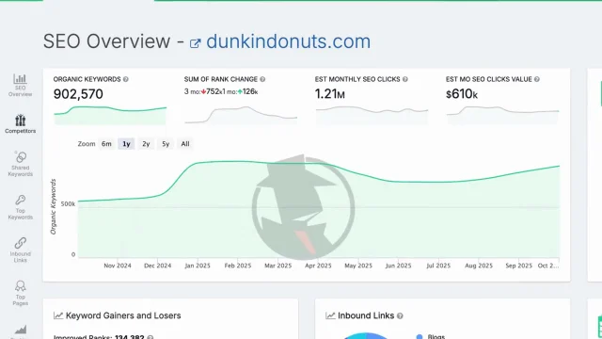
SpyFu is a competitive intelligence platform focused on organic search and paid advertising data. Its API exposes competitor keyword rankings, PPC spend estimates, ad history, and domain SEO metrics. SpyFu has been in the market for over 15 years, which means its historical data, especially for US-based domains, is genuinely extensive. It's one of the more affordable Semrush API competitors for teams focused on paid search competitive analysis.
What Are the Key Features of SpyFu?
- Competitor organic keyword data: see what terms any domain ranks for
- PPC competitor analysis: ad copy history, estimated ad spend, and keyword bids
- Domain SEO metrics: domain strength, inbound links, and ranking history
- SERP keyword overlap analysis between competing domains
- Google Ads keyword recommendations based on competitor data
- API endpoints for domain-level and keyword-level data
- US and UK market coverage with reasonable historical depth
What Are the Pros and Cons of SpyFu?
Pros:
- Deep PPC competitive intelligence — a genuine strength vs. other Semrush API alternatives
- Very affordable entry point at $39/month
- Long historical data for US domains (15+ years in some cases)
- Clean API with straightforward query patterns
- Good for IT services and outsourcing firms doing competitor research for US clients
Cons:
- Data coverage outside the US and UK is notably weaker
- Backlink data is limited compared to Ahrefs or even SE Ranking
- Rank tracking is not a primary strength — accuracy varies
- API documentation is less thorough than competitors
- Not suitable as a primary best Semrush API alternative for rank-monitoring workflows
What Is the Pricing of SpyFu?
- Basic Plan ($39/month): 10k search result rows, 10k exports, 1 live tracking project, 10+ years historical data, RivalFlow (0 sites), ChatGPT integration, AI brand monitoring, 5k weekly keyword tracking, 10 automated reports, Google Ads templates, GSC integration, white-label reporting, API access, 1 user
- Pro + AI Plan ($59 first month, then $119/month): unlimited search results & exports, 10 tracking projects, 10+ years historical data, RivalFlow (1 site), ChatGPT integration, AI brand monitoring, 15k weekly keyword tracking, 100 automated reports, Google Ads templates, GSC integration, white-label reporting, API access, 1 user (+$30 per extra)
- Team / Agency Plan ($249/month): unlimited search results & exports, unlimited tracking projects, 10+ years historical data, RivalFlow (10 sites), ChatGPT integration, AI brand monitoring, 50k weekly keyword tracking, unlimited automated reports, Google Ads templates, GSC integration, white-label reporting, API access, 5 users (+$30 per extra)
Best Use Cases of SpyFu
- Teams building PPC competitive dashboards for US and UK clients
- Outsourcing agencies doing quick competitor analysis on client acquisition calls
- SaaS companies researching keyword overlap with direct product competitors
- Content teams identifying competitor top-performing organic pages
- Paid search managers tracking competitor ad spend patterns over time
4. Ahrefs API
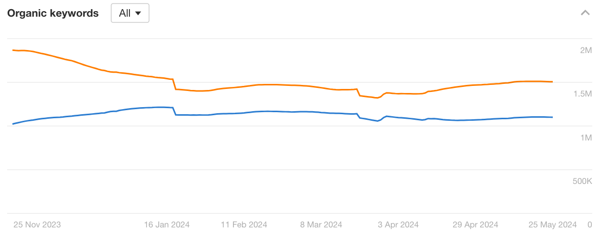
Ahrefs is one of the largest SEO data providers in the market. Its API gives programmatic access to a backlink index that covers over 35 trillion known links, keyword data across 170+ countries, SERP positions, and site audit results. Among Semrush API competitors, Ahrefs is the closest match on raw data depth. The trade-off is cost: API access is significantly more expensive than other alternatives to Semrush API and typically suited to larger teams or data-intensive products.
What Are the Key Features of Ahrefs?
- Backlink API: one of the largest indexes available, with referring domain, anchor, and link attribute data
- Keywords Explorer API: keyword difficulty, search volume, and click metrics across Google and 10 other search engines
- Site Explorer API: organic and paid traffic estimates for any domain or URL
- Rank Tracker API: position monitoring for tracked keyword sets
- Site Audit API: crawl-based technical SEO data
- Content Explorer API: top-performing content by topic or domain
- SERP data, including featured snippets, People Also Ask, and video results
What Are the Pros and Cons of Ahrefs?
Pros:
- The largest commercially available backlink index — critical for link-focused SERM work
- Highly accurate keyword difficulty scores and traffic estimates
- Strong data coverage across international markets
- Reliable SERP feature tracking for branded keyword monitoring
- Consistent data quality preferred by many technical SEO teams
Cons:
- Not competitive on price as a best Semrush API alternative for smaller teams
- API quota system can be complex to plan around for high-volume use cases
- Some features (like content gap) are not fully accessible via API
- Overkill for teams that only need rank tracking or lightweight keyword data
What Is the Pricing of Ahrefs?
- Lite Plan ($129/month): 5 projects, 6 months historical data, 750 tracked keywords, 5 tracked prompts, 100k crawl credits, 1,000 credits per user, 1 user (+2 at $40/mo), core tools (Site Explorer, Keywords Explorer, Rank Tracker, Site Audit, Competitive Analysis, API & MCP access, reports, dashboards)
- Standard Plan ($249/month): 20 projects, 2 years historical data, 2,000 tracked keywords, 10 tracked prompts, 500k crawl credits, unlimited credits per user, 1 user (+5 at $60/mo), all Lite features plus Content Explorer, batch analysis, SERP comparison, keyword clusters, AI suggestions, deeper analytics & reporting
- Advanced Plan ($449/month): 50 projects, 5 years historical data, 5,000 tracked keywords, 20 tracked prompts, 1.5M crawl credits, unlimited credits per user, 1 user (+10 at $80/mo), all Standard features plus Looker Studio integration, advanced site audit options, segmentation, and extended data insights
- Enterprise Plan ($1,499/month): all Advanced features plus unlimited API access, SSO & enterprise-grade security, access management & audit logs, unlimited historical data, custom limits & exports, and forecasting & trend analysis (annual commitment required)
Best Use Cases of Ahrefs
- Link-heavy SERM campaigns where backlink index quality directly affects analysis accuracy
- SaaS companies building internal SEO data pipelines at enterprise scale
- Agencies with large budgets that need the most comprehensive Semrush API competitor data available
- Technical SEO teams doing large-scale crawl and audit automation
- E-commerce platforms tracking thousands of product keywords across multiple countries
5. Moz API
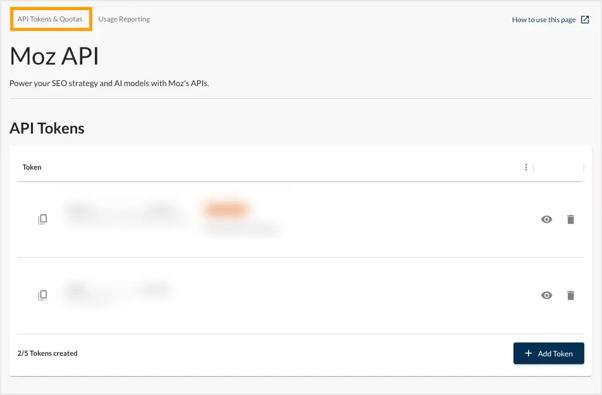
Moz has been an SEO data provider since 2004. Its API — now called Moz Pro API and the standalone Mozscape API — exposes Domain Authority, Page Authority, spam scores, keyword difficulty, rank tracking data, and link metrics. The DA/PA scores Moz developed remain widely used as reference metrics across the industry. As one of the original alternatives to the Semrush API, Moz is well-established but has fallen behind on data freshness and crawl frequency compared to more recently scaled competitors.
What Are the Key Features of Moz?
- Domain Authority (DA) and Page Authority (PA) scores — the most-cited link authority metrics in the industry
- Link Explorer API: backlink data, including referring domains, linking pages, and anchor text
- Keyword Explorer API: search volume, difficulty, organic CTR, and priority scores
- Rank Tracker API: keyword position monitoring with SERP feature data
- Spam Score: identifies potentially risky links pointing to a domain
- On-Page Grader data accessible via API
- Free tier available for limited API queries — useful for testing
What Are the Pros and Cons of Moz?
Pros:
- DA and PA scores are a near-universal reference metric — easy to explain to clients
- Free API tier makes initial integration low-risk
- Solid keyword difficulty data, well-calibrated for English-language markets
- Long track record means the API is mature and stable
- Reasonable pricing for mid-market teams among best Semrush API competitors
Cons:
- Backlink index is noticeably smaller than Ahrefs and has slower crawl refresh rates
- Rank tracking accuracy has received mixed feedback in recent independent tests
- International keyword data is weaker outside English-language markets
- Product development pace has been slower than competitors in recent years
- Not a strong choice as a primary alternative to Semrush API for data-heavy workflows
What Is the Pricing of Moz?
- Starter Plan (from $20–$75/month): 3,000 rows/month, no overages, +150 beta rows/month, suitable for basic research and reporting integrations
- Growth Plan (from $125–$500/month): 50,000 rows/month, overages at $25 per 10,000 rows, +3,500 beta rows/month, designed for scaling businesses needing flexible data access
- Advanced Plan (from $2,000/month): 4 million rows/month, overages at $5 per 10,000 rows, +400,000 beta rows/month, built for large-scale custom tools and dashboards
- Enterprise Plan (from $10,000/month): 40 million rows/month, overages at $3.50 per 10,000 rows, +4 million beta rows/month, optimized for commercial product integrations at scale
Best Use Cases of Moz
- Agencies that report DA as a client-facing metric and need API-level access to it
- Teams doing link prospecting where spam score filtering adds value
- SaaS content teams doing English-language keyword research at a moderate scale
- Developers integrating DA/PA into proprietary dashboards or CRM systems
- IT and outsourcing companies need a cost-effective best Semrush API alternative for light SEO workflows
Conclusion
There's no single best Semrush API competitor that fits every use case. The right choice depends on what your team actually needs from the API:
- SE Ranking covers the widest range of SERM use cases at a price point that works for agencies, SaaS teams, and in-house SEO teams building automated workflows. It's the most practical starting point among Semrush API alternatives for most practitioners.
- Ahrefs wins on data depth — if backlink index quality is non-negotiable, the cost is worth it for large-scale operations.
- Keywordtool.io is a specialist tool, best used alongside another API rather than as a primary replacement.
- SpyFu earns its place specifically for PPC competitive research in US and UK markets.
- Moz remains relevant where DA/PA metrics are a deliverable requirement.
The best approach is to match the tool to the specific data your workflow consumes. Running a quick POC against your actual query patterns — keyword tracking volume, backlink pull frequency, SERP feature monitoring — will tell you more than any pricing page. All five tools here offer trial access or free tiers to test with real data before committing.
FAQ
1. What are the main Semrush API alternatives for rank tracking?
SE Ranking, Ahrefs, and Moz all provide rank tracking via API. SE Ranking is the most cost-effective for teams tracking large keyword sets daily. Ahrefs offers higher accuracy at a premium price. Moz's rank tracker has received mixed accuracy reviews in recent comparisons.
2. Is SE Ranking a reliable Semrush API alternative for agencies?
Yes. SE Ranking includes AI visibility tracking, white-label features, multi-client project management, and API access across standard paid plans. It's a common choice among agencies managing SERM for multiple clients in SaaS, e-commerce, or IT services.
3. Which Semrush API competitor has the best backlink data?
Ahrefs has the largest backlink index of all the tools covered here. Moz and SE Ranking offer solid backlink data for most use cases, but neither matches Ahrefs on raw index size or crawl frequency.
4. Are there free alternatives to Semrush API?
Moz offers a limited free tier through its Mozscape API (2,500 rows/month). Keywordtool.io provides limited free keyword suggestions, though meaningful API access requires a paid plan. SE Ranking offers a 14-day trial and 100,000 credits. Ahrefs does not offer a free API tier.
5. How does SpyFu compare to other best Semrush API alternatives for PPC research?
SpyFu is the strongest option specifically for PPC competitive analysis. It exposes competitor ad copy, estimated spend, and keyword bid history in a way that most other alternatives to Semrush API don't match. Outside the US and UK, its data coverage weakens significantly.
6. Can Keywordtool.io replace Semrush API for keyword research?
Partially. Keywordtool.io provides strong autocomplete-based keyword data across Google, Amazon, YouTube, and app stores. It does not offer rank tracking, backlinks, or site audit data. It works well as a supplement to another API but not as a standalone replacement for Semrush API.
7. What is the cheapest best Semrush API alternative?
SpyFu starts at $39/month with API access, making it the lowest entry price among these tools. SE Ranking starts at a $50 minimum deposit for API access (pay-as-you-go model). For teams on tight budgets, either is significantly cheaper than Semrush's API-level plans.
8. Which alternative to Semrush API works best for e-commerce SEO?
SE Ranking covers product keyword tracking, competitor analysis, and on-page audits at a price that scales for e-commerce teams. For Amazon-specific keyword research, Keywordtool.io adds value as a complementary tool. Ahrefs is the premium choice if budget allows.
9. Does Moz API still hold up as a Semrush API competitor in 2026?
Moz remains relevant where DA/PA is a required deliverable. For teams that report link authority to clients or use it in prospecting workflows, the API is still a standard choice. For teams prioritizing data freshness, crawl depth, or international keyword coverage, other alternatives to Semrush API will serve better.
10. How should I choose between these best Semrush API competitors?
Map your actual data needs first: rank tracking volume, backlink pull frequency, keyword research scope, and whether you need PPC data. SE Ranking handles the broadest set of SERM use cases at mid-market pricing. Ahrefs is the upgrade path when data depth becomes the limiting factor. Keywordtool.io and SpyFu are specialists best used alongside a primary platform.
11. What competitor to Semrush should I choose: Ahrefs or Keywordtool.io?
For teams that need the absolute deepest backlink index, Ahrefs is the closest Semrush API competitor — but the price jump is significant. For pure keyword suggestion volume across platforms like Amazon, YouTube, and App Store, Keywordtool.io is a specialist option worth including in your stack.