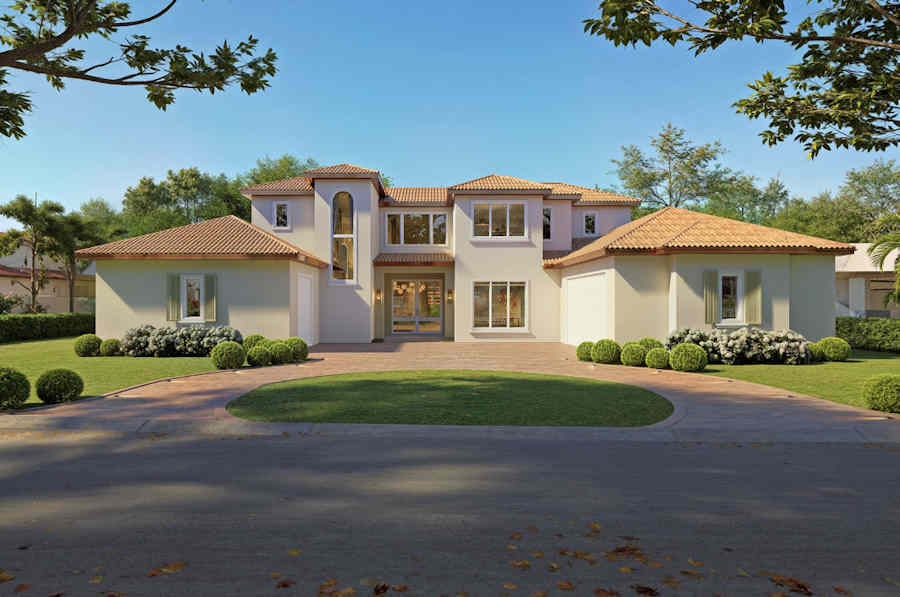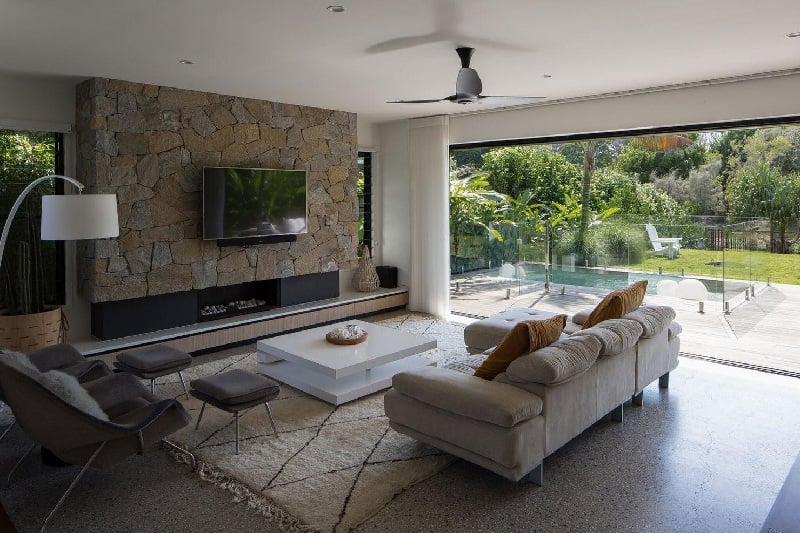
Some materials fade into the background, but natural stone becomes a defining feature. It adds permanence, texture, and character in a way few materials can. Whether used as a dramatic landscape outcropping or a refined fireplace surround, stone creates focal points that feel timeless. This article explores how to use natural stone outdoors and indoors while creating a cohesive design throughout the home.
What Makes a Stone Feature Work
Before getting into specifics, it helps to understand why some stone features look effortless and others look forced. A few principles carry across every application:
-
- Scale with intention. Focal-point stone should feel confident. Undersized pieces scattered around read as clutter; a few large, deliberate elements read as design.
- Let the stone lead. Natural stone has its own color, movement, and texture. The best designs work with those qualities rather than fighting them.
- Repeat, don't match exactly. Echoing a stone type or tone in more than one spot ties a property together. It doesn't have to be identical, just related.
- Respect the setting. Stone that looks like it could have been unearthed right where it sits almost always looks better than stone that looks imported and plopped down.
Outcropping Stone: Sculpting the Landscape
Few landscape elements have the presence of natural outcropping stone. These are large, broad, weather-worn slabs and boulders the kind that look as though they've been part of the hillside for centuries. Used well, they transform a flat, forgettable yard into terrain with depth, movement, and a sense of age.
When homeowners and designers bring in outcropping stones, they're usually after one of a handful of effects:
-
- Natural grade transitions. On a sloped lot, outcroppings can step down a hillside to break up the incline, control erosion, and create planting pockets between the stone. The result looks geological rather than engineered.
- Garden focal points. A single large outcropping, partially nestled into plantings, becomes an instant anchor for a bed something the rest of the garden can be composed around.
- Informal seating and gathering spots. Broad, flat-topped stones double as casual seating around a fire pit or at the edge of a lawn.
- Water features. Outcropping stone is a natural fit for streams, waterfalls, and pondless features, where the goal is to mimic how water moves over rock in the wild.
Successful outcropping designs look natural rather than staged. Partially burying each stone, aligning its natural grain, and grouping rocks instead of spacing them evenly helps create that effect. Adding grasses, perennials, or groundcovers around the edges softens the stone and makes it appear as though it has always belonged in the landscape.
Turning Outcroppings into Steps and Retaining
Beyond aesthetics, outcropping stone also serves practical purposes. Large slabs create durable, natural-looking steps that blend seamlessly into sloped landscapes while giving each property a distinctive appearance.
The same material works for low, informal retaining. Stacked or set outcroppings can hold back a modest grade change while looking like a natural ledge rather than a built wall. For any retaining application involving real load or height, though, proper engineering and drainage matter; stone that's holding back soil needs a foundation and backfill that let water escape, or hydrostatic pressure will eventually push it out of place.
Bringing Stone Indoors: The Hearth
Indoors, natural stone creates the same lasting impression. A limestone fireplace surround becomes the focal point of a room while adding warmth and timeless appeal.
Where an outdoor outcropping is about rugged informality, an indoor fireplace surround is usually about refinement. And for that, few materials compete with limestone.
Choosing a Limestone Fireplace Surround
Limestone has long been valued for fireplace surrounds thanks to its fine grain, warm tones, and ability to suit both traditional and modern interiors.
If you're considering a limestone fireplace surround, a few decisions will shape the result:
-
- Style and detail. A surround can be anything from a simple, contemporary slab framing the firebox to an intricately hand-carved mantelpiece with corbels, moldings, and a substantial shelf. Match the level of detail to the architecture of the room; clean and minimal for modern spaces, more ornate for traditional ones.
- Full surround versus mantel. Some installations wrap the entire face of the fireplace in stone; others use a limestone mantel and legs framing a different material at the firebox. Both are valid; it's a question of budget and how much visual weight you want the stone to carry.
- The hearth. Don't forget the horizontal hearth extension in front of the firebox. Carrying the same limestone across the hearth ties the whole feature together and provides the required non-combustible surface in front of the opening.
- Color and finish. Limestone ranges from creamy whites through warm buffs to soft grays. A honed or naturally matte finish suits limestone's understated character better than a high polish, which tends to fight the stone's natural warmth.
One important technical point: fireplaces involve heat and building-code requirements. Combustible materials like a wood mantel shelf must be kept at specific clearances from the firebox opening, and those distances are set by code and the appliance manufacturer. It's worth confirming clearances and, for gas or wood-burning units, the venting and firebox requirements before finalizing a design, so the beautiful surround you choose is also a safe one.
Getting the Proportions Right
Even the most beautiful stone can fall flat if the proportions are off. A surround that's too slight looks lost on a tall wall; one that's too massive can overwhelm a modest room. As a general rule, the fireplace should feel balanced against the wall it sits on and the ceiling height above it; taller rooms can carry a taller, more substantial surround, while a low-ceilinged space usually wants something more restrained. The firebox opening, the mantel height, and the depth of the hearth all want to relate to one another and to the furniture arranged around them. Before committing, it's worth mocking up the outline in painter's tape on the wall so you can stand back and judge the scale in the actual room, in real light, rather than trusting a drawing on a screen.
Making Inside and Outside Feel Connected
Here's where the two halves of this article come together. A home feels intentional when its stone speaks a consistent language. That doesn't mean using the exact same stone at the garden steps and the fireplace; it means choosing materials that share a family resemblance.
A few ways to create that thread:
-
- Echo the palette. If your outdoor outcroppings lean warm and buff-toned, a limestone surround in a compatible warm tone will feel related even though the applications are completely different.
- Repeat a texture. Pairing naturally cleft, rugged stone outdoors with a softer honed version of a similar stone indoors creates contrast that still feels coordinated.
- Frame the view. If a picture window looks out onto a stone garden feature from beside the fireplace, the two stone elements can be composed to play off each other, blurring the line between inside and out.
This kind of coherence is what makes high-end homes feel considered rather than assembled piece by piece.
Caring for Stone Features
Both outdoor outcroppings and indoor limestone reward a little ongoing attention:
-
- Outdoors, outcropping stone is essentially maintenance-free, though you may occasionally clear leaves and debris from crevices and rinse off built-up grime. Moss and lichen that develop over time are usually welcomed as part of the natural, aged look.
- Indoors, limestone is a softer, more porous stone, so it benefits from a penetrating sealer to resist soot and the occasional spill, and it should be cleaned with pH-neutral products rather than acidic or harsh cleaners that can etch the surface. Dust the surround periodically and wipe gently as needed.
Neither demands much, and both age gracefully, limestone developing a mellow patina indoors, outcroppings settling deeper into the landscape as plantings mature around them.
The Lasting Appeal of Stone
Trends in finishes and fixtures come and go, but a genuine stone feature never really dates. An outcropping that steps down a garden slope will look just as right in thirty years as it does today, and a limestone fireplace surround will still be the heart of the room long after the furniture around it has been replaced.
That permanence is the whole point. When you build a focal point out of natural stone whether it's shaping the land outside or anchoring the living room within you're not decorating for this season. You're adding something to the home that will quietly define it for a very long time.