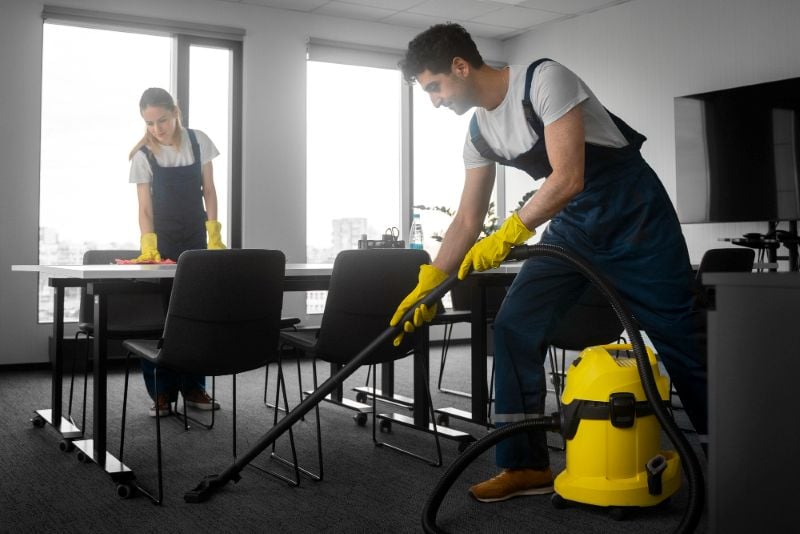
Healthy offices depend on environmental hygiene, not surface appearance alone. Shared desks, break rooms, washrooms, and meeting spaces collect skin cells, dust, food residue, and microbes through normal daily use. If that buildup stays in place, indoor air quality drops and hand-to-face transfer rises. Professional janitorial cleaning supports cleaner breathing zones, safer contact surfaces, and steadier working conditions, which helps employees stay comfortable through long hours inside enclosed commercial settings.
Cleaner Shared Areas
Reception counters, lunch areas, and conference tables carry the heaviest daily contact load in most workplaces. After managers see how fast these spots collect residue and hand-borne contamination, many compare janitorial cleaning services in NYC that can cover touchpoints, floors, and waste handling on a dependable schedule. Regular attention in those shared rooms helps limit spread before contaminants move deeper into private offices.
Surface Control
Door pulls, copier screens, faucet handles, and elevator buttons can hold viable germs long after smudges disappear. Scheduled disinfection lowers the chance of indirect contact transmission during packed workdays. That matters in larger offices, where dozens of hands reach the same objects within short intervals. Cleaner high-touch points reduce one of the most common routes for microbes to move through a building.
Better Indoor Air
Indoor air shifts with every step, vacuum pass, and opening door. Dust lodged in carpet, fabric panels, vents, and window ledges can recirculate and then irritate eyes, skin, and airways. Professional cleaning removes that particulate load before it accumulates. Damp wiping, filtration-based vacuuming, and routine floor care help lower airborne matter, which can improve breathing comfort for employees spending full weeks inside sealed office environments.
Restroom Hygiene
Washrooms influence workplace health because moisture supports bacterial growth on fixtures, partitions, and dispensers. Repeated cleaning reduces organic residue that feeds odor and contamination. Stocked soap, towels, and tissue also shape behavior, since handwashing rates improve when supplies stay available. A sanitary restroom helps stop germs from leaving sinks and stalls and then returning on hands, shoes, or personal items.
Floor Safety
Floors trap more than visible dirt. Shoes bring in pollen, street grime, moisture, and fine debris that spread through corridors and workstations. Routine sweeping, mopping, and vacuuming remove those particles before they become airborne or slippery. Deeper care also strips residue that can increase fall risk. Cleaner walking surfaces support office health by cutting both contaminant circulation and avoidable injuries.
Reduced Sick Days
Absence patterns often reflect shared exposure, not personal habits alone. Kitchens, printers, meeting rooms, and restrooms create repeated contact chains during a normal shift. If cleaning is inconsistent, pathogens can move easily from one person to the next. Professional service interrupts that cycle with routine removal of soil and microbes. Over time, fewer preventable illnesses can support steadier attendance and smoother daily operations.
Consistent Methods
Health gains come from repetition, timing, and follow-through. Informal tidying often happens after a spill, complaint, or inspection, which leaves long gaps between meaningful cleaning tasks. A professional plan assigns duties by space, frequency, and risk level. That structure keeps work reliable across daytime, evening, or overnight service windows. Offices benefit when sanitation follows a stable routine instead of staff convenience.
Support for Morale
Physical surroundings affect concentration, comfort, and trust in the workplace. Stained carpet, dusty vents, and neglected kitchens can signal poor oversight, even if core business functions run well. Clean rooms create a calmer impression and support better focus during meetings or desk work. Employees also tend to feel more comfortable welcoming visitors into spaces that look cared for and hygienic.
Scope Matters
Cleaning needs vary by building type, headcount, and daily traffic. A medical office faces different contamination pressure than an administrative suite or retail back office. Service frequency should reflect those conditions, along with flooring type, restroom use, and occupancy patterns. When the scope matches the environment, cleaning becomes more effective because labor and materials reach the spaces that carry the greatest hygienic burden.
Why Training Counts
Results depend heavily on staff technique. Workers need to know dwell times, dilution ratios, material compatibility, and the safest order for each task. Poor practice can spread contamination from one surface to another or damage finishes that then trap more soil. Trained crews are better able to recognize risk zones, use products correctly, and complete work without disrupting the office environment.
Conclusion
Professional janitorial cleaning supports healthier offices by controlling surface contamination, reducing airborne dust, and improving hygiene in heavily used shared spaces. Those effects reach far beyond appearance. Cleaner washrooms, safer floors, and well-managed touchpoints help shape comfort, attendance, and daily function across the whole workplace. When sanitation follows a reliable plan, offices become easier to breathe in, safer to move through, and better suited for sustained productive work.