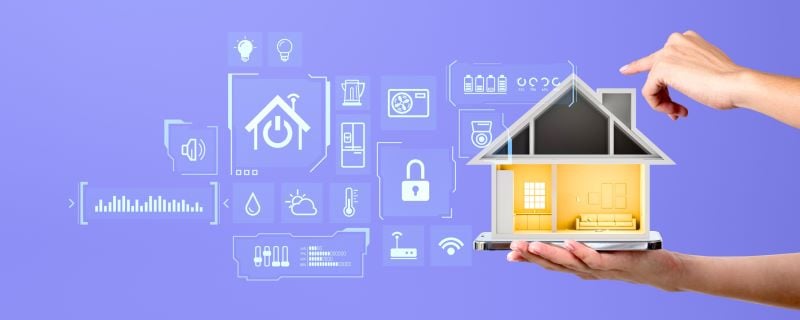
Internet connections that deliver high speeds and maintain consistent signal strength are necessary for a family's daily activities. If the home network fails, essential tasks stop. Adults cannot access professional servers, and children cannot attend digital classrooms. Due to those needs, homebuyers inspect a property's digital infrastructure even at the listing-viewing stage. It is costly to repair poor wiring after a renovation. As a result, homeowners plan local networks so that every family member has a specific amount of data capacity without delays or disconnected sessions. In this article, we describe tools that change a standard residence into a smart home – a location where devices interact without errors and personal information remains protected.
Why Modern Homeowners Choose Complete Network Planning
Most domestic wireless problems stem from using only the standard router. Thick steel-concrete walls and glass-mirrored cupboards create physical barriers that seriously weaken signal strength in distant rooms.
To avoid dead zones and ensure stable coverage, consider solutions like:
-
- Install a mesh system. A few compatible modules provide a seamless blanket of WiFi coverage across the entire flat or bungalow.
- Run an Ethernet LAN cable. For computers or TVs, it’s better to use a wire of category Cat6e.
- Use two-band routers. Spreading traffic across the 2.4 GHz and 5 GHz bands will ease strain on WiFi.
- Mount a low-voltage box. A special tech box in the hallway groups all wires, sockets, and switches into one place.
Together, these ensure that the smart home runs without interruption, even if the whole family turns on high-bitrate streaming video at the same time.
Smart Living: Integrating Household Devices into One Ecosystem
In a well-functioning home, a resident does not need to manage many separate applications for various pieces of hardware. It is more effective when all gadgets operate together through automatic processes. When sensors for temperature, radiator controllers, and humidifiers exchange information without manual intervention, the conditions in every room remain at levels that support health.
Current home technology uses open protocols that enable hardware from various manufacturers to exchange data. Zigbee & Thread are the most common and consistent standards for sensors at this time. Because they require low amounts of electricity, the batteries in wireless buttons and sensors that detect water leaks can function for twenty-four months.
For consistent home automation, consider the configuration described below.
|
System Element |
Best Protocol |
Power Source |
Main Function |
|
Main Hub |
Ethernet / Wi-Fi |
220V |
Processes local scenarios |
|
Motion & Door Sensors |
Zigbee / Thread |
CR2032 battery |
Detects changes in rooms |
|
Smart Plugs |
Wi-Fi / Zigbee |
220V |
Controls device energy use |
|
Thermostats |
Zigbee |
AA batteries |
Manages heating temperature |
With a local data-processing system, a digital home can continue to perform fundamental operations when an internet connection is unavailable. If a sensor detects water under a washing machine, for instance, the system closes the main water valve. It does this without sending data to the manufacturer's servers.
Internet Safety and Home Traffic Management
The quantity of network-connected devices in a typical house is increasing, including mobile phones, computers, televisions, and game consoles. Because many inexpensive sensors have software weaknesses, a larger number of devices poses greater risks to data privacy.
Qualified engineers passionately recommend splitting your home LAN into multiple isolated virtual local area networks (VLANs). This allows you to set aside an encrypted channel for working on where all of your financial documents are stored and remote work occurs. A separate isolated segment can be used for children’s tablets where they engage in online learning and watch entertainment. Another subnet is reserved solely for smart devices that should never have access to your PC.
For securely collecting public data or checking information in different regions while working remotely, experts often use proxies. If your business processes require working with British segments of the network or specialized software, a reliable proxy UK will provide quick responsiveness and stable connections without delays.
Smart Family Living: How Technology Supports Daily Routines
A correctly configured smart home takes away hundreds of chores, freeing up time to interact with loved ones and relax. When returning home, your system already warms up rooms, turns on pleasant ambient lighting, and starts a robot vacuum cleaner in areas without people.
Smart family technologies allow you to completely abandon classic metal keys that children constantly lose in the yard.
Here are a few things to improve home security and make it easier to live in:
-
- Biometric door locks. They open by taking fingerprints, scanning faces, or using a personal temporary code.
- Smart video calls. A camera registers visitors at the door and sends a notification to your phone, even if you are in the office or on the road.
- Automatic blind pullers. Light sensors close windows when it is bright outside so furniture does not burn out, and rooms do not overheat.
- Gas leak sensors. In case of danger, the system instantly cuts off the pipe and activates the room's emergency ventilation.
By implementing those residential technologies, owners make the house predictable and secure for children, plus older family members. All these intelligent home systems make it unnecessary for people to monitor the building's technical functions at all times.
For cybersecurity, you must replace the original passwords on routers, cameras, and hubs with complex ones. If you install firmware updates regularly, the data remains private (privacy protection), and people who are not permitted cannot control the devices.
Conclusion: Investing in the Future of Your Smart Home
Equipping a modern digital space is a long-term investment in the comfort and liquidity of your home. It is common for buyers to seek houses with low-voltage wiring and integrated security systems. As you improve the network in stages, divide the traffic, and automate the lights, the house becomes easy to use and safe for everyone. Invest in technology wisely, and your house will be more comfortable for its residents immediately.