One of the most expensive phrases in residential construction is:
"We didn't notice it until later."
By the time a defect becomes visible after plasterboard, cabinetry, flooring, and finishes have been installed, fixing it is rarely straightforward. Trades need to return. Materials need to be removed. Schedules need to be adjusted. In some cases, completed work must be dismantled simply to access the problem.
This is one of the least discussed realities of residential construction.
Many building defects are not expensive because they are severe. They become expensive because they are discovered too late.
The earlier an issue is identified, the more options exist to resolve it efficiently. Once walls are lined, ceilings are closed, and finishes are applied, the cost of correction rises significantly.
For builders, developers, and homeowners alike, understanding which defects are easiest to address before enclosure can prevent substantial financial and operational headaches later.
Construction Is a Sequence of Dependencies
Residential construction is not a collection of isolated tasks.
Each stage depends on the quality of the work completed before it.
A framing issue affects plaster installation.
A waterproofing issue affects tiling.
A drainage problem affects landscaping and foundations.
This creates an important operational reality.
Construction defects rarely remain isolated.
A small issue identified early may affect only one trade.
The same issue identified later may affect five.
One observation frequently made by experienced project managers is:
"The cost of a defect often grows faster than the defect itself."
That is because the expense is usually driven by disruption, not repair complexity.
Frame Alignment Problems
Framing defects are among the most common issues identified during residential construction.
These may include:
-
- Out-of-plumb walls
- Misaligned framing members
- Incorrect openings
- Poor bracing installation
- Inadequate structural connections
When identified before wall linings are installed, rectification is generally straightforward.
Carpenters can access structural components easily. Adjustments can be made without affecting subsequent trades.
Once plasterboard is installed, however, the situation changes.
Walls must be opened.
Finished surfaces become damaged.
Additional trades become involved.
The defect itself may not have changed, but the cost of accessing it certainly has.
Drainage and Site Preparation Issues
Some of the most expensive future problems originate before the home itself is fully visible.
Site preparation and drainage often receive less attention from homeowners because they are not visually impressive.
Yet poor drainage remains one of the leading contributors to long-term building issues.
Common problems include:
-
- Incorrect site falls
- Water pooling around foundations
- Inadequate stormwater management
- Poor grading
The challenge is that these issues often appear insignificant during construction.
The consequences emerge later.
Moisture intrusion, foundation movement, erosion, and landscaping failures frequently trace back to drainage decisions made during early stages of the build.
Incorrect Structural Connections
Modern homes rely on numerous structural connections working together.
Tie-down systems, brackets, fixings, anchors, and load-transfer components all play critical roles.
Most homeowners never see these elements.
Once construction progresses, many become concealed permanently.
If installation errors are identified before enclosure, correction is generally efficient.
If discovered later, investigation alone may require removing internal finishes.
This highlights one of construction's recurring contradictions.
Some of the most important building components are also the least visible.
Service Installation Conflicts
As projects progress, multiple trades begin operating within the same physical spaces.
Electricians, plumbers, HVAC contractors, and data installers often work within tightly coordinated schedules.
When coordination breaks down, conflicts occur.
Examples include:
-
- Services installed in incorrect locations
- Structural members modified without approval
- Plumbing clashes
- Electrical routing conflicts
These issues may appear minor initially.
However, they frequently create downstream complications that affect multiple trades.
One useful lesson from construction management is that many project delays are not caused by difficult work.
They are caused by coordination failures.
"The biggest bottlenecks are often coordination problems, not effort problems."
Few examples illustrate this principle better than service conflicts discovered after enclosure.
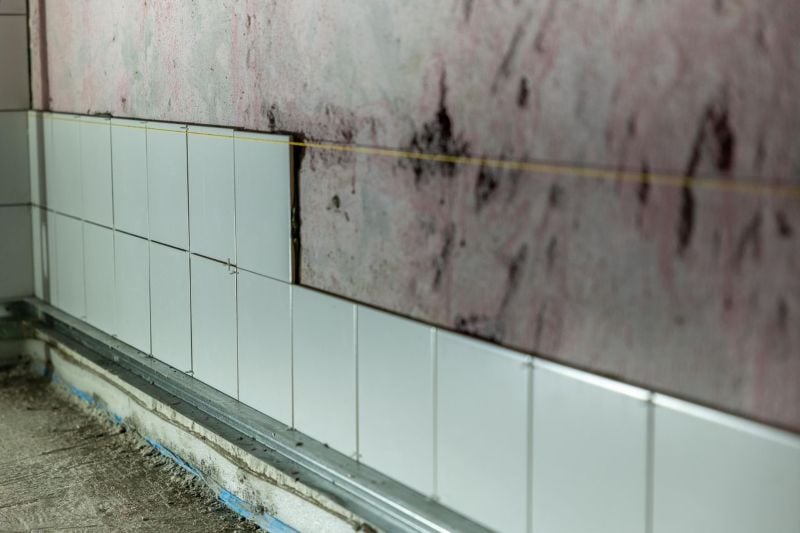
Waterproofing Deficiencies
Waterproofing failures consistently rank among the most costly residential defects.
The reason is simple.
Water rarely damages only one thing.
When waterproofing systems fail, moisture affects multiple materials simultaneously.
Timber, insulation, plasterboard, flooring, cabinetry, and finishes can all become involved.
Before walls and surfaces are completed, waterproofing issues are usually easier to identify and rectify.
After completion, diagnosis becomes more complicated.
The source of the problem may be hidden.
Remediation often requires removing newly completed work.
The cost difference can be substantial.
The Psychology of Construction Progress
Homeowners naturally focus on visible progress.
Frames go up.
Walls appear.
Roofs are installed.
Rooms begin taking shape.
These milestones create excitement because they provide tangible evidence that the project is advancing.
The challenge is that visible progress does not always equal quality progress.
This creates a subtle psychological risk.
As construction becomes more visually impressive, people become less inclined to question what has already been completed.
The project feels closer to completion.
Attention shifts toward finishes rather than fundamentals.
Experienced construction professionals understand that some of the most important quality checks occur before the building looks finished.
Why Independent Verification Matters
Construction involves multiple stakeholders.
Builders manage schedules, subcontractors, suppliers, compliance requirements, budgets, and client expectations simultaneously.
Most projects are delivered successfully.
However, construction remains a complex process involving thousands of individual decisions.
Even highly capable teams can experience oversights.
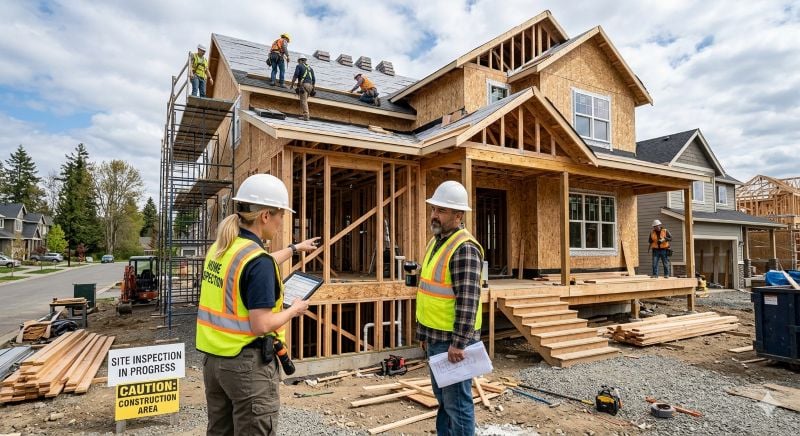
This is one reason many homeowners choose to incorporate stage inspections into the construction process.
The purpose is not to create conflict.
The purpose is to introduce independent verification before work becomes concealed by subsequent stages.
Issues identified at this point are often dramatically easier to resolve than issues discovered after completion.
The Real Cost of Rework
One of the least appreciated costs in construction is rework.
When defects are identified late, the repair itself is often only part of the expense.
Additional costs may include:
-
- Trade rescheduling
- Material replacement
- Project delays
- Administrative coordination
- Quality assurance reviews
- Client communication
Research across construction industries consistently highlights rework as a major contributor to project inefficiency.
The underlying lesson is straightforward.
Preventing defects is usually cheaper than correcting them.
But identifying defects early is often the next best outcome.
What Sophisticated Builders Understand
Experienced builders recognise that quality control is not a separate activity from construction.
It is part of construction.
The most successful projects are rarely the ones with no defects whatsoever.
They are the projects where issues are identified early, communicated clearly, and resolved efficiently.
A useful observation from seasoned industry operators is:
"Every project contains problems. Good projects find them before the client does."
That mindset often separates well-managed builds from projects that experience costly disputes and delays.
Final Thoughts
Many of the most expensive construction defects begin as relatively simple issues.
A framing discrepancy.
A drainage problem.
An installation conflict.
A waterproofing oversight.
Individually, these problems are often manageable.
What makes them costly is allowing them to remain hidden until later stages of the build.
The earlier issues are identified, the more options exist to resolve them without disrupting schedules, damaging completed work, or creating unnecessary expense.
This is one reason stage inspections continue to play an important role in residential construction quality control. They help identify problems while they are still accessible, visible, and significantly cheaper to correct.
Because in construction, timing often matters as much as the defect itself. The best time to fix a problem is usually before the walls go up. The second-best time is before someone discovers it after handover.