A thoughtfully designed garden should continue to impress long after the sun sets. Walls, retaining structures, stone steps, and paved pathways all carry considerable visual weight during daylight hours, yet once the sun dips below the horizon after sunset, these same elements often vanish completely into the surrounding darkness. Hardscape lighting, which involves the strategic placement of fixtures on or within built stone and masonry elements, changes that equation entirely by turning once-dark surfaces into illuminated focal points. By embedding or mounting small fixtures directly into built elements such as walls, steps, and pathways, property owners can significantly extend the usability and enjoyment of their outdoor spaces well into the evening hours. The result is a garden that feels safer, looks more polished, and delivers a stronger return on the original investment in masonry, stone, or concrete work. This guide explores the specific advantages of adding purpose-built lights to hard surfaces and offers practical advice on fixture selection, placement, and design integration.
How Hardscape Lighting Transforms Outdoor Spaces After Dark
Revealing Architectural Details That Disappear at Night
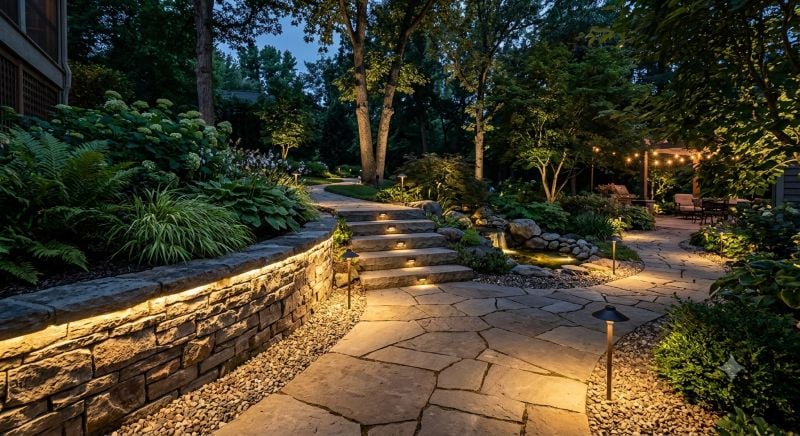
Stone veneer walls, brick columns, and natural rock borders lose their texture and color once daylight fades. A recessed fixture mounted flush with the surface casts a controlled wash of light that highlights mortar joints, rough-cut edges, and color variations. This technique, often called grazing, brings depth back to surfaces that would otherwise appear flat and featureless. Homeowners who have spent significant budgets on premium materials can finally enjoy those details around the clock. Those exploring innovative hardscape lighting solutions will find that modern fixtures are compact enough to fit inside standard mortar joints and thin enough to avoid disrupting the clean lines of a wall or pillar.
Creating Distinct Zones Within a Single Garden
Light defines space just as effectively as a hedge or a fence. A soft glow along a seating wall separates a dining terrace from a lawn area without physical barriers. Step lights mark the transition between an upper patio and a lower garden bed, signaling a change in elevation and function at the same time. By treating each hardscape element as its own lighting zone, the garden gains a layered atmosphere that feels intentional rather than accidental. Property owners interested in practical guidance for maintaining and improving their homes will recognize this zoning principle as one of the most cost-effective ways to add perceived square footage to an outdoor living area.
Five Practical Benefits of Installing Hardscape Lights in Your Garden
In addition to visual appeal, built-in garden lights provide clear and practical benefits. Here are the key benefits of a well-planned installation:
1. Improved foot-traffic safety. Illuminated steps, walls, and pathway edges significantly reduce trips and falls, even on moonless nights.
2. Extended outdoor living hours. Proper lighting adds two to three extra evening hours of garden use in warmer months.
3. Higher property value. Professional exterior lighting boosts curb appeal, buyer interest, and perceived home value.
4. Lower long-term energy costs. LED hardscape fixtures use minimal wattage, running fifteen to twenty units for pennies nightly.
5. Reduced maintenance burden. Solid structures shield lights from impacts, and LED modules last tens of thousands of hours.
Brands like InLite appear in online forums and guides alongside other manufacturers, making product comparison easy before choosing a system.
Why LED Technology Matters for Built-In Fixtures
Heat output is a genuine concern when a fixture sits inside a stone or composite wall. LED modules run cool enough to be encased in tight spaces without degrading surrounding adhesives or discoloring adjacent materials. They also offer a range of color temperatures, from warm amber tones that mimic candlelight to neutral whites that render plant colors more accurately. Choosing the right temperature influences mood: warmer tones suit dining walls and fire pit surrounds, while cooler tones work better along driveways and utility paths. A detailed independent review of top-rated outdoor lighting products can help narrow down which LED specifications match a given project.
Protecting Your Investment in Masonry and Stonework
Quality hardscaping costs a significant amount. A retaining wall built from natural flagstone or a set of bluestone treads represents a substantial financial commitment. Leaving those elements unlit means their visual contribution drops to zero once darkness arrives, effectively halving the hours of enjoyment they provide. Lighting these features keeps them visible and shows thoughtful design.
Choosing the Right Hardscape Lighting Fixtures for Walls, Steps, and Pathways
Fixture selection depends on the specific hardscape element being lit. Wall-mounted wash lights work best on vertical surfaces taller than forty centimeters, where the spread of light can travel far enough to create a visible gradient. Step lights require a narrow downward beam to light the tread without blinding approaching pedestrians. Pathway-edge fixtures should cast a light pool about sixty to ninety centimeters wide, covering enough area for safe footing without spilling into nearby planting beds. Material compatibility is also important. Stainless steel housings resist corrosion in coastal areas, while powder-coated aluminum suits most inland climates. Always check the ingress protection rating, as fixtures rated IP65 or higher withstand rain, irrigation spray, and occasional submersion.
Safety and Ambiance: How Built-In Lights Protect and Beautify Your Garden
The dual role of hardscape lighting—serving both safety and atmosphere—is what sets it apart from standard floodlights or solar stake lamps. A single recessed fixture in a stair riser simultaneously prevents a misstep and adds a warm accent line across the garden. This dual function means fewer total fixtures are needed, which keeps the daytime appearance clean and uncluttered. It also reduces wiring runs and transformer loads, simplifying both installation and future troubleshooting. For those managing broader renovation projects, our collection of tips and resources for residential property owners covers complementary upgrades that pair well with exterior lighting improvements.
Design Tips for Integrating Hardscape Lighting Into Your Existing Garden
Retrofitting lights into an established garden requires careful planning and thoughtful consideration of the existing layout, but it does not demand a complete rebuild of the space. Map every hard surface people walk on or view. Focus on elements seen from key viewpoints like windows and doors. Choose the same color temperature for all fixtures to prevent an uneven look. A consistent warm white near 2700 Kelvin suits most home environments. Space wall-wash fixtures at 1.5 times wall height apart. For steps, install a fixture on every second or third riser, as the eye naturally fills in the pattern. Finally, wire all fixtures to one timer or smart controller so the system turns on and off on a set schedule. Automation removes the risk of leaving lights burning through daylight hours and keeps energy consumption predictable month after month.
Bringing Your Garden to Life Every Evening
Hardscape lighting is no longer a luxury limited to commercial plazas or resort courtyards. Modern fixtures and low voltage make it accessible to any home garden. The benefits that homeowners can expect from hardscape lighting are entirely tangible, ranging from safer movement along paths and steps after dark, to longer hours of outdoor enjoyment during warm evenings, and extending to a noticeable lift in overall property presentation that potential buyers and guests will immediately appreciate. The same principle applies whether lighting one wall or an entire network of paths. Lighting structures reveals a garden's hidden nighttime identity.
Frequently Asked Questions
How do I prevent glare and light pollution when installing hardscape lighting in residential gardens?
Choose shielded fixtures with downward or lateral beam angles that keep light below the horizontal plane. Install dimmers on circuits to match ambient conditions and avoid overlighting paths or seating areas. Position sources low to the ground and use warm color temperatures (2700-3000K) to reduce blue-light scatter into neighboring properties.
What are the most common installation mistakes homeowners make with hardscape lighting projects?
Overlighting is the leading error, turning functional accents into harsh spotlights that wash out texture instead of revealing it. Placing fixtures too high on walls creates distracting hotspots, while ignoring cable routing through masonry results in visible wiring that undermines the finished appearance. Skipping voltage-drop calculations on long runs causes dimming at the far end of circuits.
Which types of hardscape lighting fixtures work best for stone walls and paver integration without disrupting clean design lines?
Compact LED systems with flush-mount housings and precise beam angles are engineered to fit into mortar joints and thin surface profiles. InLite offers innovative hardscape lighting solutions that match fixture dimensions to masonry thickness, ensuring seamless integration. These units deliver controlled light distribution while maintaining the original visual intent of retaining walls and pathway borders.
Can hardscape lighting systems be retrofitted into existing stone or concrete structures, or do they require new construction?
Retrofit installations are entirely feasible with the right tooling and planning. Diamond-core bits cut precise holes for recessed housings without cracking surrounding masonry. Surface-mount options with low-profile brackets work when drilling is impractical. Run low-voltage cable through expansion joints or along the back of retaining walls to avoid visible conduit, then seal penetrations with masonry-compatible silicone.
How much does professional hardscape lighting installation typically cost per fixture in 2025?
Expect $150 to $400 per fixture when labor, wiring, and transformer setup are included. Complex masonry integration requiring core drilling or trench work pushes costs toward the upper range. Material choice also matters: marine-grade stainless steel housings command premium pricing compared to composite or aluminum bodies, but they deliver longer service life in freeze-thaw climates.