This is Part 7 of David Fletcher's ongoing Realty Times series exploring how artificial intelligence is reshaping real estate—and why professional judgment has never been more valuable.
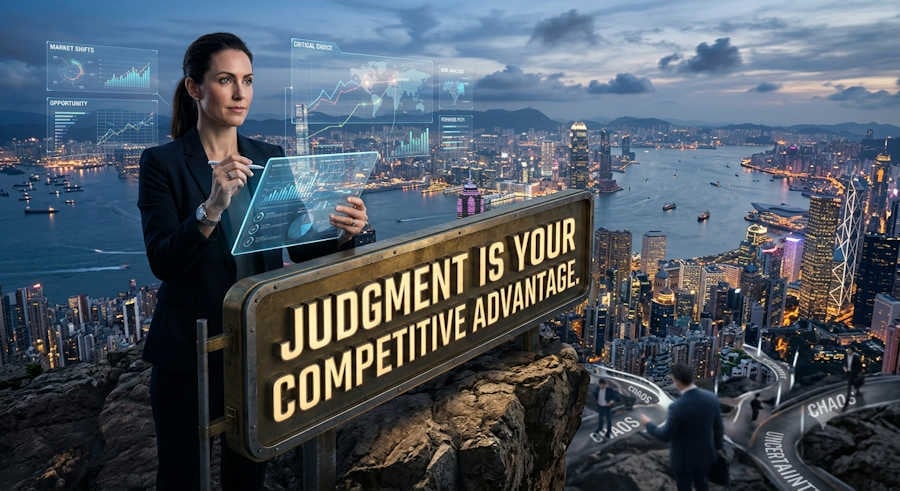
In today's marketplace, your greatest competitive advantage isn't faster technology, better prompts, or access to more information.
It's your judgment.
For years, mortgage companies have competed for one thing: becoming the lender a Realtor trusts enough to recommend.
It isn't just about interest rates or closing costs. It is about earning a place in a Realtor's small circle of trusted professionals.
Research confirms what many experienced Realtors have known all along: buyers continue to rely heavily on their real estate agents when considering mortgage financing.
Zillow's 2024 Consumer Housing Trends Report found that 61% of pre-approved buyers used a referral from a real estate agent, Realtor, or broker when looking at financing options. An earlier Zillow report found that approximately one in five mortgage buyers first found the lender they ultimately used through a real estate professional's referral.
Think about that for a moment.
A meaningful percentage of borrowers select their lender because a Realtor they trust makes a recommendation.
That should make every mortgage executive pay attention.
But it should also make every Realtor stop and think, because the same competitive battle is about to be fought in the age of artificial intelligence.
## The Competition Has Changed
For decades, successful mortgage loan officers have understood an important truth: they are not simply competing for individual borrowers.
They are competing to become one of the few professionals a Realtor consistently trusts.
A National Bureau of Economic Research study examined referral networks connecting 78,706 Realtors with 101,316 loan officers across 41 states. The researchers concluded that these referral networks are both widespread and concentrated, with homebuyers frequently directed toward a relatively small number of loan officers.
The lesson is clear.
Trust wins.
Not just once, but repeatedly.
Now ask yourself a different question.
As consumers increasingly use AI to search for homes, compare neighborhoods, understand financing and evaluate market conditions, whom will they trust when it is time to make an important decision?
Will they trust the AI?
Or will they trust the Realtor whose professional judgment has consistently proven reliable?
## NAR Is Seeing the Same Trend
The National Association of REALTORS® has documented the rapid adoption of artificial intelligence throughout the real estate profession.
A Realtors Property Resource survey reported by NAR found that 92% of agents were already using AI or planned to use it. However, 63% identified the accuracy of AI-generated information as their greatest concern.
Reggie Nicolay, Senior Vice President of Marketing and Training for Realtors Property Resource (RPR), explained the significance of those findings:
"AI adoption is no longer the question. Agents are already using it. The real opportunity now is confidence—confidence in output quality, confidence in compliance and confidence in how AI is used in client conversations."
Notice what he did not say.
He did not say the greatest opportunity was writing better prompts.
He did not say it was purchasing faster software.
He did not say it was automating every possible task.
He said the opportunity was confidence.
Confidence is built through trust, and trust is earned through sound professional judgment.
AI Doesn't Replace Trust. It Raises Its Value.
Many Realtors continue to worry that artificial intelligence will eventually replace them.
I believe the opposite is more likely.
AI will replace or accelerate many routine tasks.
It can summarize documents, write marketing copy, research neighborhoods, generate market reports and answer hundreds of common questions.
But AI cannot sit across the kitchen table and recognize that a buyer's objection about a kitchen being too small may have little to do with the kitchen itself.
It cannot observe the buyer's hesitation and ask the question that uncovers the real concern.
It cannot establish a relationship, accept responsibility for a recommendation or reassure a family facing one of the largest financial decisions of its life.
Those are acts of professional judgment.
Judgment becomes more valuable—not less valuable—as information becomes abundant.
The New Referral Economy
Mortgage companies have spent decades trying to become one of the few lenders a Realtor consistently recommends.
Realtors now face a similar challenge.
Your competition is no longer simply the agent across town.
Your competition includes every AI platform that can answer a consumer's question within seconds.
The question consumers will ask will not simply be:
Who can give me the fastest answer?
The more important question will be:
Who can help me make the best decision?
There is an enormous difference between the two.
The professionals who thrive in the AI era will not necessarily be those who possess the most information.
They will be the professionals whose clients trust their judgment when the decision truly matters.
The Future Belongs to Trusted Advisors
Technology has always changed how Realtors work.
It has never changed the fundamental reason clients choose one professional over another.
They choose someone they trust.
Mortgage companies understand that.
Successful loan officers understand it.
Now Realtors must understand it as well.
Artificial intelligence will continue to become faster, smarter and more accessible. That is inevitable.
What is not inevitable is whether Realtors become more valuable because of AI—or less valuable.
The answer will depend not merely on how well they use artificial intelligence, but on how well they combine its capabilities with professional experience, curiosity and judgment.
In an age when AI can answer almost any question, the Realtor who exercises the best judgment will become the professional everyone wants advising them.