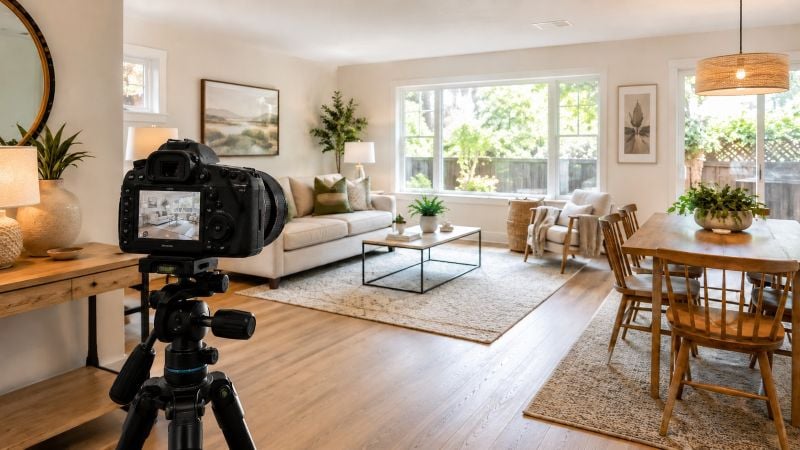
Sellers and agents lose valuable ground when professional staging enters the conversation too late.
Professional staging is still misunderstood as the final decorative layer before photography. In reality, it should begin much earlier. The strongest results come when staging is treated as the prelude to photography, marketing, showings, buyer comparison, and negotiation. The property preparation process should not be a rescue tactic after the listing has already struggled.
The first showing now happens online. Before a buyer books a viewing, they have already judged the photos, room flow, lighting, color, cleanliness, condition, and overall impression. If the images reveal clutter, heavy furniture, poor maintenance signals, dated finishes, dark rooms, or avoidable distractions, the buyer may never take the next step.
In a market where buyers have more choice, presentation has to do more than look clean. Too many listings now show the same white walls, white furniture, pale accessories, and rooms that photograph neatly but create no clear memory. Neutral should not mean anonymous. A great stager does not impose a decorating style; the work is to support likely buyer priorities while showing function, scale, warmth, care, and a reason to remember the property.
That is why preparation before photography matters.
A listing photograph is not just a picture. It is the buyer’s first experience of the property. It creates an immediate opinion about value, care, lifestyle, and confidence. Once that opinion is formed, it is difficult to undo.
This is where sellers can make an expensive mistake. They may decide to “see what happens” first and consider staging only if the property does not sell. By then, the strongest launch window has passed. The listing has already been viewed, compared, saved, dismissed, discussed, or ignored. If a price reduction follows, staging becomes part of a recovery plan instead of part of a stronger opening strategy. That is backwards.
Professional staging should begin before photography, before showings, before online comparison, and before buyers start questioning the asking price. It is not simply about adding attractive accessories. It is about preparing the property, so buyers understand the space, trust the condition, and feel confident enough to take action.
Good preparation answers buyer questions before they are spoken. It shows whether the property is clean and maintained, whether rooms have clear purpose, whether lighting and color support the space, and whether furniture placement shows size, flow, and function.
These questions matter because buyers do not evaluate property one detail at a time. They respond to the total impression. A poorly lit room, worn flooring, crowded furniture, heavy window coverings, neglected repair, or dated color may seem minor to the seller. Together, those issues create doubt.
Doubt affects value.
It is important to note a good-looking property can still sit on the market. That does not mean preparation failed, and it does not mean staging has no value. It means presentation is one part of the value equation. Price, location, condition, finished space, layout, lot appeal, buyer demand, and competition still decide what the market is willing to bear. Professional preparation cannot change those facts, but it can help separate a presentation problem from a pricing problem. When the property is properly prepared and buyers still hesitate, the conversation becomes clearer: the issue may not be how the property looks, but whether the market supports the price.
When buyers see avoidable concerns, they may wonder what else has been overlooked. They may assume more work is needed. They may compare the property less favorably against another listing. They may still be interested, but with hesitation, and hesitation often shows up in the offer.
This is why staging should not be reduced to just decorating.
Decorating is about personal enjoyment. Staging is about buyer response. The goal is not to show the seller or agent’s taste. The goal is to help the property communicate clearly to the likely buyer.
That may involve editing furniture, improving lighting, adjusting color, correcting visual imbalance, packing early, cleaning more thoroughly, completing minor repairs, or identifying presentation issues that weaken confidence. Sometimes the most important staging recommendation is not what to add. It is what to remove, repair, simplify, or invest money on.
Agents benefit from this step as much as sellers. A well-prepared property gives the agent stronger photography, a clearer marketing story, fewer avoidable objections, and a better foundation for the pricing conversation. It also helps avoid the uncomfortable position of trying to defend a property that went public before it was truly ready.
Sellers also need to understand that the camera sees differently than the eye. A room that feels acceptable in person may photograph smaller, darker, busier, or more dated than expected. Since the buyer’s first impression is usually made from images, preparing for the camera is now part of preparing for the market.
The best time to address those issues is before the photographer arrives.
Once the listing is live, the market begins responding. Online views, showing requests, buyer feedback, second showings, and offers all tell a story. If that story is weak, the conversation can quickly shift from preparation to price.
Of course, a price reduction may be necessary, but it should not be the first tool used to correct avoidable presentation problems. If a reduction is needed after thorough preparation, the investment was not wasted. The property entered the market with fewer objections, stronger photographs, clearer function, and a better chance to earn buyer confidence. If buyers still hesitate, the conversation becomes clearer: the issue may be price, competition, timing, property limitations, or what the market is willing to bear.
A professional staging consultation gives sellers and agents a practical plan before that happens. It helps identify what should be fixed, improved, removed, rearranged, cleaned, packed, and simplified before the property is judged by the market.
Sellers have one opportunity to launch with strength. Agents have one opportunity to introduce the property to the market with confidence. Preparing before photography gives the property a better chance to attract attention, build buyer confidence, and support its value from the first impression.