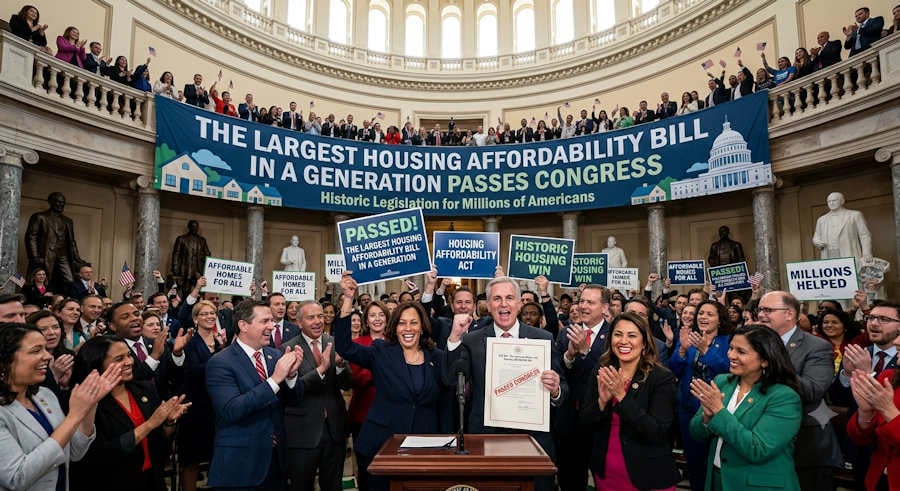
The 21st Century ROAD to Housing Act, which recently cleared a major hurdle by passing the Senate with overwhelming bipartisan support, is one of the most substantial federal housing overhauls in decades.
The bill tackles the housing crisis by targeting the root cause: the lack of available housing inventory. For everyday consumers, buyers, and renters, the impact is divided into several major areas:
1. Cracking Down on Institutional Investors
The most highly publicized consumer protection in the bill is a direct restriction on Wall Street "crowding out" average families.
-
The Rule: The bill bars large institutional investors from purchasing single-family homes if they already own 350 or more residential properties.
-
The Goal: It aims to reduce competition for entry-level buyers who find themselves outbid by all-cash corporate buyers. (Note: "Build-to-rent" developments are excluded to protect new rental construction).
2. Pushing Down Construction Costs
To lower the final sticker price of homes, the bill targets federal and local red tape:
-
Eliminating the "Chassis Rule": Historically, builders were legally required to build manufactured homes on a permanent steel frame with wheels, even if the home was never meant to move. Eliminating this rule is expected to slice up to $10,000 off the production cost of a new manufactured home.
-
Incentives for Local Zoning Reform: The bill sets up a $200 million annual grant program to reward local governments that cut red tape, fast-track permitting, and allow denser options like duplexes, townhouses, and accessory dwelling units (ADUs).
-
Commercial Conversions: A new pilot grant program (the RESIDE Act) will fund local efforts to turn vacant, empty commercial or industrial buildings into affordable housing.
3. Help for Current Homeowners & Landlords
-
Whole-Home Repairs: The bill establishes a federal pilot program to fund local and state home repair initiatives. This means lower-income homeowners and landlords can access grants and forgivable loans to update and modify older, deteriorating properties.
4. Expanding Financing & Mortgage Access
-
FHA Loan Modernization: The bill increases the statutory loan limits for FHA-insured manufactured housing loans and expands property improvement loans to cover the construction of ADUs.
-
Small-Dollar Mortgages: It orders a deep dive into loan originator compensation to figure out how to make lenders more willing to write small-dollar mortgages ($100,000 or less), which are traditionally hard for lower-income buyers to secure.
-
Appraisal Modernization: It updates appraisal licensing standards to reduce home valuation delays and bottleneck times for final home purchases.
The Reality Check: While housing advocates and lawmakers are calling this a historic step forward, housing economists note that consumers won't feel relief overnight. Because the bill focuses heavily on building supply, cutting red tape, and streamlining construction, it will take months or even years for these new developments to hit the market and visually ease local