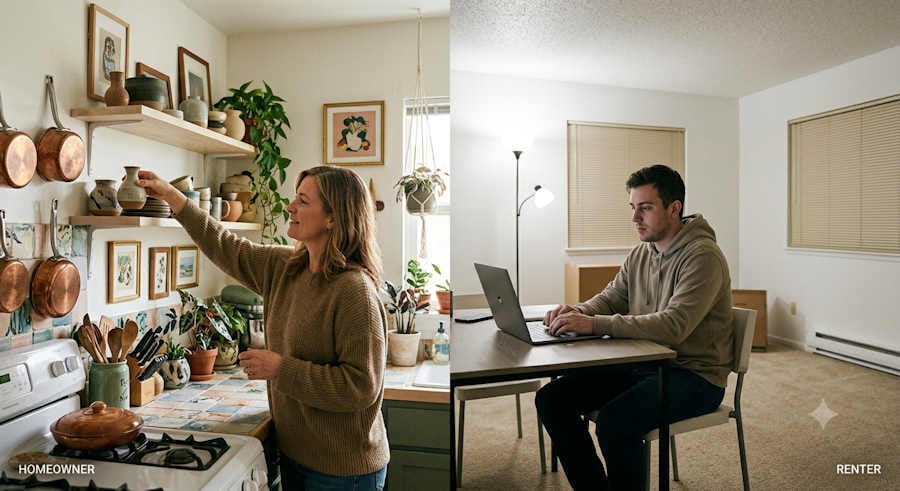
Question: I own a rental property that was my former home. Soon I will be looking to buy a new home and keep my rental property active. I notice that my former home is on my credit report which will lower my credit score due to owning more than one property and showing that amount of liability. Would you recommend that I open a business account and have the business own the rental property to clear up my debt to credit ratio problem?
Answer: No. The credit report shows the mortgage debt, but your loan application is different: It will show the debt plus the rental income you receive and the market value for the property.
The investment property is an asset less any mortgages or liens. As well, the debt is offset by your monthly rental, three-quarters of which is likely to be added to your income for qualification purposes. Go no further until you speak with loan officers.
Question: I just recently sold a home in a fiercely declining real estate market due to job relocation. I lost so much that I had to write a sizable check to the mortgage company to get out of it. I am absolutely appalled to find out that there are no tax breaks for this type of personal loss! It appears you can write off losses on the sale of a second home, but not a main residence.
The law protects the investments of the wealthy, who can afford two homes, but does not protect people who can only afford one home ... as if that is not an investment! Has anyone tried to get this piece of tax legislation changed? Has this always been the case?
Answer: It doesn't matter if you're rich or poor, you cannot write off the loss from the sale of a personal residence. If a second home is not used in business or trade, if it is purely for personal use, then the same rule applies: no write-off.
"The loss on the sale of a personal residence is a nondeductible personal loss," says the IRS . For details, speak with a tax pro.
Question: If I buy a house with an in-law apartment does the current "in-law" have to vacate the premises?
Answer: The term "in-law apartment" or "accessory unit" generally means a rental unit within a private home -- not a residence for in-laws, though that is possible.
Does the tenant have a lease? If yes, it must be honored by a new owner. Is the property in a community with rent control? If yes, does rent control apply? For specifics, speak with a local real estate attorney.
Also ask: Does the in-law unit meet all required zoning and building codes? If not, you could have problems.
It might make sense to buy the property if all zoning and building code standards are met and under the condition that the tenant must vacate the premises 24 hours before closing. This way removing the tenant is the responsibility of the current owner and you can see that the property is vacant during the pre-closing walk-through. For details, speak with a local real estate broker or attorney.
Question: We recently built a small home near Hilton Head Island. We also found a small, new home in our home state. We would like to sell the beach house this summer but aren't sure if it would be wiser to hang on for a year before listing. Our concern is that there is a building frenzy down there and the competition is heating up. What are your thoughts about the timing of the market?
Answer: A building frenzy is good news for sellers -- it means your property is in demand. Local brokers can tell you about the area market and how your property might now be priced.
However, if you sell you need to consider the tax issues involved. Speak with a tax pro before going further. It may make sense to require that closing not occur before a certain date as a condition of any sale situation to qualify for low capital gains tax rates.
Question: I purchased a house a few days ago. After finding out who I was using for a home inspection the owners tried to back out of the contract because they have had a bad experience with the home inspector scaring people out of deals in the past. Can they do this?
Answer: No. If you have an agreement which says you can have a home inspection with the inspector of your choice, then you get to pick the inspector.
The core point of an inspection is that you want an experienced outside party selected by you to look at the property precisely so you do not rely only on the representations of the owner or their agents.
If the inspector is too picky you can reject his or her advice and go through with the transaction. No home is perfect and what you really want to find are material defects or large near-term repairs that will be required.
All sellers should welcome a thorough inspection because it reduces their future liability -- no one can say they hid defects in the face of a solid inspection by a professional. For this reason, the pickier the better.
Your buyer broker can tell you more.
Question: Is it true that a person who is at least 65 years old only pays half the property tax of a younger person?
Answer: Jurisdictions around the country are working to moderate the burden of property taxes for older residents. Some have special allowances while others defer property taxes until the home is sold.
These programs vary widely -- and some jurisdictions have no programs. Contact local real estate brokers or the property tax office for details.
Question: I am writing in hopes that you may have an answer as to why our house shakes at night.
At first I considered the train that passes our house two blocks up, yet as I thought about it, it couldn't be the train because when the shaking of the house starts, you don't hear the train at all. Then I thought about a boiler, yet I checked and we don't have a boiler.
Last, I thought about the sewer system as we live in a city, where, if I am correct, water comes through the sewer every night to flush everything down, so when it all boils down to it, that's my only reasonable conclusion.
Answer: If your house shakes every night at the same time then there is some regular, repetitive event that's the cause.
The odds are overwhelming that it's not the local sewage system. But, contact the local water utility and ask for an inspector to take a look.
By any chance, do other houses in the neighborhood also shake? Do you have a thermostat that automatically turns on the heating or air conditioning? Are you near an industrial facility or mine which uses heavy equipment? Does the house shake on weekends as well as week days?
It's possible that there's a train in the area that you feel but do not hear. Perhaps it's further down the tracks.
Question: I need some sound advice about the current market because I think I'm going crazy.
Just when I already thought prices in my area were already threefold what the average income qualifies for in mortgage payments, I'm now even more shocked to see new listings that are $100,000 or more overpriced in desirable areas according to online valuations.
All of that on top of everyday reports that the market has cooled, foreclosures are up, and homes on the market are by far outnumbering qualified buyers. We're now looking to buy our next home, but I am so depressed by the numbers I'm seeing.
Why are seller's agents overpricing the houses, according to fair market values from recently sold homes? How do they justify such prices? Why do brokers encourage buyers to invest at these prices, when common sense tells me, if rates go up, and people are shut out of the market, there will be even fewer qualified buyers, so prices have to go down! Do brokers have any code of ethics for the crisis they're creating in this market? Please tell me something to ease my misery about the current market!
Answer: You're not crazy. There are several answers.
First, why do you think online valuations are accurate? Do online sites have appraisers in your neighborhood who reported to them recently, or do they work by statistics which may be out-of-date, inaccurate and not reflective of individual properties?
Second, imagine if you were a seller. Would you hire a broker to sell the property for less than market value? If brokers are over-pricing properties then buyers won't buy. Asking prices will soon fall if buyers just say no.
Third, home values are not based on a multiple of average incomes. They are based on what the market will bear. In effect, buyers are self-selected by their willingness to purchase at a given price and their financial ability to do so. Seen another way, homes are not universally affordable.
Fourth, there are individuals within the market who agree with your assessment and believe that appreciation rates will slow, stop or perhaps reverse. In some areas -- and with some types of properties -- it can be argued that prices are already falling. Consider, for example, luxury new homes offered at discount in certain markets.
As a buyer you must use your own judgment. If prices make no sense to you, vote with your dollars and rent. Use the services of a buyer broker, someone obligated to work in your best interest as a purchaser, to better understand local trends and to spot properties that meet your requirements.
Have a real estate question? Send your inquiry to Ask Realty Times . Because of the volume of mail received, Mr. Miller cannot respond to questions individually or privately. Published letters may be edited for space and style. For comments regarding other Realty Times articles, please contact individual authors by pressing here . For past columns in this series, please press Ask Realty Times .
This column is designed to provide accurate and authoritative information in regard to the subject matter covered. It is made available with the understanding that neither the author nor the publisher is engaged in rendering legal, accounting, or other professional services. If legal services or other expert assistance is required, the services of a competent professional person should be sought.