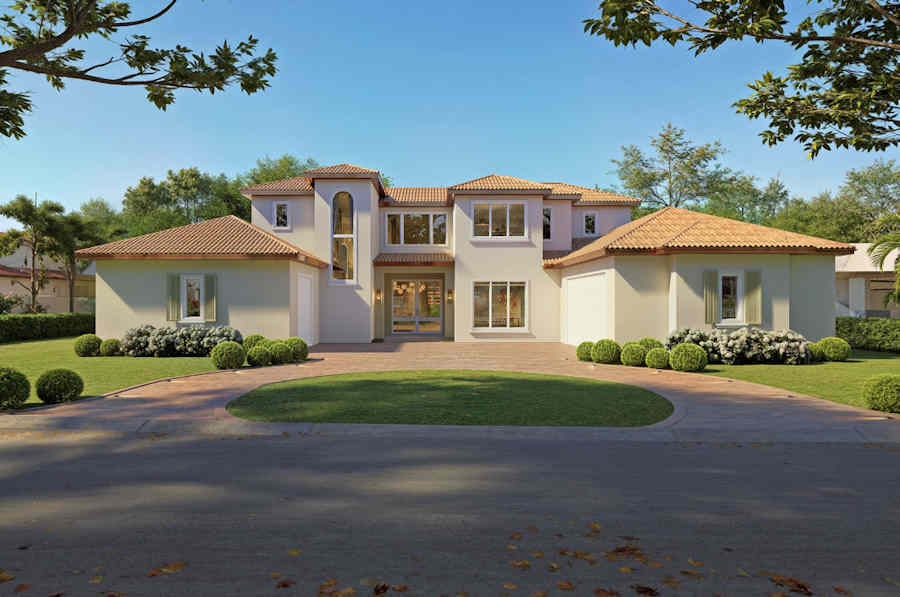
Baby boomers have loaded up on real estate investments at a higher rate than other home owners and that could put them at risk -- especially high risk if they own property in areas where prices are more likely to tumble.
One quarter of baby boomers, people who are aged 42 to 60 years old have two or more properties, according to the National Association of Realtors' "2006 Baby Boomer Survey".
The demographic group also owns 57 percent of all vacation/seasonal homes and 58 percent of rental properties.
Among those who own rental investment property, 34 percent own multiple properties: 14 percent own two rentals, 5 percent own three and a small number own four properties; however, 14 percent own five or more rental units. Among those who own vacation homes or seasonally occupied property, 13 percent said they own two or more vacation or seasonal homes, according to NAR.
"As a group, boomers are in their peak earning years and continue to wield great influence in the U.S. economy, but they are not homogeneous -- there are significant variances in needs, behavior, attitudes and resources," said David Lereah, NAR's chief economist,
"On one hand, is an almost insatiable desire for real estate, with some owning multiple properties, and on the other, many have not adequately planned for retirement. What should not be overlooked are the discretionary spending interests of this generation, and their appreciation of housing as a great investment," Lereah said.
Investment strategy risk
What also should not be overlooked is that, by virtue of their peak-earning-years status, baby boomers are also at or near the age where incomes stop growing, get fixed and can even shrink.
Affluent and retirement market consulting firm, Chicago-based Spectrem Group says some boomers, the so-called "mass affluent group" -- those with investable assets between $100,000 and $1 million -- typically have real estate, at 37 percent, as their largest asset class.
With 23 percent in their principal residence and 14 percent in investment properties they are at greater risk than those who can better afford the risk by virtue of their income and investment diversification. The mass affluent have a 76 percent greater exposure to real estate than millionaires (those with investable assets of $1 million or more), who put only 21 percent of their investment stake in real estate -- 13 percent in their principal residence and 8 percent in investment real estate, Spectrem reported.
"Mass affluent investors have heavily tied their financial futures to the real estate market, which has been so hot for so long that many believe it has virtually no place to go but down. If the real estate market begins to crack, it is the mass affluent who will likely feel the effects both faster and with greater force. The fact that these assets often carry outstanding mortgages increases the risk further still," said Catherine S. McBreen, Spectrem's managing director.
Just ask technology investors of the late 1990s what they learned about one-sided investment portfolios.
When investing, the fundamentals still apply and diversification remains a cardinal rule.
Another measure of affluent households looking to make net increases in their investments in the next few months, indicates some boomers are on a fundamentally sound investment track.
Phoenix Marking International recently reported that affluent households -- in this case, those with $250,000 to less than $1 million in invested assets -- that are planning to increase their investments, are plowing their assets into retirement accounts, deposit accounts, mutual funds and stocks with only about one in five planning to buy more real estate.
"I'm not surprised that less than a quarter of those surveyed said they'd add to their real estate portfolio. After all, these people have seen very large increases in the value of real estate and, quite logically, probably think the market is overheated, as many do here in the Bay Area," said Romeo Danais, a Silicon Valley real estate investor for years, who says he's now pulling up stakes in Silicon Valley to invest in real estate in Oklahoma, New Hampshire and Texas.
Still, Lereah says portfolios heavy in real estate has emerged as an investment strategy.
"Some boomers will take advantage of generous capital gains exclusions from their taxes when they sell their primary residence, and then place themselves in the position of being able to convert a vacation home into their new primary residence which would later become eligible for the same tax treatment," Lereah says.
"Then, if their needs change in the future, they'll be able to take the capital gains tax break after they have lived in that home as their primary residence for two out the five previous years. It becomes a great way to build and protect a nest egg," he added.
That assumes, of course, there will be sufficient capital gains to exclude and profits to use.
Real estate can be a viable investment, as those now enjoying vast returns know, but diversifying, at least by location, may be worth serious consideration.
Market location risk
First American Real Estate Solutions' recent report "The Real Estate Cycle in 2006: Evaluating Market Position, Identifying Turning Points and Constructing Scenarios," documents, in general, how various housing markets might play out in the next few years.
Author, Christopher Cagan, director of research and analytics at First American says "cyclical" markets, regions like Southern California (especially Los Angeles and San Diego), the San Francisco Bay Area, including Silicon Valley, Florida (Miami, West Palm Beach, Boca Raton), Honolulu and New York City, follow a business-cycle pattern with a wave-like motion over 10- to 15-year periods. Prices can fluctuate by large percentages -- 20 to 40 percent -- above and below long-term growth rates in these markets, which have been the nation's hottest in the recent boom cycle.
Right now, these markets face a great potential for price declines after nearly a decade of double-digit home price appreciation. Some of them are already slamming the brakes on appreciation.
For example, Silicon Valley's median home price for single-family detached homes in closed sales, rose up more than 21 percent from April 2004 ($618,000) to April 2005 ($750,000). Since then, prices have been in the slow lane, rising only 3.3 percent to $775,000 in April 2006, according to Richard Calhoun, broker/owner of Creekside Realty in San Jose and publisher of the Bay Area Real Estate Market Newsletter.
Likewise, says First American, "hybrid" markets (Chicago, Seattle, Northern Florida) and "catch-on" markets (Phoenix, Detroit and Las Vegas), that take on the more dramatic down-side characteristics of cyclical markets, could put investors heavy into real estate at great risk.
The First American study suggests more "linear" markets (Wichita, Atlanta, Knoxville, St. Louis and Indianapolis) could be the place to park real estate investments for slow-but-sure investment returns without the risk of wild swings associated with more volatile markets.
Evidence that some real estate investors are looking at other markets comes from a variety of recent reports.
Boston-based think tank the Massachusetts Institute for a New Commonwealth recently found that one third of the state's boomers intend to retire out of state -- often because they simply can't afford to remain in the high-priced New England market.
Also, migration patterns revealed in the U.S. Census Bureau's spring report "Domestic Net Migration in the United States: 2000 to 2004" shows Americans are fleeing Northeast and West markets where housing is often most expensive. Instead they are putting down stakes in the South and elsewhere where homes cost less.
The bureau's report helped quantify RealtyTimes.com research in "Boom May Be Spilling Over To More Affordable Housing Markets" which highlighted smaller markets enjoying a transfer of real estate wealth from more expensive markets.