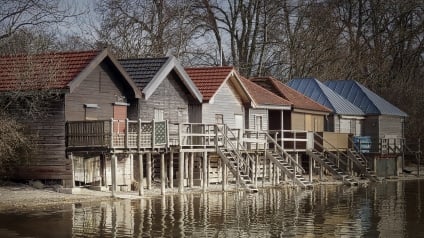
Today's baby boomers are just about as likely to unload a second home as they are to buy one and they aren't any more likely than their parents to own additional properties.
In the greater scheme of the housing market, those distinctions are probably more significant than heralding baby boomers merely as second home market boom makers.
"Housing Trends Among Baby Boomers," a new study of home owners 50 and older by the Mortgage Bankers Association's finance research arm, Research Institute for Housing America, says the growth in the number of boomers has been essential to growth in the second home market, only because there is a growing number of boomers, not because boomers appetites have increased for second homes.
The real impact of baby boomers is that they own homes at a higher rate than other population groups, their listings help keep the market supplied with resales and those looking to move down from empty nests or over to a second home, are a key source of housing demand.
Also, their home equity is the most significant non-pension asset in household portfolios and, as a large reserve of untapped wealth, that bodes well for both the housing market and the ever-more housing dependent economy.
Tuning up some of the beliefs about baby boomers and the second home market, the study found:
- Only 15 percent of homeowners 50 and over also own a second home.
- Despite anecdotal evidence, the rate of second-home ownership among 50 to 60 year olds has remained flat over the 12-year period from 1992-2004. Early Baby Boomers were no more likely to own such homes than older cohorts.
- The typical second home is held for about 15 years, but turnover is high: 45 percent of older homeowners with such homes disposed of them within six years. Changes in marital status and health, not income or employment, drive the decision to dispose of a second home.
- Second homes are a small portion of the typical asset portfolio of an older household and are not important drivers of investment decisions.
- Most second-home owners make limited use of their homes: one-half spend two weeks or less and two-thirds spend four weeks or less per year in the home. Also, only 12 percent of owners intend to sell their main home and eventually occupy their second home.
- The market for mortgages on second homes for older households is only 6.3 percent of the size of the market for mortgages on primary residences.
- Most baby boomer second-homes aren't mortgaged. Owners either inherited their homes or purchased them with cash. Second-home mortgage originations comprise only about four percent of overall mortgage market originations.
- There are strong regional patterns of demand for second homes including Florida, California, New England, and other coastal regions, as well as the West and mountain, lake and desert areas throughout the nation.
- Empty-nesters are not flocking to urban areas. Only two percent of all empty-nest retirement-age suburban homeowners can be expected to move to an urban area.
- Suburban empty-nesters are just as likely to move to a non-metropolitan area as they are to an urban area.