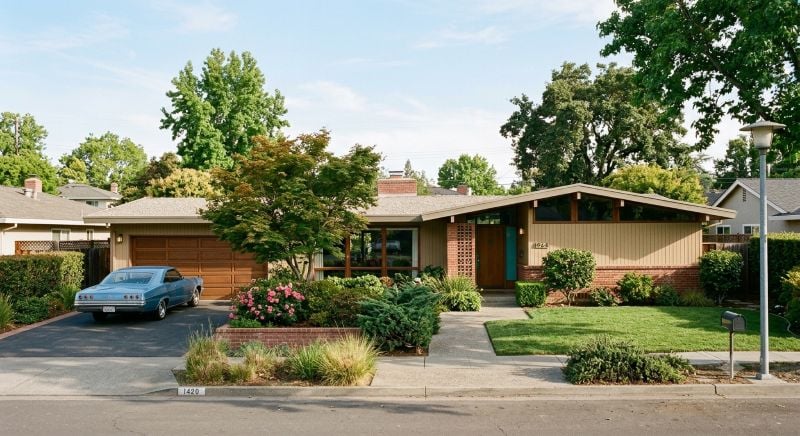
Question: I have three new duplexes and have not been able to rent them. They each have three bedrooms, two baths, garages, fireplaces, garage door openers, tile kitchen floors and inside laundries. I'm offering free rent for three months. Why can't I rent these properties?
Answer: Allow me to speculate. You have three new duplexes. Not one to live in, not one to rent, but three. In other words you perhaps bought three properties in one shot, possibly from a troubled developer. You got the units cheap relative to earlier owners and may have bought with little or nothing down.
You now have six rental units (two per duplex) and no renters. You also have the monthly costs of owning six rental units and no rental income. Unless this situation is changed, these units are a substantial drain on your wallet. For many people six empty rental units could lead to foreclosure and bankruptcy if not rented or sold.
Prior to purchasing what did you see in the marketplace that made them attractive as rental units? Did you engage a buyer broker to provide advice? What about other investors? Are you merely having bad luck or is the local market slowing or stopped?
Some ideas: Can you rent the units to groups, say local college students? Is there a local government program which rents homes for individuals with limited incomes? Can you sell one or more of the properties at a break-even point just to get rid of the monthly cashflow cost?
Question: I'm floating the rate on a home loan which will close in several weeks. I've been checking the rate daily and noticed that the Federal Reserve lowered the prime rate a half point and I'm waiting for this to effect my interest rate. It hasn't and I'm getting worried. I get the feeling that I'm playing blackjack in a casino and the house knows what the next cards are! Is the lender waiting for more borrowers to lock before lowering the rate? My loan is a 30-year fixed with more than 20 percent down. Why is the rate not falling?
Answer: It's true that the Federal Reserve recently lowered both the discount rate and the federal funds rate, however these rates do not directly impact interest levels for most home mortgages.
Why? The discount and federal fund rates are short-term interest benchmarks. For this reason the Fed action does impact the prime rate and many home equity loans are tied to the prime rate so they should see lower costs.
However, the Fed action has little direct impact on long-term rates -- and those are the rates which determine mortgage costs in most instances.
What does move mortgage rates up or down is the demand for real estate financing versus the amount of money that investors are willing to provide. Right now interest rates are remarkably low given federal deficits, massive trade imbalances and huge lender losses. Investors are still willing to place money into mortgages. It's anyone's guess where interest rates are headed, but many people believe that rates are likely to rise.
It may be that the rate you get will actually be seen as a bargain in the not-too-distant future. The problem is that nobody knows for sure, including your lender.
Question: Recently our house was on the market and someone made an offer. We agreed and everything went well and the buyer did obtain a loan from the mortgage company.
We were very happy that things went well and all the paperwork was ready two days before closing. Unfortunately, the next day (a day before the closing date) we had a call from our agent saying the buyer didn't sign the paperwork. In fact, the buyer went to escrow office but for some reason refused to sign anything. Obviously this is the buyer's default! Now, we we're told that the buyer refused to sign the consent to release the $9,000 deposit.
My husband and I are very mad right now. The buyer wasted everyone's time and at the end refused to close!
Our agent told us to find an attorney and be prepared to fight the case. We don't understand, clearly this is the buyer's fault. Why do we still have to hire an attorney?
Answer: Buyers have an obligation to complete purchases unless there is an "out" within the sale agreement. Typically, if you're a day or two from closing, all "outs" are long gone.
What may be happening here is perhaps best explained by Lawrence Yun, senior economist with the National Association of Realtors. He says an "internal survey of our members shows more than 10 percent of sales contracts fell through at the last moment in August, primarily the result of canceled loan commitments."
"The volume of activity we're seeing today is below sustainable market fundamentals because some creditworthy people are trying to buy homes but can't because of the credit crunch."
What does it all mean?
First, a "loan commitment" -- if one fell through -- isn't worth a penny if the lender can't deliver financing with promised terms on the date of closing.
Second, when there's a dispute regarding a deposit the result typically is that the money is turned over to a court. The parties to the agreement must then convince a judge who is right. When you go to court you want an attorney to protect your interests.
Third, your attorney will have to review the sale agreement to see if the buyer actually has an escape clause which would allow them to keep the deposit.
Not only are you likely to go to court to get your deposit, but it's also possible that the borrower will go to court with a claim against the lender.
Both you and the buyers might be best served trying to work out a compromise.
Question: I leased my house for 12 months. The people living there signed an agreement to purchase the home at the end of this time. Now we are 14 months into it and still I have not closed on the home. They've been approved for the loan to purchase however it hasn't closed and I am responsible for the mortgage on it. How long should I wait, or should I put the house back up for sale and evict the current tenants?
Answer: Apparently what you have is a lease option agreement. Under such arrangements, the would-be buyer typically has the opportunity to purchase the property at a price set in advance. However, the buyer cannot be compelled to make a purchase.
If the person living in the property is not a buyer then what is their status? If they are tenants and have a month-to-month lease then they may well have the right to stay on the property on a "holdover" basis. In other words, the agreement may require you to give them a full month's notice before they can be required to leave.
For specifics, have an attorney review your agreement and make sure that no rent control or related rules apply in your situation.
Question: We're purchasing a house where the seller will be living in the property for four months after closing. We have adjusted the selling price to account for the four months of rent. Our lawyer suggested that we do not want them as renters because they can become squatters! Are we entitled to a pre-closing inspection before closing and before they move out of the home?
Answer: It may be that your attorney does not want you to enter into a post-occupancy settlement agreement with the sellers because he does not want them to have the status of a "tenant." This can be important in given areas where some form of rent control is in place. One solution to this problem is to set the rent at a given level for the first four months after closing and to then have the rent rise significantly per diem for each day the tenants remain on the property after the four months has passed.
As to the matter of inspections, you are plainly entitled to a pre-settlement inspection of the property. You can also write the sale agreement to provide for the establishment of an escrow fund with seller dollars to assure that at the end of the four-month period, when the property is actually delivered to you and you conduct an exit examination of the property, that it's in the same condition as it appeared during the pre-settlement inspection. Speak with your attorney for specifics.
Question: I offered to buy a house for sale and the owner accepted. The house failed inspection (I paid for the inspection as the potential buyer). An amended offer was generated by me and the seller accepted, the result is that the roof will be replaced from the proceeds of the house sale (the roof has not yet been replaced). I have not yet closed the "process" by signing all the loan and other paperwork. If I decide to not sign, I know my "good faith" deposit is forfeited, but can I be sued by the seller of the house?
Answer: You need to look at the exact terms and conditions of the sale agreement.
Some sale agreements say that if a buyer defaults the seller is entitled to the deposit and is silent on any other option, others say the owner gets the deposit and has the right to sue, still others say if the seller takes the deposit that such money is in settlement of all claims.
Sale agreements usually say that both parties agree to act in good faith to complete the transaction. To me, that means going ahead and signing all required paperwork.
As an example, one sale agreement to which I was a party says that "if Buyer has misrepresented Buyer's financial ability to consummate the purchase of the Property, or if this Contract is contingent upon Buyer securing a written commitment for financing and Buyer fails to apply for such financing within the time period herein specified, or fails to pursue financing diligently and in good faith, or if Buyer makes any misrepresentations in any document relating to financing, or takes (or fails to take) any action which causes Buyer's disqualification for financing, then Buyer shall be in default; and Seller may elect by written notice to Buyer, to terminate this Contract and/or pursue the remedies set forth under the 'Default' Paragraph."
You say the seller will pay for roof repairs which will occur after closing. That's fine. Does your arrangement also require the closing agent to establish an escrow (trust) account with money from the seller to assure that the work is done? If not, how can you be sure the seller will pay for the repair work?
For specifics, please speak with your broker or an attorney.
Have a real estate question? Send your inquiry to Ask Realty Times . Because of the volume of mail received, Mr. Miller cannot respond to questions individually or privately. Published letters may be edited for space and style. For comments regarding other Realty Times articles, please contact individual authors by pressing here .For past columns, please press Ask Realty Times .
This column is designed to provide accurate and authoritative information in regard to the subject matter covered. It is made available with the understanding that neither the author nor the publisher is engaged in rendering legal, accounting, or other professional services. If legal services or other expert assistance is required, the services of a competent professional person should be sought.