Real-time business is no longer a future idea. It is becoming the new standard.
I see edge intelligence as the next major shift in how organizations use data, AI, and connected devices to make decisions. Instead of sending every signal to a distant cloud or data center, edge intelligence processes data close to where action must happen.
The closer intelligence is to the decision point, the faster the organization can respond.
That matters because customers, machines, vehicles, patients, and transactions are all creating data faster than traditional systems can manage from a distance.
Why Is AI Moving Closer to the Point of Action?

The cloud changed how business stores, scales, and analyzes information. Now edge intelligence is changing how fast business can act.
In many real-time situations, organizations cannot afford to send every signal to a distant data center, wait for analysis, and then receive a response. That delay may be small in technical terms, but it can be large in business terms.
IDC estimates global edge computing spending at nearly $261 billion in 2025 and projects it will reach $380 billion by 2028. Gartner’s 2026 edge forecast, summarized by ZEDEDA, says that by 2028, more than two-thirds of enterprise-managed data will be created and processed outside the data center or cloud.
This is a Hard Trend: intelligence is moving closer to action.
What Does Edge Intelligence Actually Mean?
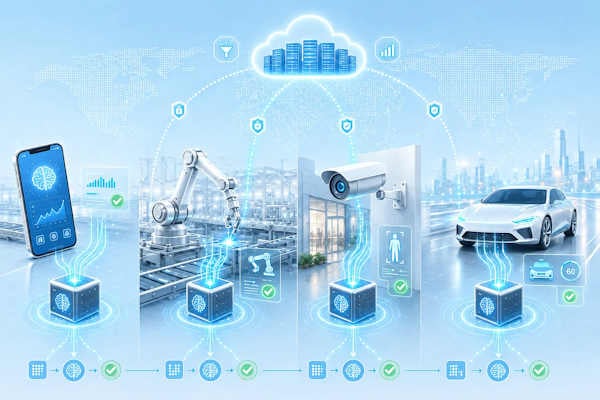
Edge intelligence means data is processed at or near the device, machine, vehicle, sensor, store, or user that generates it.
It can include:
-
Edge AI running directly on devices
-
On-device compute making fast local decisions
-
Distributed intelligence across connected systems
-
AI inference is happening close to the data source
The cloud is not disappearing. It is being extended.
Large AI models may still be trained in the cloud. Enterprise-wide coordination may still happen in the cloud. But real-time decisions will increasingly happen at the edge, where a delayed response can create cost, risk, or friction.
The future is not cloud versus edge. It is cloud plus edge.
Why Is This Shift Becoming Inevitable?

Three forces are driving edge intelligence forward: more connected devices, more real-time AI decisions, and more demand for latency reduction.
IDC has stated that industries benefit from processing data closer to the source through faster decision-making, improved security, and cost savings. That explains why centralized processing alone cannot keep up.
Bandwidth gets strained. Latency becomes a bottleneck. Delay becomes a business cost.
As more devices generate more data, organizations need intelligence closer to the source. Sending everything to the center first is no longer efficient enough for real-time operations.
When speed becomes strategic, distance becomes a liability.
How Does Latency Become a Business Constraint?
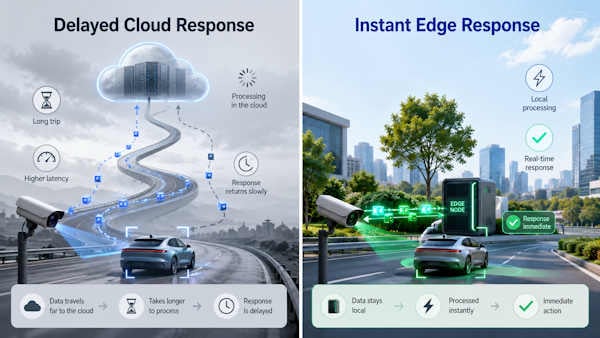
Latency is the time it takes for data to travel, be processed, and return as action. In some settings, a small delay is acceptable. In others, it can be dangerous, expensive, or deeply frustrating.
When latency is reduced, leaders can create:
-
Safer autonomous systems
-
Faster factory decisions
-
Better patient monitoring
-
Smoother retail experiences
-
More responsive customer service
Speed is not just a performance metric. It is the foundation for new business models.
A checkout-free store depends on systems that respond instantly. A factory that self-corrects depends on machines that read signals locally. A safety system depends on intelligence that acts before the moment is lost.
Why Does Autonomous Mobility Depend on Edge Intelligence?

A vehicle cannot wait for a cloud server to decide whether to brake.
Waymo reported 100 million real-world, fully autonomous miles driven on public roads in July 2025. That milestone shows edge intelligence in one of its clearest forms.
Cameras, radar, lidar, and onboard AI must process changing road conditions immediately. A child stepping into the street, a car drifting into another lane, or a sudden stop ahead all require instant response.
In autonomous mobility, latency is a safety issue before it is a technology issue.
The lesson applies far beyond transportation. Whenever action must happen immediately, intelligence must be close enough to act without delay.
How Can Edge Intelligence Improve Privacy and Trust?

Apple states that Face ID data does not leave your device. That is a powerful example of edge intelligence serving both speed and privacy.
Your phone does not need to send your face scan to the cloud to confirm who you are. It can process that authentication locally. That reduces delay and limits exposure of sensitive personal data.
Business leaders should pay close attention to this model.
When sensitive information can remain closer to the user, companies can strengthen trust while improving performance. Privacy and speed do not have to compete when systems are designed intelligently.
Edge intelligence can make digital experiences faster, safer, and more trusted at the same time.
Why Are Smart Factories Becoming More Anticipatory?
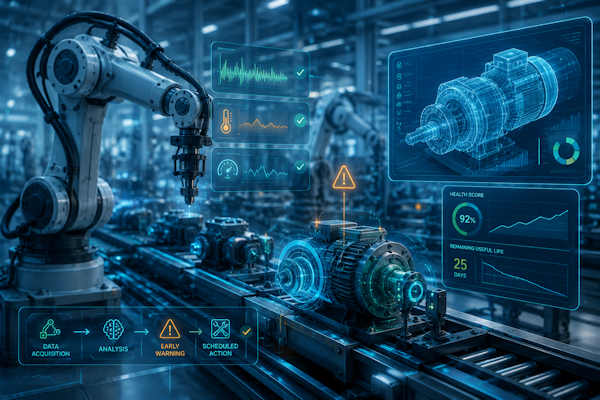
In manufacturing, a few seconds can separate normal operation from costly downtime.
Siemens says Industrial Edge brings real-time insights and intelligent processing to the shop floor. GE Vernova uses AI and machine learning to detect anomalies and anticipate equipment issues before they occur.
Edge AI allows machines to analyze vibration, temperature, pressure, and performance data as work happens. That means a factory can detect early warning signs and trigger action before a breakdown stops production.
This is the Anticipatory advantage: pre-solve the problem before it becomes expensive.
A reactive factory waits for failure. An anticipatory factory sees the signal early and acts while there is still time to prevent disruption.
How Is Retail Being Redesigned Around Instant Response?

AWS Just Walk Out is Amazon’s checkout-free retail technology. It allows customers to enter a store, pick up what they want, and leave without standing in a checkout line.
AWS says the system uses AI, sensors, computer vision, and RFID to track what shoppers take or return. It builds a virtual cart and automates payment when the shopper exits.
That removes one of the biggest friction points in physical retail: waiting.
For retailers, the value goes beyond convenience. Edge-enabled systems can improve inventory accuracy, reduce bottlenecks, and create a smoother customer experience.
When friction disappears, customer behavior changes.
The future of retail will increasingly be shaped by systems that respond in the moment.
How Fast Is the Edge AI Market Growing?
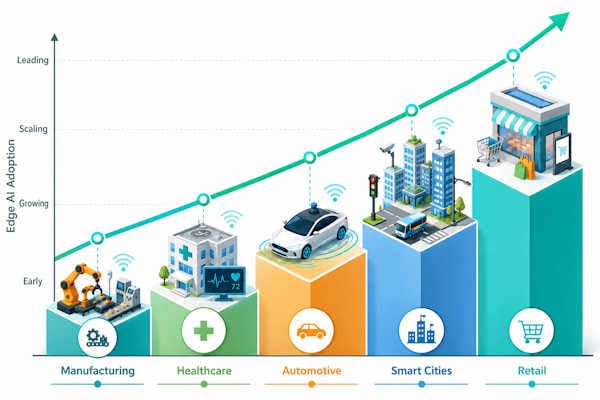
The edge AI market is moving from pilot projects to core infrastructure.
Fortune Business Insights values the global edge AI market at $35.81 billion in 2025. It projects growth from $47.59 billion in 2026 to $385.89 billion by 2034.
That growth shows a clear shift in business priorities. Companies are no longer asking whether AI should move closer to the edge. They are deciding where it should move first.
The best starting point is wherever delay already creates cost, risk, or friction.
For some organizations, that will be operations. For others, it will be customer experience, security, logistics, healthcare, or safety. The opportunity is industry-specific, but the Hard Trend is broad.
What Does Distributed Intelligence Mean for Your Cloud Strategy?
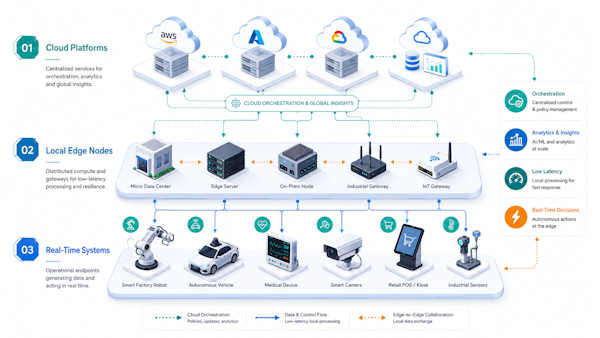
This is not a choice between cloud and edge. It is a connected model where each does what it does best.
The cloud will continue to support large-scale storage, AI model training, long-range analytics, and enterprise-wide coordination. Edge computing will manage the decisions that require immediate action, local control, and instant execution.
That is distributed intelligence in action.
The cloud becomes more powerful when the edge handles the decisions that distance slows down.
A smart strategy does not replace the cloud. It redesigns the relationship between central intelligence and local action so the entire organization can move faster.
Where Should Leaders Look First?

Edge intelligence is not simply an IT upgrade. It is a business design decision.
Start with one certainty: more data will be created outside the core data center, and more decisions will need to happen in real time.
That changes the leadership question. Do not ask only whether your cloud can handle more data. Ask where intelligence needs to live so action can happen instantly.
That is Anticipatory thinking. Use Hard Trends to make decisions before disruption forces those decisions on you.
The best opportunities often appear where delay touches revenue, safety, privacy, trust, or customer experience.
Wherever delay is already costing you, edge intelligence deserves serious attention.
What Questions Will Help You Find the Real-Time Opportunity?

To apply edge intelligence strategically, start with better questions:
-
Where is delay costing us money, trust, safety, or customer loyalty?
-
Which decisions must happen instantly, and what data should stay local for speed, privacy, or resilience?
-
Which systems should detect warning signs and pre-solve problems before failure occurs?
These questions move the conversation from technology spending to business advantage.
Do not wait for latency to break the customer experience, the production line, or the safety system. By the time delay becomes obvious, damage has often already started.
The Anticipatory approach is to prevent delay before it becomes visible as a problem.
That is how leaders turn edge intelligence into measurable value.
Are You Building for Real Time, or Paying for Delay?
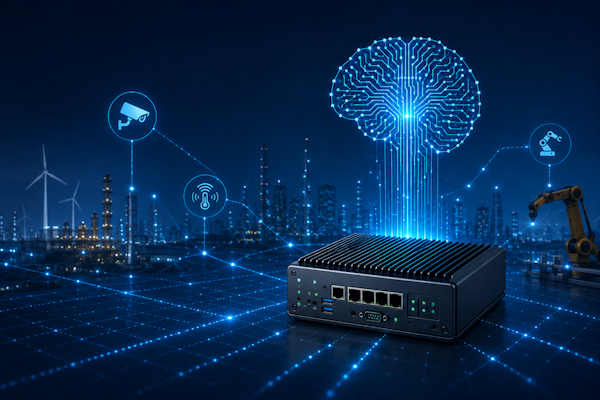
Edge intelligence is not another technology layer. It is a new way to design an organization that can sense, decide, and act in real time.
The companies that win will not be the ones with the most data. They will be the ones that act on the right data first.
That means placing intelligence closer to the customer, the machine, the vehicle, the patient, and the transaction. When decisions happen at the edge, customers move faster, machines respond sooner, safety systems act earlier, and operations become more adaptive.
Delay is no longer something leaders can afford to accept as normal.
Real-time business requires real-time intelligence. The edge is where that intelligence increasingly needs to live.
Are You Ready to Move Intelligence Where Action Happens?

The future belongs to organizations that act in real time.
Start now by mapping where latency shows up in your business. Identify the decisions that must happen instantly. Then move intelligence closer to those decision points.
This is how you build real-time advantage before competitors turn your delay into their opportunity.
Edge intelligence is a Hard Trend. Real-time demand is accelerating. Customers, machines, markets, and systems will not wait for slow organizations to catch up.
Build for speed now. Build for anticipation now. Build for action now.
Ready to create real-time advantage? Bring Daniel Burrus in to help your leadership team anticipate change, apply AI where speed matters most, and act before disruption arrives.