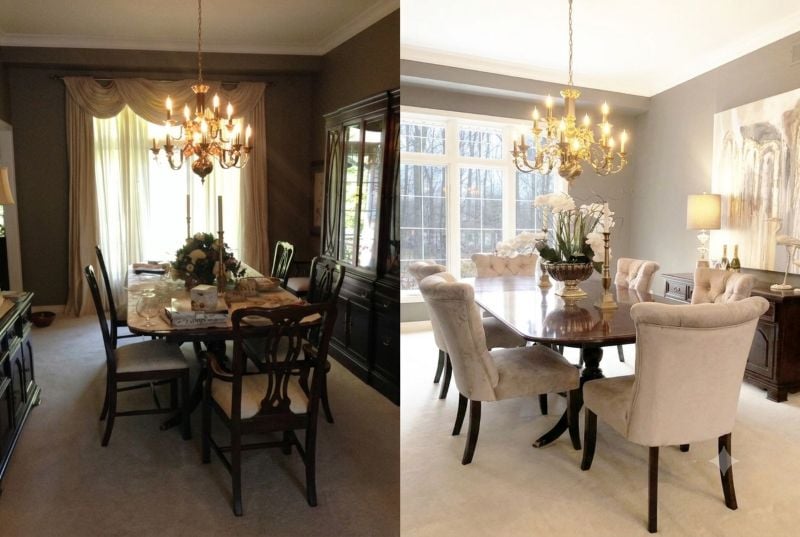
One of the most delicate moments in any real estate transaction happens during the initial walk-through of an occupied home. An agent or stager looks around a meticulously cared-for living room, turns to the homeowner, then tentatively but gently suggests removing pieces of furniture, repainting the custom accent wall, and/or packing away family heirlooms and photo galleries. The homeowner’s immediate, often unspoken reaction is almost always defensive: “Are you saying my home isn’t good enough?”
The short answer is absolutely not. But understanding why those changes are necessary requires separating two concepts that are frequently confused: decorating and staging.
Your home is fine for living, just not ready for selling. Living in a home and marketing a property are two fundamentally opposite objectives. Recognizing this distinction is the secret to protecting seller equity and avoiding awkward conversations during the listing process.
Decorating Explains Who YOU Are; Staging Shows Who the BUYER Can Be
Decorating is deeply personal. It is an internal art form designed to nurture the people who live inside the walls.
When you decorate a home for living, you curate it around your specific life:
-
- You display travel souvenirs, family portraits, and personal art collections that spark joyful memories.
- You arrange furniture for maximum personal comfort—oriented toward a television, a fireplace, or a specific window view.
- You choose color palettes and wallpaper based on your unique personality and tastes.
Staging, on the other hand, is an external marketing strategy. It is not interior design; it is emotional, intentional, thoughtful merchandising.
When you stage a property for sale, the goal is not to express the seller’s identity, but to create a strategic, neutral backdrop where buyers can project their own lives. Every piece of furniture, lamp, and rug is placed to highlight room scale, maximize natural light, and guide foot traffic through the space.
DECORATING (LIVING) | STAGING |
| • Personal expression & taste | • Broad market appeal
| • Optimized for daily comfort | • Optimized for flow & camera angles
| • Owner history/memories | • Blank canvas for buyer's future
| • Furniture placed for utility | • Furniture placed for function/space
The Four Shifts of Occupied Staging
Transitioning an occupied home from a personal sanctuary to a high-value retail asset doesn't usually require a complete redesign. It does require four fundamental mental shifts:
1. From "My Home" to "The Product" (The Mindset & Language Shift)
Language shapes psychology. As long as sellers call the space "my home," every piece of feedback, staging recommendation, or buyer inspection comment will feel like a direct critique of their lifestyle. Moving away from thinking and talking about the property as a "home" is a vital first step.
Sellers who consciously switch their vocabulary to "the house," "the property," or "the product for sale" create an immediate emotional boundary. It transforms the seller from an emotional occupant defending memories into a business manager launching a high-ticket asset.
2. From Comfort-First to Flow-First Layouts
In daily life, an oversized sectional blocking a walkway might be perfectly fine because it’s comfortable for Friday family movie nights. In real estate marketing, that same sectional shrinks the room on camera and creates a physical bottleneck during in-person showings. Staging arranges furniture to accentuate architectural features and create effortless walkthrough paths.
3. From Subtraction to Scale (The Power of Editing)
Property owners often assume staging requires buying entirely new furniture. In occupied homes, staging is usually 80% subtraction and 20% curation. Removing 30% to 50% of the furniture, personal items, and extra decor immediately reveals floor space, expands sightlines, and makes rooms feel larger and brighter. We are also protecting your identity & privacy. I always say “no one needs to know anything about anybody who lives there until they are ready to sign an agreement to buy”.
4. From Distraction to Focus
When a buyer walks through a room filled with personal items, gallery walls, or specialized hobbies, they get distracted. Instead of evaluating the square footage or visualizing where their own sofa will sit, they are quietly inspecting the seller’s taste, family history, and lifestyle. Staging removes those visual speed bumps, so the house itself remains the star of the show.
Reframing the Conversation for Sellers and Agents
For real estate agents, helping homeowners navigate this transition requires diplomacy. Framing staging recommendations as a critique of personal taste guarantees friction. Instead, frame it as a financial business strategy:
"You’ve built a wonderful home here, which has served your family beautifully. But the moment we go to market, its role changes. It transitions from your personal sanctuary into a high-value asset competing for buyers. Every recommendation we make isn't a judgment of your taste; it's a financial strategy designed to out-position the competition and secure the highest possible return at closing."
For homeowners, accepting this shift is liberating. Packing up personal belongings early is the first step toward your next chapter.
Stepping back emotionally from how a home feels to live in, unlocks its full financial potential on the open market. Decorating helped you enjoy the home while you owned it; staging ensures you reap the rewards when you sell it.