Once confined to the basements and hobby rooms of dedicated tinkerers, 3D printing once served a modest purpose: the crafting of miniatures, the replication of figurines, the recreation of obscure parts that manufacturers had long since discontinued. For years, it lived in the realm of novelty and utility, operating on a scale that was personal, small, and largely ornamental. The notion that this same mechanism (originally celebrated for rendering action figures and model spaceships) could one day fabricate livable, full-scale human dwellings would have sounded not only implausible, but absurd.
But time has a way of bending expectations. Today, the discourse around 3D printing has evolved. The same technology that once extruded layers of plastic to form tabletop dragons is now being explored as a legitimate force within the architecture and construction industries. The conversation has expanded. What was once a footnote in maker culture has transformed into a focal point of innovation, particularly as the dream of printing homes, buildings, and even vertical megastructures inches closer to reality.
The momentum behind this technological surge has not gone unnoticed. International media outlets are replete with reports showcasing both groundbreaking experiments and tangible structures built via additive manufacturing methods. In China, enormous 3D printers are already producing prefabricated houses with speed and efficiency that disrupt traditional timelines. And yet, these achievements may merely mark the beginning. Engineers and architects now eye the horizon, imagining a not-so-distant future where entire skyscrapers rise, printed layer by concrete layer, from ground to sky.
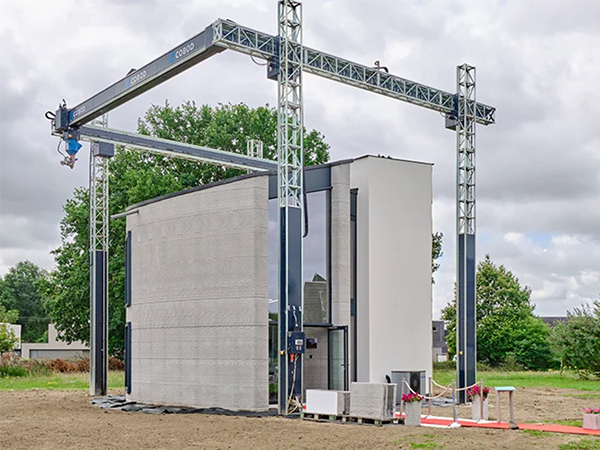
What differentiates this emergent vision is not merely scale, although scale is impressive enough. It is the element of adaptability that makes it revolutionary. Picture, if you will, a home that can respond to your life as it unfolds. Want another bedroom? More storage? A sunroom to greet the morning light? With a revised design file and a recalibrated printer, those modifications could materialize without the need for traditional contractors or costly labor. The idea introduces an era of architecture that can evolve as flexibly as the humans who inhabit it.
Rather than signaling the demise of conventional construction, this development signifies a transformation. Entire sectors stand to be redefined. Jobs will not vanish, but instead mutate and multiply into forms we have only begun to imagine. New disciplines will arise. CAD experts, structural printing technicians, robotic assembly specialists, and digital blueprint architects will be among the vanguard. Around the globe, startup companies, engineering firms, and architectural studios are locked in a competitive sprint, each aiming to become the first to perfect and commercialize large-scale 3D-printed structures.
Consider the ambitious endeavor underway in Amsterdam. A team of forward-thinking architects is presently engaged in constructing a 13-room residence using additive manufacturing. Not only does the size of the project set a precedent, but the complexity of its design and execution offers a glimpse into the discipline’s vast potential. This monumental task, which could span three years before its final walls are printed and finished, is being watched closely. And it is not alone. Similar undertakings are taking shape across the United Kingdom and the United States, each one pressing forward into a new architectural epoch.
Of course, such pioneering work invites complications. Chief among them, the issues surrounding regulation and safety. When buildings are shaped not by human hands but by precision-guided machinery, what does compliance look like? The insurance industry and municipal inspection authorities will soon find themselves confronted with questions they’ve never had to answer. New legal frameworks must be authored. Standards for material integrity and structural soundness will need to be codified and enforced. The role of a building inspector, in this new world, may one day involve parsing digital error logs and verifying printer calibration settings rather than scanning a brick wall for uneven grout.
Despite the promise, a significant barrier remains: cost. The machines themselves, along with the specialized composite materials required for printing structural components, are still financially prohibitive to many builders. Yet history suggests this will not remain the case. Technological advancements tend to usher in economies of scale. Just as desktop 3D printers gradually became accessible to hobbyists and small businesses, industrial-grade printers are expected to follow suit. Projections suggest that, within five years, the cost of printing a home may rival, or even undercut, that of traditional construction, especially when measured against reduced labor demands and project timelines.
Perhaps the most compelling vision of all is that of a continuously modifiable structure. Imagine a home or office that can grow, retract, or shift shape over time, adapting to the needs of its occupants like a living organism responds to its environment. When you factor in drone-assisted construction that are capable of reaching perilous heights and maneuvering in difficult conditions, you begin to see a future in which the dangers of high-rise labor might be substantially mitigated. In place of scaffolds and hardhats, there may be drones and printers silently working in harmony under digital supervision.
The transformation of construction is not about discarding human labor, but about enhancing human capability through intelligent machinery. As this technology matures, our entire understanding of building design and implementation will be reshaped. It will not only change what we build, but also shift how we experience the structures that surround us.