Property owners are always looking for practical ways to increase income without adding unnecessary expenses or creating more work for on-site teams. Parking is one of the most overlooked revenue opportunities across residential communities, mixed-use developments, and commercial properties. When parking operations rely on outdated spreadsheets, paper permits, or manual enforcement, valuable revenue can slip away through vacant spaces, unauthorized parking, and administrative inefficiencies. Artificial intelligence is changing that equation by helping owners make smarter decisions based on real-time data while improving the experience for residents and guests alike.
Why Smart Parking Matters for Modern Properties
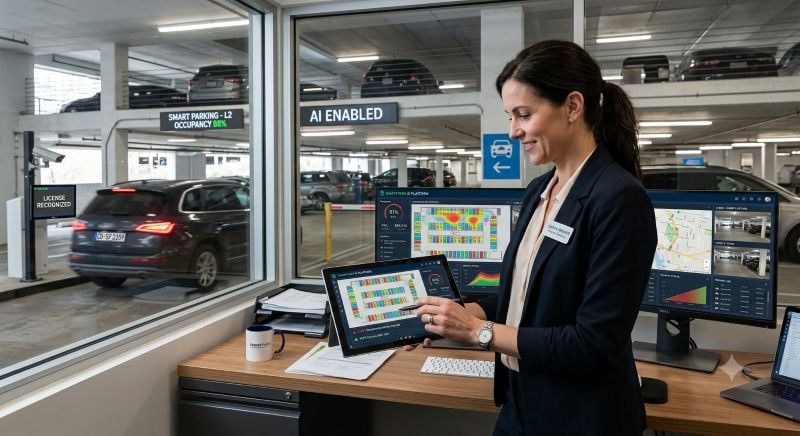
For many residential communities, parking is no longer just another amenity. It is an operational asset that deserves the same level of attention as leasing, maintenance, and resident communication. This is especially true for luxury apartments, where residents expect convenience, digital services, and seamless access from the moment they move in. AI-powered parking platforms monitor occupancy, identify usage trends, and automate routine tasks that once required constant staff involvement.
Instead of relying on assumptions, property managers receive detailed insights into how every parking space is being used throughout the day. They can determine whether reserved spaces remain empty, identify high-demand periods, and adjust parking policies based on actual behavior rather than guesswork. This leads to better space utilization and stronger financial performance.
AI also helps reduce friction for residents by supporting digital permits, automated guest registration, license plate recognition, and contactless access. These improvements create a more organized parking environment while reducing complaints about unauthorized vehicles or unavailable spaces. When parking operates smoothly, resident satisfaction often improves alongside operational efficiency.
Using AI to Increase Revenue Without Raising Costs
Many property owners focus on increasing rental income, but parking can generate meaningful additional revenue when managed strategically. AI systems identify opportunities that manual processes frequently miss, including underused premium spaces, recurring guest parking demand, and pricing adjustments based on occupancy levels.
One reason parking management software is one of the best property management tools you can invest in is its ability to automate revenue-producing tasks while reducing administrative overhead. Rather than assigning staff members to monitor permits, process payments, answer parking questions, or manually review violations, intelligent software performs much of this work automatically.
Dynamic pricing features can help maximize income by adjusting rates according to demand. Reserved parking can be offered to residents willing to pay for guaranteed spaces, while visitor parking can generate additional revenue through digital payment systems. AI can also identify spaces that consistently remain vacant, allowing managers to redesign assignments or create new pricing structures that increase occupancy.
These efficiencies extend beyond revenue generation. Staff members spend less time handling repetitive parking issues and more time focusing on leasing, resident service, and property improvements that support long-term asset value.
Reducing Waste Through Better Data and Predictive Analytics
Property owners make stronger financial decisions when they have reliable information instead of assumptions. AI-powered parking platforms collect data continuously, creating reports that reveal trends across days, weeks, and seasons. These insights help managers understand how parking demand changes throughout the year and whether current policies still make sense.
Predictive analytics also helps prevent expensive mistakes. Instead of building additional parking that may never be needed, owners can evaluate actual demand before committing significant capital. Existing parking assets often perform far better once operations become more efficient.
Maintenance planning also benefits from AI. By tracking vehicle traffic patterns, managers can identify areas experiencing heavier use and schedule maintenance before deterioration becomes costly. Preventive maintenance generally costs less than emergency repairs, helping preserve both parking infrastructure and property value.
Better reporting also simplifies budgeting. Owners can evaluate parking performance alongside occupancy, leasing activity, and operational expenses, creating a clearer picture of each property's financial health.
Creating a Better Experience for Residents and Visitors
Revenue growth matters, but resident satisfaction remains equally important. Parking frustrations often become one of the most common complaints in multifamily communities. Long searches for available spaces, unauthorized vehicles, confusing visitor procedures, and inconsistent enforcement can damage the overall resident experience.
AI-powered systems simplify these interactions by allowing residents to register vehicles online, reserve parking where applicable, and invite guests through digital platforms. Visitors receive clear instructions before arriving, reducing confusion and minimizing unnecessary calls to the leasing office.
License plate recognition also helps eliminate delays at entrances while improving security. Vehicles can enter approved areas automatically, creating a smoother experience without requiring physical permits or access cards. Enforcement becomes more consistent because software applies parking rules uniformly instead of relying on manual inspections that may vary from day to day.
These conveniences support resident retention as well. People appreciate communities that remove everyday frustrations rather than adding to them. While parking alone may not determine whether someone renews a lease, it contributes to the overall perception of property quality and management effectiveness.
Strengthening Long-Term Return on Investment
Every operational improvement should support stronger financial performance over time. AI-powered parking management delivers value by increasing parking revenue, reducing labor costs, improving reporting accuracy, and helping owners make more informed investment decisions.
As portfolios grow, these benefits become even more significant because standardized parking operations can be implemented across multiple properties. Owners gain consistent reporting, centralized oversight, and scalable technology that supports future expansion without requiring proportional increases in staffing.
Parking should no longer be viewed as a fixed operational expense. With intelligent software and data-driven management, it becomes an asset capable of generating measurable returns while improving the daily experience for residents, visitors, and management teams. In today's competitive real estate market, maximizing every