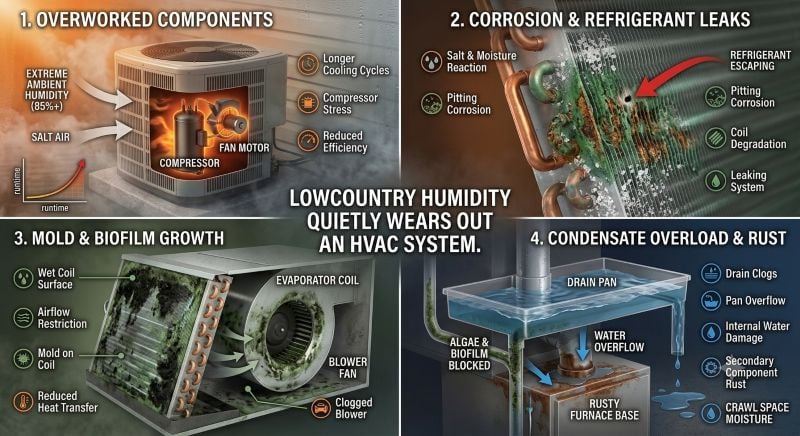
Bluffton homeowners deal with a specific kind of climate stress that a lot of HVAC advice doesn't fully address: it's not just the heat, it's the relentless humidity that comes with living in the Lowcountry. Summer humidity levels here regularly climb above 80 percent, and that moisture load puts a different kind of strain on a cooling system than dry heat does, one that shows up gradually rather than as a sudden, obvious failure.
Why Humidity Is a Bigger Deal Than Temperature Alone
An air conditioner does two jobs at once: it lowers the air temperature, and it removes moisture from the air as that air passes over the cold evaporator coil. In a climate as humid as Bluffton's, the moisture-removal half of that job is doing an enormous amount of work almost constantly through the cooling season, which typically runs from April through October here.
That extended, heavy workload accelerates wear on specific components, particularly the compressor and fan motors, faster than the same system would wear in a drier climate with a comparable temperature range. A system that might get a partial rest in a lower-humidity region rarely gets much of a break here.
Salt Air Adds a Second Layer of Wear
Bluffton's coastal location means outdoor HVAC equipment is also dealing with salt-laden air carried in on sea breezes. That salt exposure accelerates corrosion on the outdoor condenser unit's coils and fins, which are already some of the more vulnerable components on the system. Combined with the humidity-driven mechanical strain, coastal salt exposure is a real reason HVAC equipment in this specific region often shows wear sooner than the same equipment would in an inland, drier climate.
Signs Humidity Is Already Affecting Your System
A few patterns specifically point to humidity-related strain rather than a simple mechanical issue:
-
- The house feels clammy even when the thermostat reads the target temperature. This usually means the system is cooling the air fast enough to satisfy the thermostat without running long enough to actually pull sufficient moisture out of it.
- Mold or mildew smells, particularly around vents or in less-ventilated rooms. This often points to excess indoor humidity that the system isn't managing effectively.
- Frozen evaporator coils. This can result from restricted airflow combined with excess humidity load, and it's a sign the system is struggling more than it should be.
- Clogged condensate drain lines. Bluffton's humidity means most systems here are removing a genuinely large volume of water, and that drain line needs to stay clear or you risk water damage and reduced system performance.
What Actually Helps in This Climate
A few adjustments specifically address the humidity problem rather than just the temperature problem:
-
- Correct sizing matters more here than in drier climates. An oversized system cools quickly and shuts off before it's had time to remove adequate humidity, leaving a home that hits its target temperature but still feels damp.
- Keeping the thermostat fan setting on "Auto" rather than "On" prevents the system from recirculating already-collected moisture back into the home between cooling cycles.
- Air sealing and addressing infiltration points reduces how much humid outside air is working its way into the home in the first place, which lightens the overall load on the system.
- A dedicated whole-home dehumidifier can be a worthwhile addition for homes that struggle with persistent dampness even with a correctly sized and functioning AC system.
Why Maintenance Frequency Matters More Here
Given the combination of humidity load and salt air corrosion, a twice-a-year maintenance schedule, once in spring before peak cooling season and once in fall, tends to catch problems here that a once-a-year check might miss until they've already caused real wear.
Getting a System Built for This Specific Climate
Because Bluffton's combination of humidity and coastal salt exposure is genuinely more demanding than most climates, it's worth working with a provider who designs specifically around these conditions rather than applying a generic approach. Bluffton's best local HVAC company should be able to speak directly to how they account for both humidity management and salt air protection in their equipment recommendations and maintenance plans.