When a commercial roof in Pittsburgh starts showing its age, leaks, ponding water, worn seams, building owners face a decision that has a real financial gap between the two main paths: coat the existing roof, or tear it off and replace it. The right answer depends on the roof's actual condition, not just its age.
What a Roof Coating Actually Involves
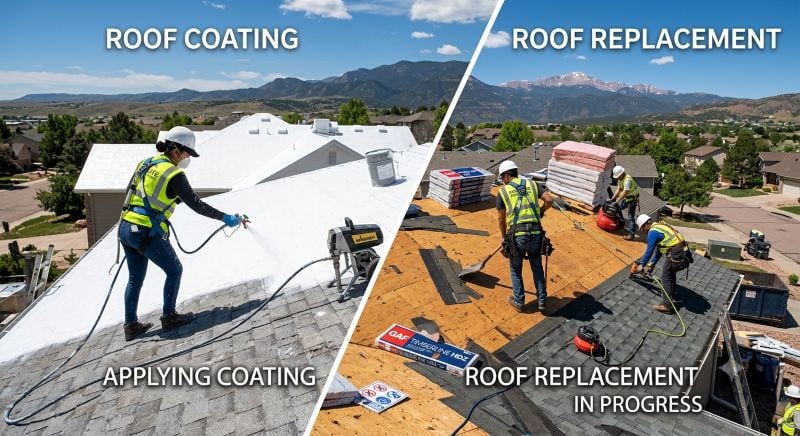
A roof coating is a restoration process rather than a full rebuild. It typically starts with repairs to any existing damage, replacement of substrate that's already saturated with moisture, and reinforcement of seams, followed by application of a liquid coating system over the existing roof surface. Common coating types include acrylic, silicone, and polyurethane, with the right choice depending on the existing roof material, local climate, and specific problem areas like ponding water.
The appeal is straightforward: coatings generally cost significantly less than full replacement, since there's no tear-off labor or disposal expense, and the work causes far less disruption to the building's operations.
What a Full Replacement Involves
A full replacement means removing the entire existing roofing assembly down to the deck and installing a new system from scratch. This is a bigger project with a bigger price tag, but it's also the only real option once a roof's underlying structure or substrate is too compromised for a coating to meaningfully help.
When a Coating Makes Sense
Coatings work best on roofs that are still structurally sound but showing surface-level wear. A good candidate typically has:
-
- Isolated or manageable moisture issues, rather than widespread saturation throughout the insulation and substrate
- No major structural deck deterioration
- Repairable leaks, meaning the sources can be identified and fixed rather than being pervasive throughout the system
- Manageable ponding water issues, since some coating systems tolerate standing water better than others, though correcting drainage problems is generally part of a proper coating project regardless
When Replacement Is the Better Financial Call
A handful of conditions point toward replacement rather than coating:
-
- Widespread moisture saturation. If a moisture survey finds wet substrate across a significant portion of the roof, commonly cited around 25 percent or more, a coating typically isn't a sound long-term investment, since it can't address the underlying saturation.
- Structural deck problems. Significant deterioration of the roof deck itself needs to be resolved at the structural level, which a surface coating can't do.
- Persistent leaks that resist repair. If leaks continue despite reasonable repair attempts, especially across multiple areas, that usually points to a systemic problem rather than something a coating can fix.
- A roof already near or past its expected service life. Even with a great coating job, restoration can't add meaningful life back to a roof that's fundamentally at the end of its usable lifespan.
Why Pittsburgh's Climate Adds Its Own Pressure
Pittsburgh's freeze-thaw cycles through the winter months put repeated stress on seams and flashing, expanding and contracting materials in ways that accelerate failure at those vulnerable points. Spring storms test drainage systems directly, and summer UV exposure degrades coatings and membranes faster on roofs with significant sun exposure. All of this means the decision window here can move faster than in a milder climate, and it's part of why a general rule of thumb, cited around 25 to 30 percent of replacement cost as the threshold where replacement becomes the better financial move, is worth revisiting with an actual professional assessment rather than applying it blindly.
Getting an Accurate Read Before Deciding
The only reliable way to know which path is right for a specific roof is a professional inspection that includes moisture survey and, where needed, core testing to see what's actually happening beneath the surface, rather than guessing based on the roof's visible condition or age alone. If you're weighing this decision for a commercial property, roof coating services in Pittsburgh should start with that kind of real assessment, giving you data to base the decision on rather than a sales pitch for whichever option is more profitable to sell.