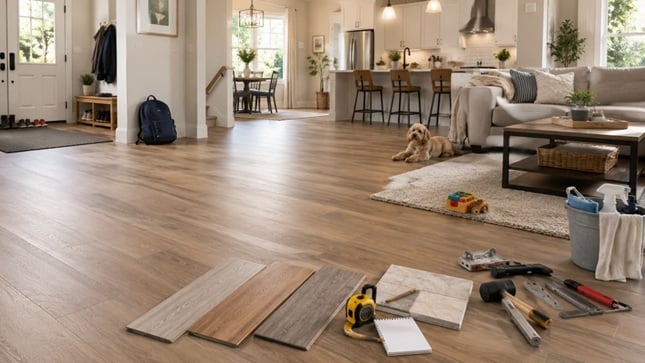
Family homes are not exactly gentle environments. Floors deal with snack crumbs, pet paws, dropped toys, sandy shoes, spilled juice, rolling office chairs, muddy sports gear, and the occasional mystery stain that nobody in the house will admit to creating. So when it comes time to replace flooring, the goal is not just to pick something pretty. It is to choose a surface that can survive real life.
That is why many homeowners start by speaking with a local flooring company before making a final decision. The right flooring depends on how your household lives day to day, not just what looks good in a showroom. A floor that works beautifully for a quiet guest bedroom may not be the best choice for a kitchen, hallway, playroom, or family room that sees constant traffic.
The good news? There are more durable, attractive, and practical flooring options available today than ever before. Whether you are renovating one room or updating the whole house, a little planning can help you choose flooring that looks great and does not require you to panic every time someone walks inside with wet shoes.
Start With Your Family’s Daily Routine
Before comparing materials, colors, or prices, think about how each room is actually used. This sounds simple, but it is one of the most important steps homeowners often skip.
A busy family room needs flooring that can handle movement, furniture, toys, pets, and frequent cleaning. A bedroom may prioritize comfort and warmth. A kitchen needs resistance to spills and easy maintenance. An entryway should stand up to dirt, moisture, and heavy foot traffic.
If you have young children, scratch resistance and simple cleanup may matter more than luxury. If you have pets, you may care about traction, stain resistance, and how well the floor hides fur. If your home has an open layout, you may want one continuous flooring style that connects the kitchen, dining area, and living room without awkward transitions.
It also helps to be honest about maintenance habits. Some people love caring for natural materials and do not mind special cleaning routines. Others want a floor they can sweep, mop, and move on from. Neither approach is wrong. But choosing flooring that matches your real lifestyle is much smarter than choosing flooring for the imaginary version of yourself who carefully polishes floors every Saturday morning.
Compare Durability, Comfort, and Maintenance
Every flooring material has strengths and trade-offs. The best option depends on what matters most in your home.
Luxury vinyl plank is a popular choice for busy families because it offers a strong mix of durability, water resistance, and style. It can mimic the look of wood while being easier to maintain than many natural materials. For households dealing with spills, pets, and constant activity, options like vinyl plank flooring in Largo can make a lot of practical sense, especially in living areas, kitchens, hallways, and other high-use spaces.
Laminate flooring is another family-friendly option. Modern laminate has improved significantly over the years, with realistic wood-look designs, strong wear layers, and good scratch resistance. It can be a smart choice for bedrooms, living rooms, dining rooms, and hallways where moisture exposure is limited. Professional laminate flooring installation can help ensure the floor is laid properly, with clean transitions and a stable feel underfoot.
Tile is extremely durable and water-resistant, making it a strong choice for bathrooms, laundry rooms, kitchens, and entryways. It handles spills well and can last a long time. However, it is harder underfoot, can feel cooler, and may not be as forgiving when dishes, toys, or phones are dropped. Tile also requires proper grout care over time.
Hardwood has timeless appeal and can add warmth and value to a home. But in a very active household, it may require more care. Scratches, moisture, dents, and fading can all become concerns depending on the wood species, finish, and daily use. Engineered hardwood can offer improved stability compared with solid hardwood, but it still needs thoughtful maintenance.
The main lesson is this: no flooring material is perfect for every family. The right choice is the one that balances appearance, durability, comfort, cleaning needs, and budget.
Think About Moisture Before It Becomes a Problem
Moisture is one of the biggest factors in flooring performance. It is also one of the easiest to underestimate.
Family homes often have moisture risks in places like kitchens, bathrooms, laundry rooms, entryways, and areas near sliding doors or patios. In some homes, moisture can also come from the slab or subfloor underneath. If that is ignored, flooring may cup, bubble, separate, swell, or develop other problems later.
This is especially important when installing flooring over concrete. Concrete can look dry while still allowing moisture vapor to move through it. Depending on the flooring material and installation method, moisture testing or a vapor barrier may be needed.
For families, water-resistant flooring can be a major stress reducer. A spilled cup of water should not feel like a household emergency. But it is still important to understand the difference between water-resistant and waterproof. Many products can handle everyday spills, but that does not mean they are designed for standing water, flooding, or long-term moisture exposure.
Bathrooms and laundry rooms deserve extra attention. So do entryways where rainwater, beach sand, or wet shoes are common. Choosing the wrong flooring in these areas can lead to repairs that are much more annoying than the original decision process.
In other words, do not choose flooring based only on how it handles dry conditions. Life is wet sometimes. Especially when kids are involved.
Do Not Overlook Subfloor Preparation
A great floor starts underneath the surface. The visible material may get all the attention, but the subfloor plays a huge role in how the finished floor looks, feels, and performs.
If the subfloor is uneven, damaged, dirty, loose, or damp, the new flooring may have problems. Planks can shift. Click-lock joints can separate. Tile can crack. Soft spots can form. Squeaks can appear. And suddenly, the brand-new floor does not feel so brand new anymore.
Subfloor preparation may include cleaning, leveling, patching, sanding, removing old adhesive, securing loose panels, or checking moisture conditions. It may not be the most exciting part of the project, but it is one of the most important.
Busy family homes especially benefit from proper preparation because the floors will be used heavily from day one. Kids will run across them. Furniture will be moved. Pets will slide around corners like tiny furry race cars. The floor needs a stable foundation.
This is also why installation quality matters. Even a high-quality flooring product can perform poorly if it is installed over the wrong surface or rushed through without proper preparation.
Choose a Style That Can Handle Real Life
Flooring style is not only about color. It is also about how well the floor hides dust, crumbs, scratches, and everyday wear.
Very dark floors can look dramatic and elegant, but they often show dust, pet hair, footprints, and scratches more easily. Very light floors can brighten a space and make rooms feel larger, but they may show certain stains or marks depending on the finish and texture.
Mid-tone wood looks are often popular for family homes because they offer a practical balance. They can hide small debris better than extremely dark or extremely light floors while still feeling warm and modern. Textured or wire-brushed looks can also be forgiving because minor wear blends into the pattern more naturally.
Pattern variation matters too. Flooring with some movement in the design can disguise everyday imperfections better than a very uniform surface. That does not mean you need a busy pattern, but a little natural variation can be helpful.
It is also worth thinking about how flooring will coordinate with cabinets, wall colors, furniture, and trim. A floor that looks beautiful by itself may feel different once it is installed across a large room. Samples are useful, but viewing them in your actual home lighting is even better.
Natural daylight, artificial lighting, and wall color can all change how flooring appears. A sample that looks warm in a store may look cooler at home, or the other way around. Always check before committing.
Plan the Installation Around Family Life
Flooring installation affects daily routines. For busy households, planning the logistics can make the process much smoother.
Think about which rooms need to stay accessible, where furniture will go, how pets will be kept away from the work area, and whether children need a safe path through the home. If the kitchen is being done, plan meals accordingly. If bedrooms are being updated, consider where everyone will sleep during the project.
Furniture moving should also be discussed ahead of time. Large furniture, appliances, fragile items, and electronics may need special handling. Closets should often be cleared. Small items should be moved before installers arrive.
Noise and dust are also part of many flooring projects, especially if old flooring needs to be removed or the subfloor needs preparation. A good plan can reduce disruption, but some temporary inconvenience is normal. Think of it as short-term chaos for long-term comfort.
The more you prepare before installation day, the less stressful the project becomes.
Conclusion
Choosing flooring for a busy family home is about more than picking the nicest color. The best flooring should match your lifestyle, handle daily traffic, resist common household messes, and fit the way each room is used.
Luxury vinyl plank, laminate, tile, hardwood, and engineered wood can all be good choices in the right setting. The key is understanding where each material performs best and what kind of maintenance it requires. Just as importantly, proper subfloor preparation and professional installation can make the difference between a floor that simply looks good and one that lasts.
A family home needs flooring that is attractive, practical, and ready for real life. Because no matter how careful everyone promises to be, someone is eventually going to spill juice. The right floor will let you clean it up, smile, and move on.