Ask five homeowners in Santa Clara County what an accessory dwelling unit is worth and you will get five confident answers, most of them wrong in the same direction. The number people repeat is that an ADU returns its cost at resale. That is sometimes true. It is not reliably true, and the cases where it fails are predictable enough that a homeowner can check for them before spending anything.
The confusion comes from mixing two different kinds of value. One is rental income, which is measurable within a month of the unit being finished. The other is appraised resale value, which behaves very differently and is where most of the disappointment lives.
The appraisal problem nobody warns you about
An appraiser working a single-family residence needs comparable sales. In neighborhoods where ADUs are still uncommon, there may be only a handful of recent sales of comparable properties with a legal second unit, and those comps may sit outside the immediate area. When the comps are thin, appraisers tend to be conservative, and the ADU gets valued closer to added square footage than to added income potential.
This gap closes over time as more units get built and sold, and in parts of San Jose it has already narrowed considerably. But it is the single most common reason a homeowner is surprised at closing. If you are building primarily for resale in the next two years, pull recent sales of properties with permitted ADUs in your specific area first. If there are almost none, your appraisal risk is real and you should plan around it rather than hope.
The rental math is the more honest number
Rental income does not depend on comps or on an appraiser's judgment. A permitted, detached unit of roughly 600 to 800 square feet in most of San Jose rents in a range that a homeowner can verify in an afternoon by looking at current listings for similar units within a mile or two.
Run that number against the actual all-in cost, including design, permits, utility connections, and the site work that gets underestimated more than anything else. Utility work in particular varies enormously depending on where your existing sewer lateral and electrical panel sit. Two identical units on two neighboring lots can differ by tens of thousands of dollars for reasons that have nothing to do with the building itself.
If the rental math works on its own, the resale question becomes a bonus rather than a dependency. That is the position worth building from.
Where the permit timeline actually bites
California has spent several years shortening ADU approval timelines by statute, and the improvement is genuine. What has not changed as much is the pre-application phase, where a project either arrives complete or arrives with gaps that trigger a round of corrections.
The delays that hurt are rarely the city's fault. They come from setbacks measured wrong, a survey that does not reflect what is actually on the lot, an easement nobody checked, or a utility plan drawn without confirming panel capacity. Each of those adds weeks, and they compound because a correction cycle usually cannot start until the previous one closes.
Homeowners who work with builders who handle the permit process regularly in a specific jurisdiction tend to lose less time here, simply because those teams know what that city's plan checkers look for. This is one of the few areas where local experience translates directly into calendar time. Bay Area contractors such as DevArt8 Builders work inside the same handful of Santa Clara County jurisdictions repeatedly, which is generally a better predictor of a clean submittal than portfolio photographs are.
What separates an ADU that holds value from one that does not
Three things show up consistently in units that appraise and rent well:
- A genuine separate entrance and a sense of privacy from the main house. Units that read as a converted back room rent for noticeably less than units that read as their own small home, even at identical square footage.
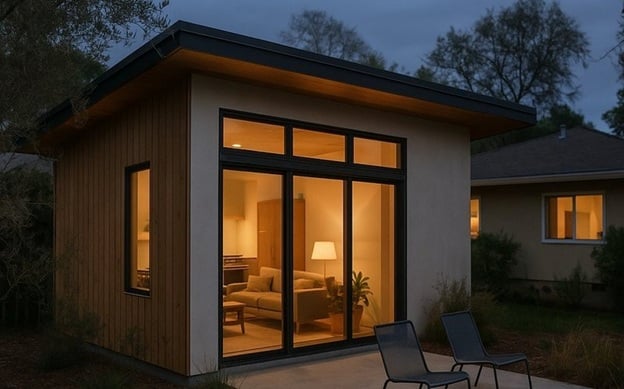
- Real natural light. This is the most common regret. A unit with one small window on each wall photographs badly, shows badly, and feels smaller than its floor plan says it is.
- Parking that was solved rather than ignored. Even where local rules do not require a dedicated space, a tenant who has nowhere to put a car is a tenant who leaves.
None of these are expensive decisions if they are made at the design stage. All of them are expensive to fix afterward, which is why they belong in the first conversation rather than the fourth.
The question worth asking before anything else
Not what does an ADU cost, and not what does an ADU add. The useful question is narrower: on this specific lot, with this specific setback situation, this sewer lateral, and this electrical panel, what does a permitted unit cost, and what does a comparable unit nearby actually rent for right now?
That question has a real answer, and it can be obtained before committing to anything. The homeowners who are happy with their ADUs two years later are almost always the ones who asked it first.