Introduction:
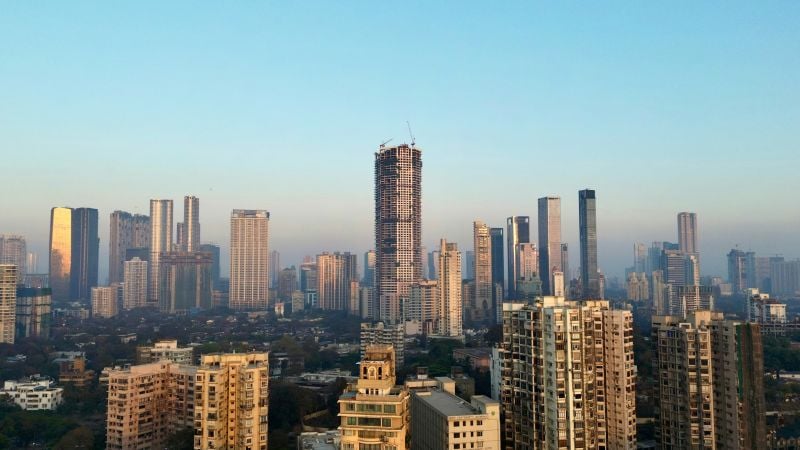
Mumbai sells not just homes, but access. Access to opportunity, to networks, to infrastructure, to a pace of life that few cities in India can hope to match. If you’ve paused at a property listing recently and asked yourself why a modest apartment in Mumbai is as expensive as a luxury villa in another place, you’re not alone. To the more seasoned investor, the price tags can be downright surreal. But the logic gets easier to unpack once you start breaking down the layers, geography, demand, infrastructure, and economic concentration. In this blog, I’ll walk you through the actual drivers of Mumbai’s competitive property prices, pair some of the most premium localities with the most upscale of Mumbai’s properties, and let your mind rest assured, as the price is in line with the value.
1. The Geography Problem:
A City That Is Not Going Anywhere. The geography of Mumbai is its greatest impediment and its greatest driver of value. Unlike the sprawling cities like Bengaluru or Hyderabad that can grow wider, Mumbai is a very narrow peninsula and surrounded by water itself. That’s to say that land is scarce and in real estate scarcity is luxury. If demand continues to rise but supply doesn't grow as fast as demand, prices will rise, without fail. Add on the enormous amount of land locked away in government control, forest zones or salt pan lands, and what leaves is then incredibly valuable in terms of potential growth.
2. Demand That Never Sleeps:
Mumbai is not just another metro; it is India’s financial capital. Everyone, from banking people and entertainment companies to global corporations and startups, wants a piece of Mumbai. And so Mumbai is flooded with tons of professionals, entrepreneurs and investors. And while in tourist cities demand is seasonal, Mumbai’s demand is relentless and steady, unlike tourists visiting a city that’s never demand, Mumbai is relentless. And even on slow economic cycles, housing demand here doesn’t collapse; it just adjusts.
3. Infrastructure:
The Cost of Connectivity. Mumbai’s infrastructure is changing quickly. Metro lines, coastal roads, trans-harbour links, such are not just upgrades, these are price multipliers. A lot of places tied to a new metro corridor tend to get a huge jump in property prices. They are willing to pay more for shorter commute times because time is money in Mumbai. This is also the reason “far” regions are now adding premium pieces.
4. Cost of Living Vs Cost of Earning In Mumbai:
Among all sectors of industry, salaries rank among the highest in India. But, as earning potential surges, so does purchasing power. That creates a feedback loop in which developers price properties based on what buyers can afford, not just construction costs. And then also, as there are more and more affluent professionals coming into town, the pricing benchmark is continually rising
5. Relevant Regulations and Development Costs:
Mumbai’s real estate market is not only about land, it’s also about compliance. Stamp duties, development premiums, approval delays, and the complexities of redevelopment add another layer of cost. Developers pass on these costs to buyers, leading to a further inflow of property prices upward.
Comparing Posh Localities in Mumbai. Let’s explore some of the variations of pricing and living culture between some of Mumbai’s most premium areas.
Let’s explore some of the variations of pricing and living culture between some of Mumbai’s most premium areas.
1. South Mumbai (Malabar Hill, Cuffe Parade, Colaba):
That is where legacy meets luxury: South Mumbai. It’s old money territory, heritage buildings, sea-facing apartments, and unparalleled prestige. Prices in this segment are some of the highest in India, which has gone above ₹60,000–₹1,00,000 per sq. ft. What you’re paying for isn’t just space, but also exclusivity, the advantage of being close to business districts and a heritage address.
2. Bandra West:
The Cultural Powerhouse. Bandra West fuses lifestyle with place. It is a lifestyle spot for celebrities, entrepreneurs and expats. Boasting a colorful café culture, a direct connection to several business regions, and an ease of navigation via sea links, Bandra commands premium rates ranging from ₹45,000 to ₹75,000 per sq. ft. It’s not only a place to live, it’s a place to be seen.
3. Andheri West:
The Balanced Premium. It’s balanced on the tightrope, in the sweet spot between affordability and connectivity of Andheri West. It comes via the metro, roads, and rail, which places it in a position to be a preferred option for professionals. Here’s home to many buyers who actively seek to purchase a home directly in Mumbai without stepping into ultra-luxury territories. If you’re on the lookout for value, projects with 2 BHK flats in Andheri West under 3cr are also gaining traction among mid to high-income buyers.
4. Lower Parel:
The Contemporary Luxury Hub. Once an area of industrial activity, Lower Parel has evolved into a luxury residential and commercial center. With high-rise towers and upscale amenities, and near corporate offices, prices here are between ₹40,000 and ₹65,000 per sq. ft. This is contemporary Mumbai, vertical, frenetic, and aspirational.
Why Mumbai Still Surpasses Other Cities. Compared with Delhi, Bengaluru, or Hyderabad, Mumbai pays its premium even.
Here’s why: Mumbai’s land scarcity cannot be matched here, while places like Bengaluru expand outward. The density of financial institutions and corporate headquarters is a lot higher. Rental yields, while moderate, remain stable due to constant demand. Investor confidence remains strong in Mumbai, making it a relatively safer real estate market.
The Emotional Premium:
Mumbai holds an emotional value that goes beyond economics. For many, a home here is a mark of pride; it is one of the ways of having “made it”. This intangible quality often compels buyers to stretch budgets, perpetuating high prices.
Where do Platforms Like Housiey Fit In?
Mumbai real estate can feel scary going in. With pricing fluctuations, developer credibility, and trade-offs with location, buyers need some clarity. For that reason, platforms like Housiey come in to do more than just list platforms; they act as guided discovery tools, which also help guide discovery. To help sort the way you search can be helpful. If you are trying to figure out which candidates to pursue and explore Mumbai flats on Housiey, then head straight to Housiey’s website and choose from a huge range of verified projects.
Key Takeaways:
Mumbai’s real estate market prices are a result of a complicated combination of limited land availability, continuous demand, and economic concentration. Wealthy neighbourhoods like South Mumbai and Bandra hold luxury properties, but Andheri West has a value-for-living proposition, but doesn’t take you high on its price tags. Infrastructure projects have driven property values up, which makes an early investment advantageous. Unlike other places, Mumbai’s pricing is based both on financial logic and on emotional aspiration, preserving demand resilience.
Conclusion:
Mumbai isn’t accidentally expensive; it’s expensive by design. Every square foot represents a mix of scarcity, opportunity, and aspiration. For buyers, the trick is not just affordability, it’s making the right decisions in a confusing market. And that’s exactly where Housiey breaks down the barriers of travel. If you are the sort of consumer who would like to buy home directly in Mumbai or see Mumbai flats on Housiey, the platform brings clarity, vetted listings and expert recommendations into one location.
FAQs.
1. Why is Mumbai more expensive than Delhi in real estate?
Mumbai has limited land and a higher concentration of demand, particularly in the finance and entertainment sectors. With greater dispersion, Delhi has a more flexible supply.
2. Is Mumbai real estate overpriced?
That might sound expensive, but prices are underpinned by ample demand and economic activity. The valuation is justified by long-term appreciation trends.
3. What are the most expensive parts of South Mumbai?
Malabar Hill and Cuffe Parade are the top places in South Mumbai. These zones have heritage value alongside luxury sea-facing properties.
4. Is Andheri West a good place to invest?
Yes, it has solid connectivity and balanced pricing. It’s particularly appealing for mid-range buyers and professionals.
5. How much does Mumbai cost on average, per sq ft?
It ranges from ₹20,000 to over ₹1,00,000 depending on the location. Premium areas get much better rates.
6. Will Mumbai property prices fall?
Short-term corrections may occur, but from the standpoint of consistent demand, there is unlikely to be a big drop. Indeed, over time this market simply steadies, rather than spiralling apart.
7. Why are redevelopment projects common in Mumbai?
A shortage of land forces older buildings to be expanded and redeveloped. This allows maximization of land use efficiency.
8. Better to buy or rent in Mumbai?
Based on your financial objectives and the length of stay, it’s best to buy for stability and the investment over the long term.
9. Which is the best suburb in Mumbai?
Areas like Andheri, Powai, and Goregaon are excellent. There is a preference based on cost and work location.
10. Are luxury apartments in Mumbai good value for it?
They are luxury and offer high resale value. But decisions should strike a balance with your financial comfort.
11. What is the main driver of property appreciation in Mumbai?
Infrastructure, connectivity, and demand-supply dynamics are major factors. Closer proximity to business hubs matter too.
12. Is Mumbai the safest real estate investment?
Yes, it is still one of the most stable markets in India. Investor sentiment continues to be strong.
13. What’s carpet area vs built-up area?
Carpet area is the available space in the house that is usable. The built-up area also includes walls, along with common spaces.
14. What is the impact on prices of metro connectivity?
Properties located along metro lines experience significant demand and appreciation in prices. Less time to commute provides substantial value.
15. Is South Mumbai worth the premium?
It’s a prestigious location with perks that cannot be beat. But it comes at a cost of way more.
16. What are the hidden costs of buying property in Mumbai?
Stamp duty, registration taxes, maintenance service charges, and GST may all pile up on top of this price. Buyers need to budget for these costs.
17. Do NRIs have an option to invest in Mumbai real estate?
Yes, NRIs are allowed to invest legally in residential properties. Mumbai is still a favored destination.
18. What is the future of Mumbai real estate?
It will also see consistent growth with infrastructure expansion. Demand ought to be strong.
19. Are smaller, more compact apartments on the rise?
Yes, cost-effective options are increasingly pushing households to compact homes. They appeal to young professionals.
20. How might I begin property-seeking in Mumbai?
Begin with a verified platform and set your budget and location preference. Applications like Housiey make it so much easier.
Sources: Reports on the industry published by the top real estate consultancies. Municipal urban planning and housing data. Market trend analysis by financial institutions. Updates to infrastructure projects, published by the public authorities. Pricing benchmarks in real estate and a look at city comparison.